Loading...
irn
44150
Institution
National Gallery of Australia Edo designations

English designations
Categories
Institution Location
Parkes Pl E, Parkes ACT 2600, Australia
irn
44150
Institution
National Gallery of Australia Edo designations
English designations
Ewua Messenger Figure
Categories
Altar & Shrine Objects
Figures
Institution Location
Parkes Pl E, Parkes ACT 2600, Australia
Iconographies
4
annotations

Uman-ague
Equal-armed cross
1 annotation


Itakpa
Cat's whiskers facial markings
1 annotation


Ewua
Ẹwua officials or Ohensa priest
1 annotation

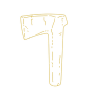
Umọmọ
Hammer
1 annotation

Provenance
9
events
Institution data
National Gallery of Australia
The data was transferred directly by the institution.
Last updated: 2021-10-26
Language: english
| Institution field | Value |
|---|---|
irn object id | 44150 |
Main Title designation object type | Messenger figure |
Materials and Technique material | brass / bronze / copper alloy |
Dimensions dimensions | 57.5 x 16.7 x 15.5 x cm |
Date Created date made | first half of 19th century |
Creators producer | Edo people, Court of Benin |
Place Of Creation production place | Northern Niger Delta, Nigeria |
Provenance provenance | Royal Palace, Benin; probably looted as part of the British punitive expedition , February 1897; with William Downing Webster (1868–1913), Bicester, Great Britain; from whom bought by Augustus Henry Lane-Fox Pitt-Rivers (1827–1900), 20 January 1898 (£23.15); by descent to his son Alexander Pitt-Rivers (1855–1927), Oxford; by descent to his son George Pitt-Rivers (1890–1966), Oxford; by inheritance to his wife Stella Pitt-Rivers, Oxford; with Everett Rassiga (1922–2003), New York, from the late 1960s?; from whom bought by the Australian National Gallery, Canberra, February 1973 The collecting history of this work of art is partial. The National Gallery of Australia welcomes further information regarding its history of ownership. |
Credit Line accession date | Purchased 1973 |
Exhibited exhibition history | In Our Own Image: Figurative Sculpture from the National Gallery of Australia [NGA Travelling Exhibition], 27 April 1994–23 June 1995 |
Literature bibliography | Catalogue of the Pitt Rivers museum, Farnham, 1898, vol.5, p.1592;Lieutenant-General Pitt-Rivers, Antique Works of Art from Benin, London: private printing 1900 (reprinted 1974), plate XV, figs 90–91, p.31, illus. b&w |
Accession Number object id | 73185 |
Sections
About
Other
Sensitive content
Sensitive Content Digital Benin includes colonial material that may contain inaccurate, derogatory or harmful language relating to African and African diasporic communities. Such language may appear in catalogue records, transcriptions, and book, exhibition or museum titles. We recognize that this material may cause distress. Sensitive-content warnings are being implemented across the collection, but this process is ongoing. The language does not reflect Digital Benin’s views; we take an anti-colonial and anti-racist position and are committed to centring the humanity of historically marginalised communities.