Uman-ague
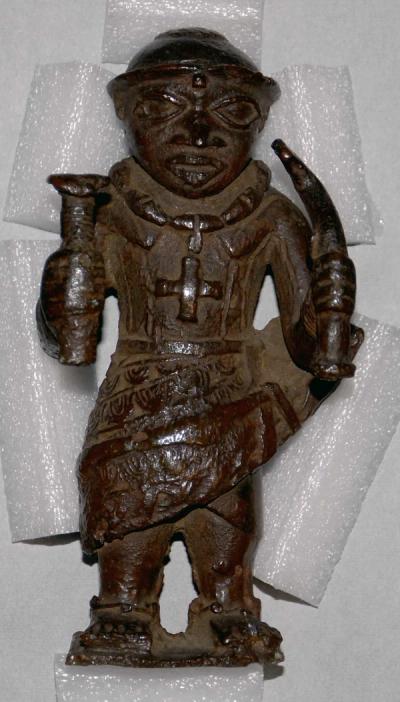
Uman-ague is a badge in the form of an equal-armed cross. The cross with straight-sided arms is known as the “Greek cross,” while the type with V-shaped arms, narrowing toward the centre, is known as the “Maltese cross.”
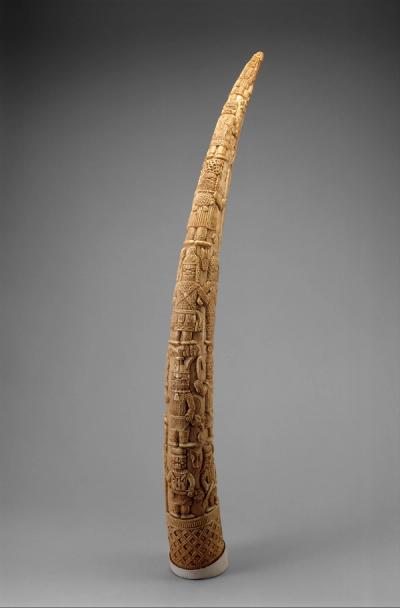
Uman-ague is usually worn around the neck by members of the Ewua or by the Ohensa ( ). The equal-armed cross has various meanings: as a symbol of cosmic order, it represents the number four and references the “four cardinal points established by the High God Osanobua when he created the world” (Girshick Ben-Amos 1999, p. 64), as well as the “crossroads or junction that serves as the point of connection between the natural and spiritual worlds” ( ). Paula Girshick Ben-Amos ( ) also argues that when used on the Aken'ni Elao (altar tusk), the cross, together with the Ivie okpagbaru (royal bead), constitutes an “emblematic reference” to Ọba Ẹsigie.
The cross also references the Portuguese missionaries who brought Christianity to the Kingdom during the reign of Ọba Ẹsigie, although the symbol was already in use before the arrival of Europeans ( ). The Maltese cross is thought to have been introduced by Ọba Eresonyẹn as part of his efforts to encourage the worship of the High God Osanobua during his reign ( ; ). Regardless, Uman-ague is often associated with Ọba Ẹsigie.
Digital Benin collates digital material from institutions, and some of this material is inherently colonial and contains words, terms and phrases that are inaccurate, derogatory and harmful towards African and African diasporic communities. Catalogue transcriptions, book titles, exhibition titles and museum titles may contain harmful terms. We recognise the potential for the material to cause physical and mental distress as well as evoke strong emotions. Owing to the scale of the collection’s data, a process to implement sensitive-content warnings in the displayed data is still incomplete. The material within the catalogue does not represent Digital Benin’s views. Digital Benin maintains a strong anti-colonial, anti-racist position and affirms its support for centring the humanity of historically marginalised and disenfranchised communities. Read more about the background of this statement here