Itakpa
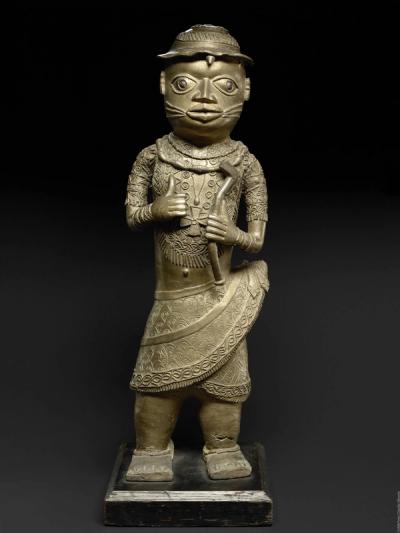
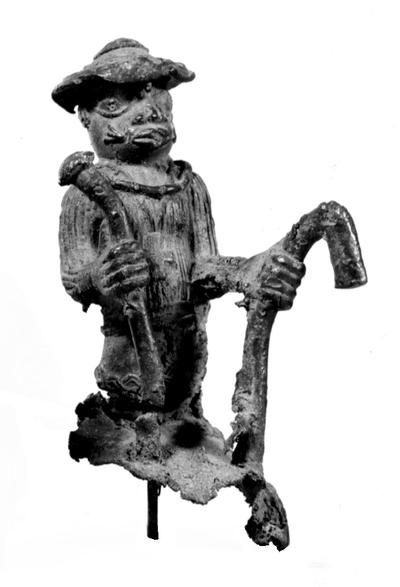
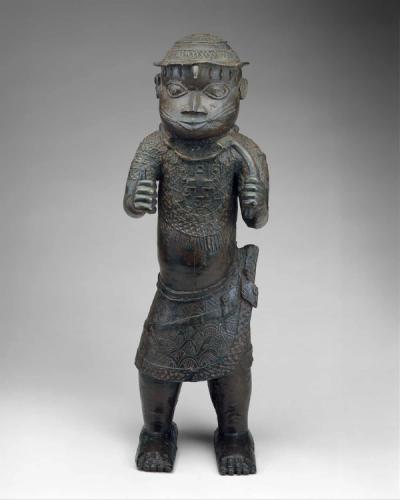
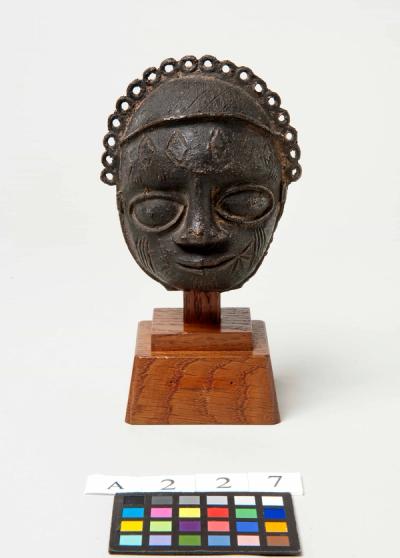
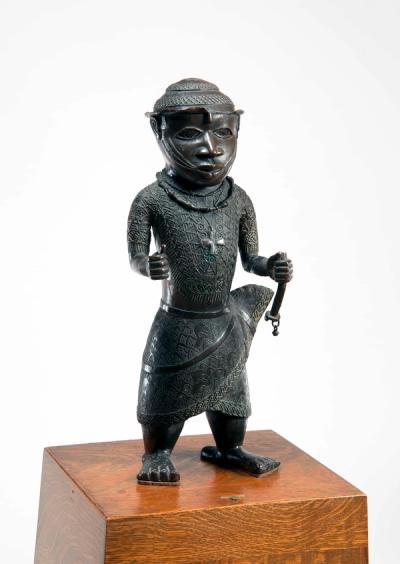
Itakpa facial markings consist of three linear cicatrizations at both corners of the mouth of figures, sometimes described as “cat’s whiskers” by scholars researching Benin art history (e.g., Willett 1967, pp. 67–70; Nevadomsky 1986, p. 41). Edo people do not, and did not historically, wear this type of facial marking. Therefore, it has been suggested that these figures could be messengers or envoys sent to the Kingdom of Benin by the Ooni of Ife, as similar facial markings have been seen on terracotta sculptures from Ife (Willett 1967). However, during Joseph Nevadomsky’s (1986, p. 41) research in Benin City, people identified these markings as Itakpa, a kind of facial marking worn by people from areas to the north of the Benin Kingdom, where the Niger and Benue rivers meet, such as the Nupe, Igala, or some Yoruba communities. Furthermore, in his 1937 Edo-English dictionary, Melzian (p. 102) identified Itakpa as the Edo word for the Nupe. During the 16th century, Ọbas led expansion wars, such as the Idah War in 1515–16 under the rule of Ọba Esigie; therefore, the attribution of figures with these markings as ‘foreigners’ corresponds with the history of the Kingdom.
Digital Benin collates digital material from institutions, and some of this material is inherently colonial and contains words, terms and phrases that are inaccurate, derogatory and harmful towards African and African diasporic communities. Catalogue transcriptions, book titles, exhibition titles and museum titles may contain harmful terms. We recognise the potential for the material to cause physical and mental distress as well as evoke strong emotions. Owing to the scale of the collection’s data, a process to implement sensitive-content warnings in the displayed data is still incomplete. The material within the catalogue does not represent Digital Benin’s views. Digital Benin maintains a strong anti-colonial, anti-racist position and affirms its support for centring the humanity of historically marginalised and disenfranchised communities. Read more about the background of this statement here