Loading...
Accession Number
1989.844
Institution
Indianapolis Museum of Art at Newfields Edo designations

English designations
Categories
Institution Location
4000 N Michigan Rd, Indianapolis, IN 46208, United States
Accession Number
1989.844
Institution
Indianapolis Museum of Art at Newfields Edo designations
English designations
Altar Tusk
Categories
Altar & Shrine Objects
Institution Location
4000 N Michigan Rd, Indianapolis, IN 46208, United States
Iconographies
16
annotations

Ukpan obọ eva
Crossed Beaded Baldrics
1 annotation


Odigba
Coral beaded collar
1 annotation


Uhunmwu-Ẹkuẹ
Pendant Mask
1 annotation

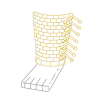
Iviawẹ
Stacked Beaded Anklet
1 annotation


Ekpede
Crossbow
1 annotation


Ẹghughu
Crocodile
1 annotation

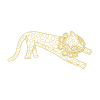
Ẹkpẹn
Leopard
1 annotation

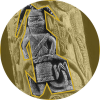
Ọba Ohẹn
King with Mudfish Legs
1 annotation


Ewi
Mudfish
1 annotation

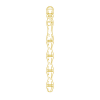
Ukhurhẹ
Ancestral Staff
1 annotation


Osisi
Gun
1 annotation


Ewu ivie
Coral Beaded Shirt
1 annotation


Uzo
Antelope
1 annotation


Asoro
Spears
1 annotation


Ikpotoki
Portuguese Figure
1 annotation


Ubanu'hi
Inifinity Symbol
1 annotation

Provenance
5
events
Institution data
Indianapolis Museum of Art at Newfields
The data was transferred directly by the institution.
Last updated: 2021-04-17
Language: english
| Institution field | Value |
|---|---|
Accession Number object id | 1989.844 |
Previous Number(s) object id | |
Title designation | tusk for royal altar |
Object Label description | Figured elephant tusks were placed on royal altars within the palace complex. (See photomural to your left.) These tusks, naturally hollow at their widest end, were placed over wooden spikes in openings at the top of brass heads honoring past kings. Like copper alloys, such as brass and bronze, ivory was a substance reserved for the king. On the front, or convex side of this tusk, is a prominent figure of a king (Oba) being held on either side by a court official. Directly above the king is a Portuguese soldier, and above the soldier is another king whose upwardly curved legs end in mudfish, a reference to the sea god Olokun. The entire surface of the tusk is filled with images of court officials, Portuguese soldiers (once powerful allies), and crocodiles, leopards, mudfish and other animals. The charred surface, particularly at the top of this tusk, may have resulted from fire damage during the 1897 British military expedition to Benin City. |
Materials material | ivory |
Medium material | |
Dimensions dimensions | 62-1/2 x 16 x 5-1/4 in. |
Object Type object type | |
Date Created date made | early 19th century |
Creation Location production place | Nigeria |
Credit Line prior source | Gift of Mr. and Mrs. Harrison Eiteljorg |
Provenance provenance | (Robert Jones, Indianapolis, Indiana) {1} sold on 22 June 1984 to Harrison Eiteljorg [1903-1997], Indianapolis, Indiana; give to the Indianapolis Museum of Art in 1989. {1} Robert Jones also sold under the name Robert Fitzgerald |
Culture or People ethnic attribution | Edo people |
Accession Date accession date | |
Exhbitions exhibition history | |
Rights license | Public Domain |
URL weblink | http://collection.imamuseum.org/artwork/51524/ |
Number of Parts object count | 1 |
Support material |
Sections
About
Other
Sensitive content
Sensitive Content Digital Benin includes colonial material that may contain inaccurate, derogatory or harmful language relating to African and African diasporic communities. Such language may appear in catalogue records, transcriptions, and book, exhibition or museum titles. We recognize that this material may cause distress. Sensitive-content warnings are being implemented across the collection, but this process is ongoing. The language does not reflect Digital Benin’s views; we take an anti-colonial and anti-racist position and are committed to centring the humanity of historically marginalised communities.