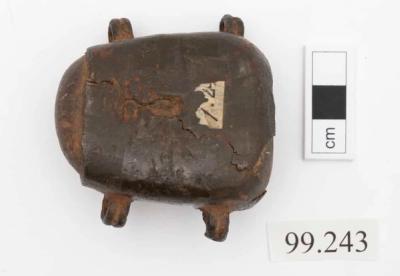
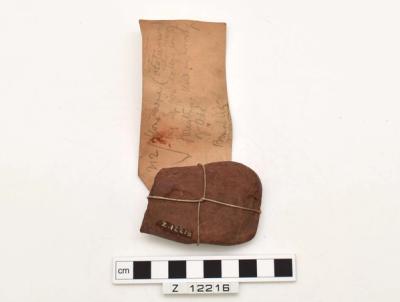
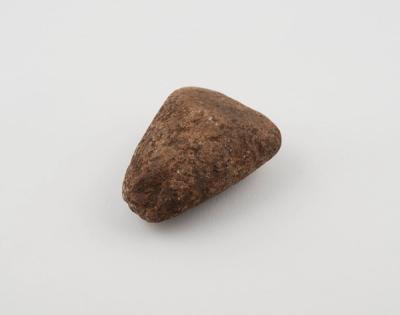
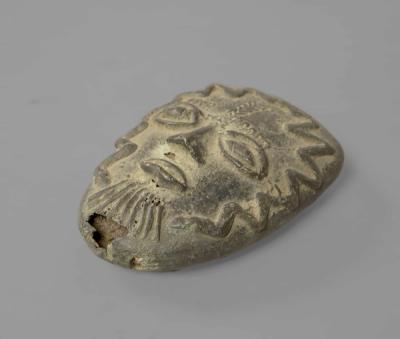
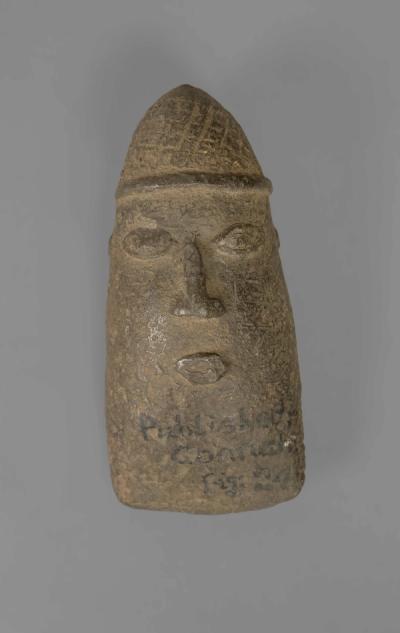
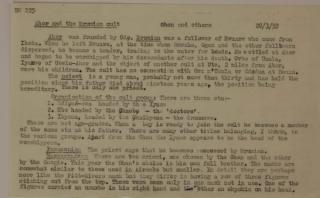
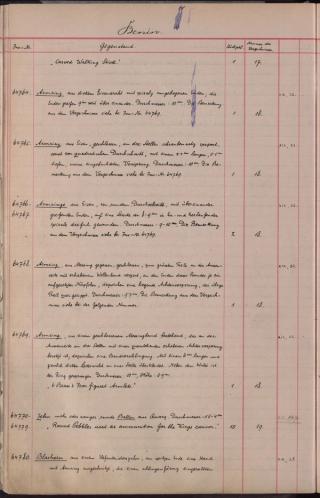
Ughavan (celts) are thunderbolts or stone axes usually found on Osun altars. They are obtained by pouring four tins of oil into the hole in which the Ughavan landed when falling from the sky as thunderbolts. Uloko (Iroko) is said to be the only tree that can withstand Ughavan while other trees shatter. According to oral tradition, Ughavan is believed to be thrown by Ogiuwu, king of death, also known as god of thunder.
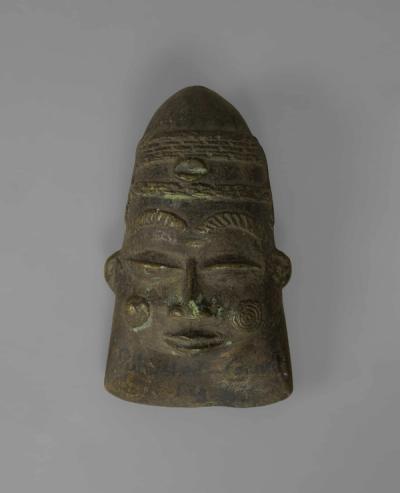
Ughavan are typically ground stone hand axes, however a small number of cast brass or lead skeuomorphs are also in the Benin Museum collection, some of which have faces cast onto the front. The exact form of Ughavan varies, and some river-washed pebbles are grouped in this category. Although described as such, these objects are not hand axes, and were not used in the Kingdom of Benin as axes. Instead, Ughavan are often seen on altars in Benin. They are associated with lightning and thunder and are also described as ‘thunderbolts’. The Edo term for these objects – Ughavan – also literally translates to ‘faeces of thunder’. Ughavan are commonly seen to represent Isango, god of thunder, but also Osun, god of medicine.
When and where stone Ughavan were produced is not known, although analysis of the stone from a small number of them has suggested they may come from the forest zone around Owo. According to Graham Connah, a common explanation for their existence in Benin City is, ‘We only find these things where lightning has struck the ground’. Metal celts are lost-wax cast, and the style of the faces, some with vertical scarification marks above the eyes, are in line with the arts of the Benin court.
Sensitive Content Digital Benin includes colonial material that may contain inaccurate, derogatory or harmful language relating to African and African diasporic communities. Such language may appear in catalogue records, transcriptions, and book, exhibition or museum titles. We recognize that this material may cause distress. Sensitive-content warnings are being implemented across the collection, but this process is ongoing. The language does not reflect Digital Benin’s views; we take an anti-colonial and anti-racist position and are committed to centring the humanity of historically marginalised communities.