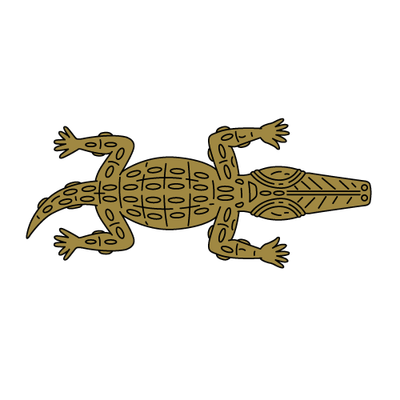
Ẹghughu
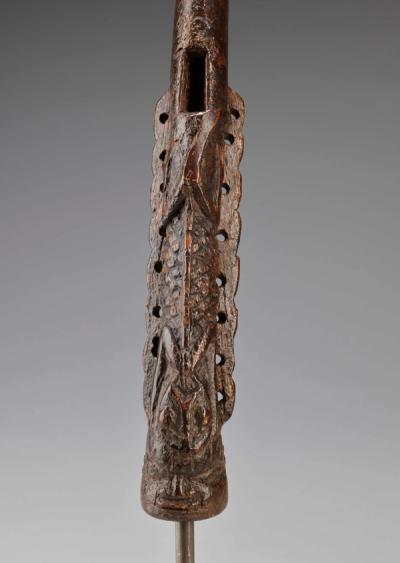
In the riverine area surrounding Benin City, there are two types of crocodile. The Ẹghughu, known in English as the dwarf or bush crocodile, is believed to be more docile ( ; Ọbazee 2025, p. 133). The second type is the Àgbákà, the aggressive Nile crocodile ( ; Ọbazee 2025, p. 11).
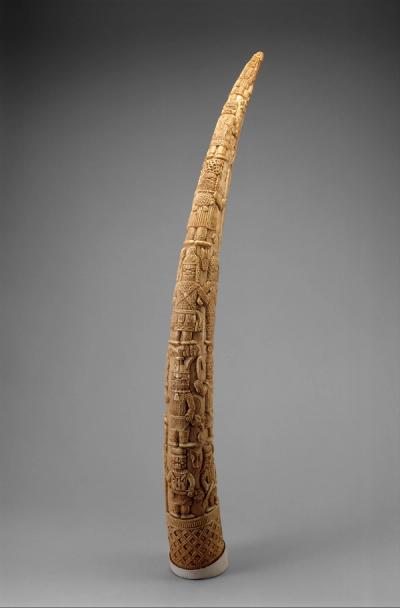
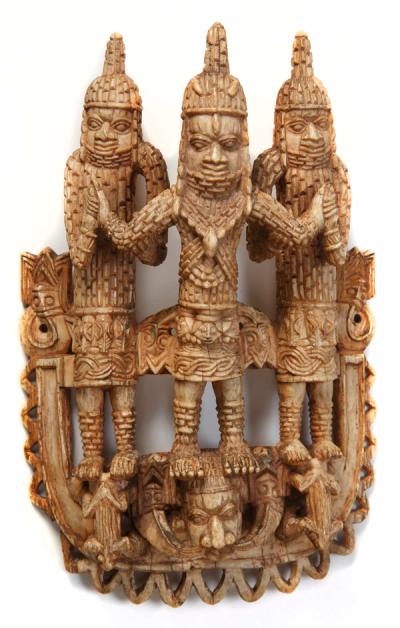
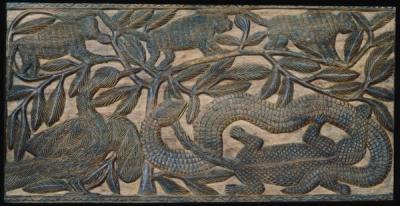
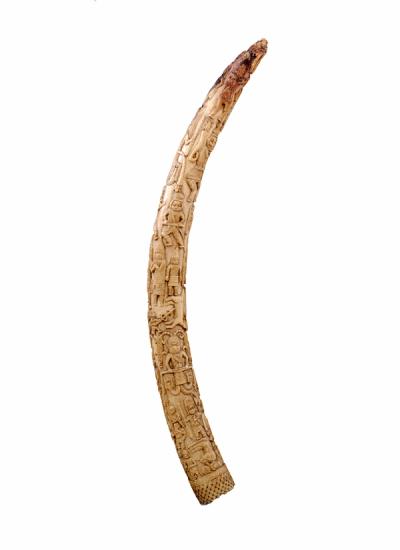
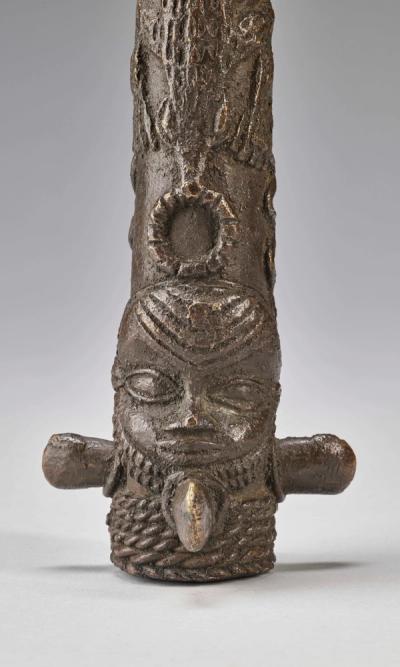
Crocodiles are one of the important animals represented in the historical Emwin Arhe, and they are known as Olokun’s guards or the “policemen” of the waters. The powerful and ferocious qualities of these animals might explain why warrior figures are often depicted wearing Uhunmwu-Ẹkuẹ (pendant masks) in the shape of crocodile heads on Ama-Ẹrọnmwọn (bronze relief plaques) ( ). Olokun devotees use crocodiles as sacrificial animals in offerings during the worship of Olokun.
Digital Benin collates digital material from institutions, and some of this material is inherently colonial and contains words, terms and phrases that are inaccurate, derogatory and harmful towards African and African diasporic communities. Catalogue transcriptions, book titles, exhibition titles and museum titles may contain harmful terms. We recognise the potential for the material to cause physical and mental distress as well as evoke strong emotions. Owing to the scale of the collection’s data, a process to implement sensitive-content warnings in the displayed data is still incomplete. The material within the catalogue does not represent Digital Benin’s views. Digital Benin maintains a strong anti-colonial, anti-racist position and affirms its support for centring the humanity of historically marginalised and disenfranchised communities. Read more about the background of this statement here