Uzo
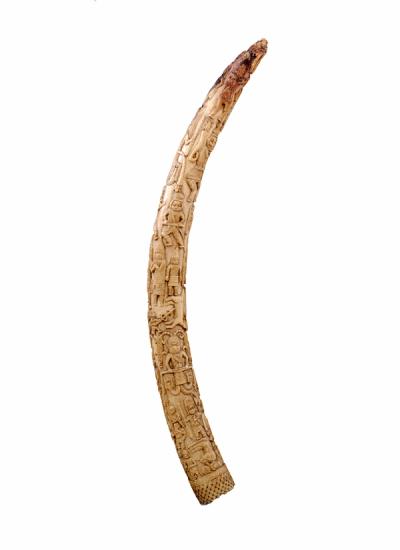
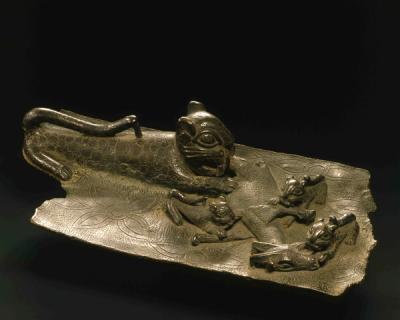
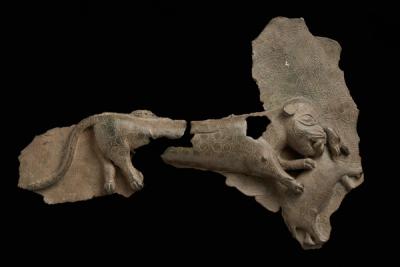
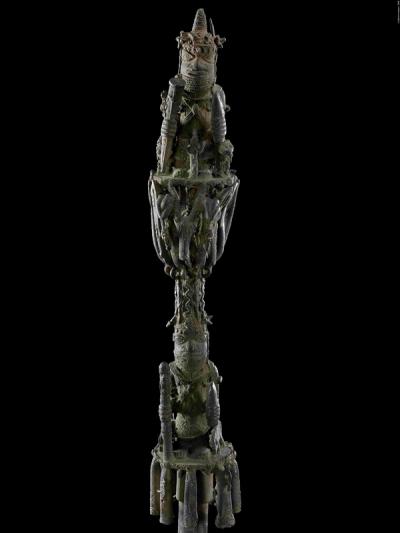
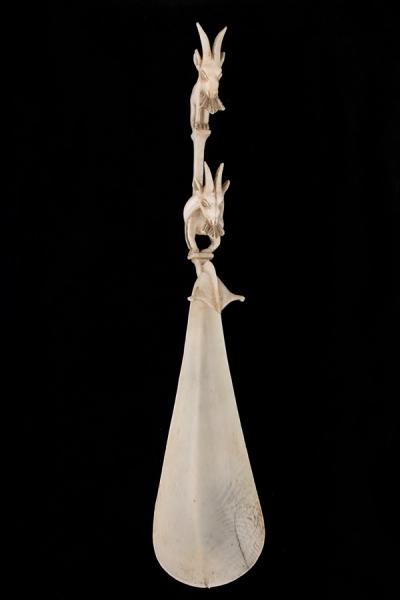
These motifs are sometimes interpreted as Uzo (antelopes) but also as Emila (cows). Both animals share certain characteristics, being regarded as physically beautiful and peaceful creatures. Some Orhiẹvbẹ (kola-nut bowls) take the form of an antelope head with its horns grasped by a pair of hands, a gesture that symbolises the right of humans to sacrifice antelopes and cows with impunity (Ben-Amos Girschick 2007, cat. no. 88, pp. 339, 341).
Uzo primarily symbolise beauty, docility, and their status as permissible sacrificial animals, reinforcing themes of human control over nature and the rituals that underpin social and spiritual order.
Digital Benin collates digital material from institutions, and some of this material is inherently colonial and contains words, terms and phrases that are inaccurate, derogatory and harmful towards African and African diasporic communities. Catalogue transcriptions, book titles, exhibition titles and museum titles may contain harmful terms. We recognise the potential for the material to cause physical and mental distress as well as evoke strong emotions. Owing to the scale of the collection’s data, a process to implement sensitive-content warnings in the displayed data is still incomplete. The material within the catalogue does not represent Digital Benin’s views. Digital Benin maintains a strong anti-colonial, anti-racist position and affirms its support for centring the humanity of historically marginalised and disenfranchised communities. Read more about the background of this statement here