Loading...
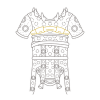
Altar of the Hand
Altar of the Hand
Altar of the Hand
Altar of the Hand
ObjectNumber_Original
VO_64755
Institution
Weltmuseum Wien
Edo designations
English designations
Categories
Institution Location
Heldenplatz, 1010 Wien, Austria
ObjectNumber_Original
VO_64755
Institution
Weltmuseum Wien
Edo designations
English designations
Altar of the Hand
Categories
Altar & Shrine Objects
Institution Location
Heldenplatz, 1010 Wien, Austria

Iconographies

18 annotations

Single Beaded Baldric
Ukpan obọ ọkpa
Single Beaded Baldric

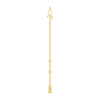
Ukpan obọ ọkpa is a single baldric worn diagonally across the torso, from the left shoulder to the right hip. Barbara Blackmun described these baldrics as an “Ẹkpẹn band,” worn by figures as “a sign of distinction” ( ).

1 annotation
Ukpan obọ ọkpa
Headwear
Ẹrhu
Headwear

Many different kinds of Ẹrhu (headwear) are worn by the various figures depicted in the imagery of Benin royal artefacts. Through comparisons with ceremonial regalia still worn by chiefs and members of the royal court, including the Ọba himself, some Ẹrhu have been used to identify the different figures depicted. For example, the conical hat worn by high-ranking town chiefs as part of the pangolin regalia, still worn at ceremonies, is also visible on figures on some Ama-Ẹrọnmwọn (bronze relief plaques). Other examples include the distinctive bell-shaped helmet associated with the Iyasẹ. Figures who wear a shallow-brimmed hat and a cross have been identified as Ewua or Ohensa priests.

Different kinds of helmets and headwear were worn by warriors, reflecting the many different ranks and roles in the army at any given time, as well as developing trends that were in turn represented on Emwin Arhe created at different points in time. Warrior figures wearing helmets covered in cowrie shells were carved on the Aken'ni Elao (carved tusks) (Blackmun 1984, p. 330), yet on the brass Ama, warriors are sometimes depicted wearing helmets made from crocodile hide or horsehair with a front plate (Osadolor in Plankensteiner 2007, cat. no. 238, p. 457). Helmets made from horsehair with a front plate are one of the more common types represented on the Ama-Ẹrọnmwọn, and the demand for black horse tails was noted by both Portuguese and British traders during the late 17th and 18th centuries (Osadolor in Plankensteiner 2007, cat. no. 238, p. 457). Other warriors depicted on Ama-Ẹrọnmwọn wear helmets with a rounded top, chinstrap, and sometimes also a feather tucked into the left side. These types of headwear are known as Ẹrhu Iyokuo.

Attire worn for battle also differed from that worn for ceremonial occasions, such as the pointed headwear worn in combination with an ornate leopard-head tunic by war chiefs. Depictions of figures wearing this attire on brass Ama-Ẹrọnmwọn (bronze relief plaques) have been interpreted as representing the war chiefs’ participation in the war-ritual Isiokuo festival (Osadolor in Plankensteiner 2007, cat. no. 238, p. 457).

Another distinctive form of headwear is that worn by figures identified as leopard hunters on the brass Ama-Ẹrọnmwọn (relief plaques). These large helmets cover almost all of the leopard hunters’ faces except for their noses, eyes, and upper lips, and are made of an unusual material that remains unidentifiable (Plankensteiner 2007, cat. nos. 68–69, p. 322).

European figures are also portrayed with distinctive hats, such as Portuguese three-cornered hats. These depictions reflect the artists’ keen observation and highlight the impact of European trade and military assistance (Ezra 1992).

3 annotations
Ẹrhu
Ẹrhu
Ẹrhu
Chisel
Afian
Chisel

When the Afian (chisel) appears as a motif on Emwin Arre (royal treasures), it is typically depicted alongside other tools associated with smithing and metal casting. Together, these tools have been interpreted as symbols of “civilisation”. Miniature versions of the Afian are also placed on blacksmiths’ altars dedicated to Ogun, further emphasising the chisel’s association with metalworking and the transformative power of iron.

1 annotation
Afian
Ubanu'hi / Obanu'hi
Ubanu'hi
Inifinity Symbol

The Ubanu'hi (infinity symbol) is a kind of guilloche or interlaced strapwork motif that can be angular or rounded. It was used by Edo artists in the decoration of many Emwin Arhe (royal treasures) and is ubiquitous in Benin royal arts. Ubanu'hi is a shortened form of “uba no Ọba ya de agbon ke ehimwin yi”, which means “the rope with which the Ọba ties the heaven and earth together” (pers. comm. Chief John Igbineweka Inneh n’Igbesawman, 2022). Similarly, Paula Ben-Amos Girshick described this as “Ọba n’iri agbon”, or the “rope of the world” pattern.

According to Ọbabanmu Ineh, the use of this motif indicates that objects were carved by members of the Igbesanmwan. However, the motif is found on all types of Emwin Arhe (royal treasures), not only those made of ivory or wood. On the flanges of the Ama-Ẹrọnmwọn (relief plaques) alone, Kathryn Gunsch identified three different versions of the Ubanu'hi and, through her analysis of over 850 plaques, found that these different Ubanu'hi forms align with other characteristics, such as dimensions, the prevalence of ornamental motifs, and stylistic qualities. Together, these provide evidence, she argues, of different production groups among the plaque makers.

Kate Ezra went on to argue that the use of these motifs indicates that certain objects were used in a “royal context” and were associated with “royal patronage”.

Ubanu’hi can also be spelt Obanu'hi, indicating different intonations in the pronunciation of the words.

3 annotations
Ubanu'hi
Ubanu'hi
Ubanu'hi
Iconography image
Ẹbẹn
Ceremonial Sword

Ẹbẹn are a type of ceremonial sword of significant importance in the Benin Kingdom. During ceremonies, titled chiefs would hold them or toss them during dances, thereby paying homage to the Ọba at these public events, particularly when a chief receives a certain status. It is forbidden for Ẹbẹn to touch the ground, so the chief must take extra precautions to avoid dropping the Ẹbẹn during the dance. Therefore, the Okae-Odionmwan (head of executioners) dances with the Umozo (warfare or executioner’s sword) behind the dancing chief.

There are two central ceremonial swords used in the royal court of the Benin Kingdom, one of which is the Ẹbẹn, along with the Ada (ceremonial swords). They are distinguished by their blades: the Ẹbẹn blade reflects the shape of a leaf or an oar. Sometimes, it is decorated with openwork designs and/or brass inlays, most commonly shaped as small Ẹbẹn and Ẹkpẹn (leopards). The handle of the Ẹbẹn also has an unusual ring-shaped form, which further differentiates it from the Ada.

1 annotation
Ẹbẹn
Hammer
Umọmọ
Hammer

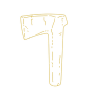
The Umọmọ is an L-shaped hammer made of iron that holds profound importance, symbolising power, transformation, and spiritual efficacy. The hammer is fundamentally associated with Ogun, the god of iron, embodying “the force inherent in metal, [with] a mystical power with the potential to create or destroy”. This dual aspect of the hammer—its capacity for both shaping and destruction—mirrors the formidable power of the Ọba. The L-shaped hammer is often associated specifically with Ọba Eresonyẹn, as it most commonly appears within the visual language of Emwin Arhe (royal treasures) that he commissioned, for example, held by Ewua figures and on one ornate cast Ẹrhẹ, thought to have been Ọba Eresonyẹn’s throne (id. no. 209779).

The hammer is notably held by figures identified as Ewua palace officials or Ohensa priests, who also wear a cross pendant on their chests. The consistent portrayal of these figures holding the Umọmọ underscores its connection to the origins of the Benin dynasty and the spiritual authority of the Ọba. Ọba Esigie, the powerful 16th-century “warrior king”, is credited with encouraging ironworking, further solidifying the hammer’s link to royal martial strength and divine kingship.

Appearing on Aken'ni Elao (carved ivory tusks), Ama-Ẹrọnmwọn (bronze relief plaques), and even as a charm, the hammer symbolises the Ọba’s ability to “mold and transform” events, to overcome challenges, and to provide spiritual protection. Its presence thus reinforces the complex interplay of hierarchy, spiritual authority, and military might within the Benin Kingdom, consistent with other potent symbols such as the Akọn Ẹkpẹn (leopard’s tooth neck ornament). The Umọmọ often appears on Emwin Arhe (royal treasures) believed to have been commissioned during the reign of Ọba Eresonyẹn.

Other terms for hammer in Edo are Avan or Avalaka, which are used interchangeably with Umọmọ by members of the Igun-Ẹrọnmwọn.

1 annotation
Umọmọ
Royal/Ewuare Bead
Ivie okpagbaru/Ivie Ewuare
Royal/Ewuare Bead

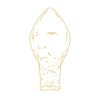
This oval-shaped bead with faceted sides is known as the Ivie okpagbaru or Ivie Ẹwuare (the ‘royal bead’ or ‘Ẹwuare bead’). The association of Ọba Ẹwuare with this bead is based on a story in which Ẹwuare took beads from the deity Olokun, sanctifying his royal position and, in turn, receiving the title ‘Lord of the Land’, in contrast to Olokun’s title ‘Lord of the Sea’. The Ivie okpagbaru/Ivie Ẹwuare is a distinctive motif that can be used to identify representations of the Ọba.

Due to the association of beads with Olokun, it is unsurprising that this bead has come to symbolise wealth when used to decorate Emwin Arre (royal treasures). ). Paula Ben-Amos associated the bead with a different narrative and the name ‘One Bead Does Not Go around the Neck’. Ben-Amos suggests that the bead is in fact the one that was fought over by Ọba Ẹsigie and his brother Aruanran when they struggled for the right to the throne in the early 16th century.

1 annotation
Ivie okpagbaru/Ivie Ewuare
tribal marks
Iwu
Facial and Body Markings

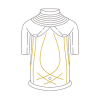
Iwu are facial and body markings (scarifications) that were historically worn by Edo men and women. However, since the 1960s, the practice has been nearly extinct. ). In the past, Iwu were used as a way of proving that one was an Edo citizen, and the ceremony of having Iwu completed was an important rite of passage for men and women. The Osiwu, who also practised circumcision and other surgical procedures, would carry out the procedure of adding Iwu. There are different types of Iwu: ‘blades’ worn on the torso (Iwu-eko), and those worn on the face, such as Ikharo (three or four markings above the eyebrows), Irho (two narrow ‘blades’ worn on each cheek), Ovbihue (nasal ‘blades’), Ovbi-agbanmwen (chin ‘blade’), and Igho-okpa/Ukpgho (three forehead ‘blades’).

The number of Iwu also varied depending on the identity of the person wearing them. For example, royal men would wear six ‘blades’ on their torso, whilst men who were not royal would wear seven ‘blades’. Meanwhile, the Ọba’s female children would wear fifteen ‘blades’, and all other women would wear sixteen.

1 annotation
Iwu
Spears
Asoro
Spears

Asoro (spears) were used as weapons in battle and for hunting. According to Osadolor, there were two types: long and short. Figures holding Asoro are often depicted on Ama-Ẹrọnmwọn (bronze relief plaques), sometimes in battle scenes and at ceremonies and festivals.

1 annotation
Asoro
Fortified chest band
Uko ugbo-ohamwen
Fortified chest band

Uko ugbo-ohamwen is a chest band often worn around the chests of warriors depicted on the Ama-Ẹrọnmwọn (relief plaques) and is fortified with charms. The band was worn to increase the strength and endurance of warriors. This fortified chest band has also been referred to as ukugba olila.Ine n’Igun in Bradbury 1959, B.S. 245

1 annotation
Uko ugbo-ohamwen
Fist/Hand
Obọ
Fist/Hand

The fist motif—particularly a clenched fist with an extended thumb—carries significant symbolic weight. It is central to the cult of the hand, a major aspect of Edo religion that focuses on an individual’s ability to achieve success through their own actions, skills, and enterprise. This cult is primarily observed by those who have already attained considerable wealth or status, including hunters, warriors, and craftsmen.

The fist symbolises physical prowess and strength, denoting the individual’s might and accomplishment. The hand is credited with enabling the accumulation of great riches and high status. This is sometimes linked to the idea that wealth results from both personal effort and the favour of Olokun, the god of wealth. On Ukhurhẹ (ancestral staffs), a clenched fist or hand grasping a mudfish signifies royal or chiefly authority. The image of a hand holding a coiled mudfish can also illustrate the Ọba’s formidable power to “cast and then release a curse” or to “set up obstacles and remove them”. The fist is sometimes accompanied by other motifs symbolising strength, chieftaincy, and longevity, such as tools like the hammer and pliers or feathers of the vulturine fish eagle. The fist motif is frequently depicted on Aken'ni Elao (carved tusks), on wooden Ikẹgobọ (altars to the hand), and on Ukhurhẹ.

1 annotation
Obọ
alligator
Ẹghughu
Crocodile

In the riverine area surrounding Benin City, there are two types of crocodile. The Ẹghughu, known in English as the dwarf or bush crocodile, is believed to be more docile. The second type is the Àgbákà, the aggressive Nile crocodile.

Crocodiles are one of the important animals represented in the historical Emwin Arre, and they are known as Olokun’s guards or the “policemen” of the waters. The powerful and ferocious qualities of these animals might explain why warrior figures are often depicted wearing Uhunmwu-Ẹkuẹ (pendant masks) in the shape of crocodile heads on Ama-Ẹrọnmwọn (bronze relief plaques). Olokun devotees use crocodiles as sacrificial animals in offerings during the worship of Olokun.

1 annotation
Ẹghughu
Mudfish
Ewi
Mudfish

Depictions of Ewi (mudfish) are among the most frequent motifs in the Emwin Arre (royal treasures). Mudfish hold an important place in Edo belief, both as representations of the god Olokun and as symbols of royalty, as well as of “prosperity, peace, well-being and fertility”. Mudfish are also particularly common animals for sacrifice, and mudfish-shaped Orhiẹvbẹ (kola-nut boxes) were used to make offerings or store kola nuts.

Yet, the appearance of Ewi across the Emwin Arhe is not consistent, and it has been argued that different species of mudfish were depicted by Edo artists, each with different qualities and capabilities. For example, the electric shock of Malapterurus electricus resembles the fierceness of the Ọba, while the liminal qualities of the Synodontis clarias mudfish, which lives both on land and in water, similarly reflect the Ọba’s rule over land and sea.Gallagher 1983, p. 93 With these different qualities in mind, the mudfish is an important symbol of Benin kingship and royalty.

Sometimes the Ọba was depicted by artists with mudfish rather than legs (see Ọba with Mudfish Legs).

2 annotations
Ewi
Ewi

Provenance

5 events
Production
unknown to February 22, 1897 (year approximate)
Production of Ikẹgobọ by the Igbesamwan guild in Benin City
Loot
February 19, 1897 (day approximate) to June 1899 (month approximate)
Looting of the Emwin Arre - Inalienable Cultural Artefacts - during the Invasion of the Benin Kingdom in February 1897 and until the end of overt military activity in June 1899
Unknown
February 22, 1897 (day approximate) to 1899
Acquisition of a collection of Benin objects by W. A. Maschmann
Transfer
February 22, 1897 (day approximate) to 1898
Transfer of the Maschmann collection to Hamburg, c. 1898
Purchase
1899
Purchase of the Maschmann collection by the Weltmuseum Wien, 1899

Related archival documents

1 documents
See all
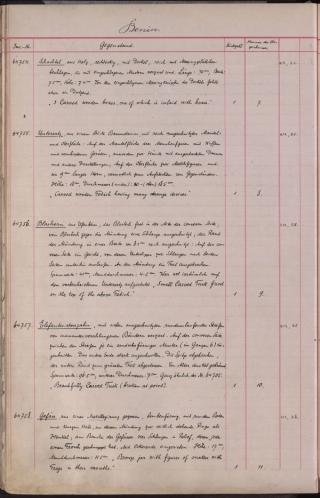
An archival document representing a Inventories of 1 page(s)
InventoryAccession Record
Weltmuseum Wien
Inventory book - objects

Institution data

Weltmuseum Wien
The data was transferred directly by the institution.
Last updated: 2022-05-24
Languages: german, english
Institution fieldValue
ObjectNumber_Original
object id
VO_64755
NativeTitle
edo designation
ikegobo
TextEntry
description
Dieser Altar der Hand ist Teil der historischen Sammlungen aus dem Königreich Benin im heutigen Nigeria. 1897 wurde das Königreich erobert und dessen Oba (König) Ovonramwen ins Exil verbannt. Die aus dem Königspalast geraubten Kunstschätze wurden anschlie
Medium
material
Holz
Medium_en
material
Wood
ObjectName
object type
Altar der Hand
ObjectName_en
object type
Altar of the Hand
DateBegin
date made
1800
DateEnd
date made
1900
Dated
date made
19. Jahrhundert
Dated_en
date made
19th century
Period
date made
Term
production place
Afrika südlich der Sahara
Term2
production place
West-Afrika
Term3
production place
Nigeria
Term4
production place
Benin
Thesaurus
production place
Afrika südlich der Sahara/West-Afrika/Nigeria/Benin
Provenance
provenance
Role_person
provenance
Sammlung-Collection-Wilhelm Albert Maschmann|
Culture
ethnic attribution
Edo, Benin Königreich
Culture_en
ethnic attribution
Edo, Benin Kingdom
CreditLine
department and institution
Weltmuseum Wien
Department
department and institution
MVK Objekte - Afrika südlich der Sahara
Zugangsdatum
accession date
1899
LocationString
display status
Raum Me.40
FileName
images
VO_64755_x.jpg|
PrimaryImage
images
VO_64755_x.jpg
Classification
||
DepartmentID
35
Department_cut
department and institution
Afrika südlich der Sahara
DisplayOrder
1|2|
Last_Modified
2021-12-06 08:15:34
LocationID
76192
ObjectID
object id
441034
ObjectNumber
object id
64755
PublicAccess
1
SortNumber
VO 64755
TextDate_en
|
TextEntryHTML
description
Dieser Altar der Hand ist Teil der historischen Sammlungen aus dem Königreich Benin im heutigen Nigeria. 1897 wurde das Königreich erobert und dessen Oba (König) Ovonramwen ins Exil verbannt. Die aus dem Königspalast geraubten Kunstschätze wurden anschlie
TextEntryHTML_en
description

 This Altar of the Hand is part of the historical collections from the Benin Kingdom, in present-day Nigeria. In 1897, the kingdom was conquered and Oba (king) Ovonramwen banned into exile. The loot from the royal palace was then sold through the ar
TextEntry_en
description

 This Altar of the Hand is part of the historical collections from the Benin Kingdom, in present-day Nigeria. In 1897, the kingdom was conquered and Oba (king) Ovonramwen banned into exile. The loot from the royal palace was then sold through the ar
cxrDisplayOrder
1|
Sensitive content

Sensitive Content Digital Benin includes colonial material that may contain inaccurate, derogatory or harmful language relating to African and African diasporic communities. Such language may appear in catalogue records, transcriptions, and book, exhibition or museum titles. We recognize that this material may cause distress. Sensitive-content warnings are being implemented across the collection, but this process is ongoing. The language does not reflect Digital Benin’s views; we take an anti-colonial and anti-racist position and are committed to centring the humanity of historically marginalised communities.

Read more about our approach