Ikẹgobọ
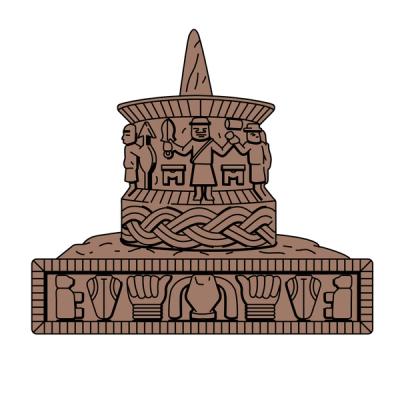
Obọ, the hand or arm, is recognised to be the seat of power of accomplishing things. Its worship is specific to warriors as well as wealthy and high-ranking people. It is worshipped to ensure success for special undertakings and give thanks. The Ọba and some people of high rank still have special altars of the hand, called Ikẹgobọ, which take the form of sculptured cylindrical objects in wood, or occasionally bronze, depending on the status of the sponsor.
Ikẹgobọ are placed on ancestral altars. Typically, the Ọba, Iy’Ọba and certain privileged chiefs may use cast forms, whereas chiefs use wooden ones (Dean, 1983 ). Altars of the hand are cylindrical, the outer sides decorated with relief carving. They are sometimes topped with sculptural elements, elephant tusks or antelope horns, and wooden altars are topped with a conical projection which mimics a tusk. Worship of the hand is important in Edo belief; the hand relates to an individual’s success with different skills, qualities or characteristics, such as craftsmanship, hunting or warcraft.
Chief Jacob Egharevba (1949, pp.88-89 ) worship of the ‘god of the hand’ emerged during the fifteenth century, during the reign of Ọba Ewaure I. What is less certain is whether altars of the hand also emerged at this time, or were a later development. Today, Ikẹgobọ continue to be used on altars by individuals who have high-ranking positions within the palace societies.
Educational Material
Digital Benin collates digital material from institutions, and some of this material is inherently colonial and contains words, terms and phrases that are inaccurate, derogatory and harmful towards African and African diasporic communities. Catalogue transcriptions, book titles, exhibition titles and museum titles may contain harmful terms. We recognise the potential for the material to cause physical and mental distress as well as evoke strong emotions. Owing to the scale of the collection’s data, a process to implement sensitive-content warnings in the displayed data is still incomplete. The material within the catalogue does not represent Digital Benin’s views. Digital Benin maintains a strong anti-colonial, anti-racist position and affirms its support for centring the humanity of historically marginalised and disenfranchised communities. Read more about the background of this statement here