Ukpọn
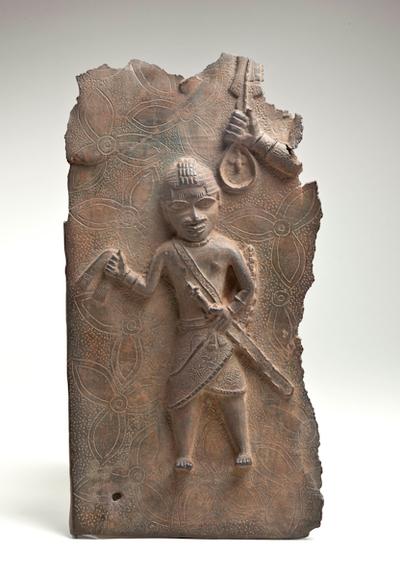
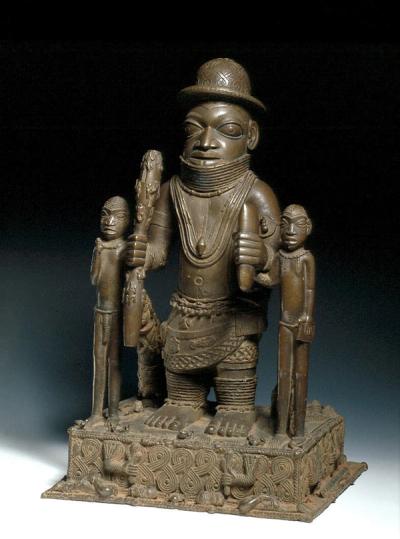
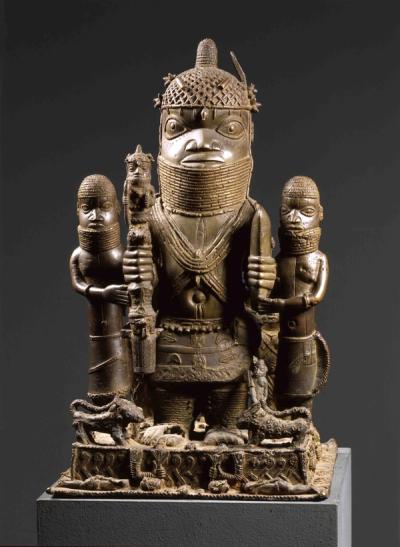
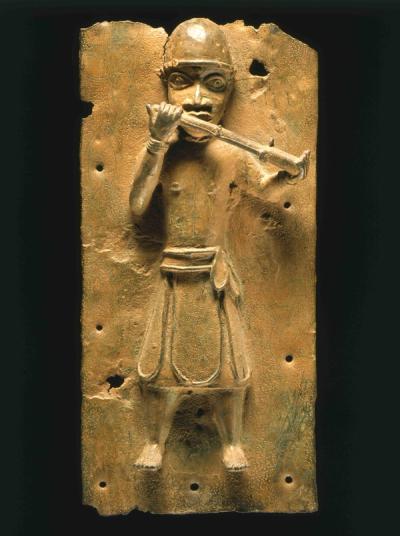
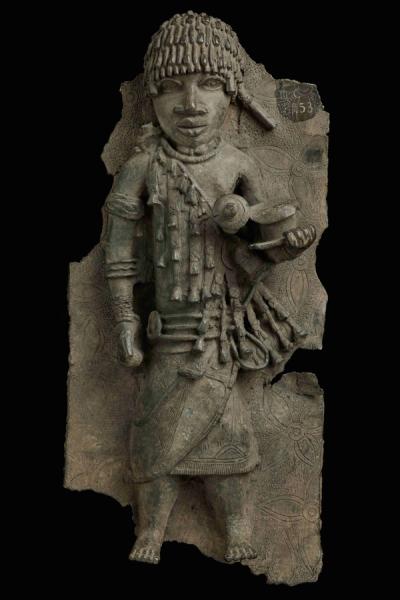
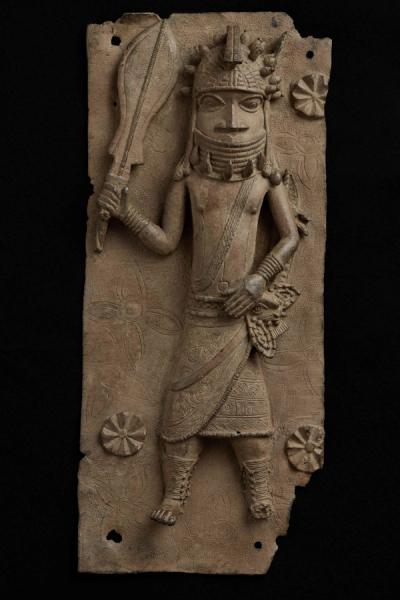
Ukpọn is the Edo term for cloth (Aigbe 1985, p. 55; Ọbazee 2025, p. 542) and is used here to refer to the wrappers or kilts worn by many of the figures depicted on the Emwin Arre (royal treasures). The cloth worn around the waist may be plain, but it is more commonly richly decorated with motifs associated with the monarchy, power, and wealth, such as the Ọba'nui (infinity symbol) and Uhunme Ikpotoki (Portuguese heads).
The Benin Kingdom was renowned for its textile production, both for local use and for trade ( ). Within the royal court, members of the Owina n’Ido produced ukhuen cloth for the Ọba and other members of the court, who wore it as wrappers during festivals and ceremonies ( ).
Alongside locally produced textiles, imported cloth was also an important commodity in the Benin Kingdom’s trade networks. Textiles were exchanged with neighbouring production centres, particularly Ijebu ( ), while European traders brought silks, woollens, linens, and cotton from Europe and Asia from the 15th century onwards ( ).
Digital Benin collates digital material from institutions, and some of this material is inherently colonial and contains words, terms and phrases that are inaccurate, derogatory and harmful towards African and African diasporic communities. Catalogue transcriptions, book titles, exhibition titles and museum titles may contain harmful terms. We recognise the potential for the material to cause physical and mental distress as well as evoke strong emotions. Owing to the scale of the collection’s data, a process to implement sensitive-content warnings in the displayed data is still incomplete. The material within the catalogue does not represent Digital Benin’s views. Digital Benin maintains a strong anti-colonial, anti-racist position and affirms its support for centring the humanity of historically marginalised and disenfranchised communities. Read more about the background of this statement here