Loading...
ID
210084
Institution
Omo n'Oba n'Edo Uku Akpolokpolo, Ọba of Benin & National Commission for Museums and Monuments, Nigeria Restituted
Previously owned by Ethnologisches Museum, Staatliche Museen zu Berlin
Edo designations

English designations
Categories
Institution Location
1 Adesogbe (Plymouth) Road, P.M.B. 1115, Benin City , Edo State
ID
210084
Institution
Omo n'Oba n'Edo Uku Akpolokpolo, Ọba of Benin & National Commission for Museums and Monuments, Nigeria Restituted
Previously owned by Ethnologisches Museum, Staatliche Museen zu Berlin
Edo designations
English designations
Relief Plaque
Categories
Palace Architecture & Ornamentation
Institution Location
1 Adesogbe (Plymouth) Road, P.M.B. 1115, Benin City , Edo State
Iconographies
3
annotations

Ukpọn
Wrapper
1 annotation

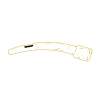
Oko/Akohẹn
Horn/Flute
1 annotation


Ebe Amẹ
Water Fern
1 annotation

Provenance
5
events
Institution data
Ethnologisches Museum, Staatliche Museen zu Berlin
The data was transferred directly by the institution.
Last updated: 2021-06-14
Language: german
| Institution field | Value |
|---|---|
ID object id | 210084 |
Sachbegriff designation | Sachbegriff: Reliefplatte |
Titel designation | Titel: Hornbläser |
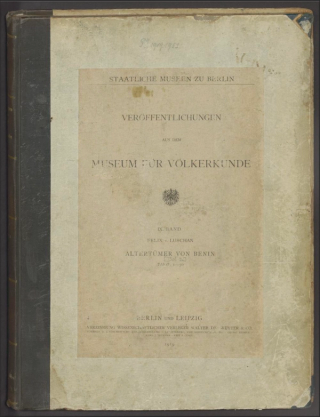
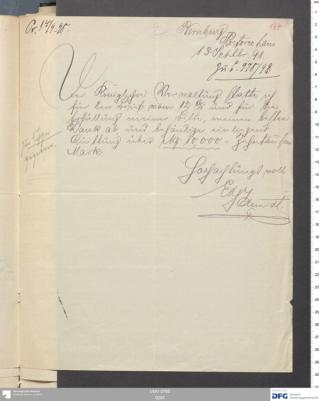
Objektref. description | VIII A 12082, Positiv, SW, Rückseite der Bronzeplatte ""Mann die Flöte blasend"", Kurt Grunst (*04.04.1921); E 663/1898, Erwerbung: a.) I/131/1898 + b.) I/132/1898 + I/133/1898: a.) III C 8164-8182 + b.) III C 8183-8192 + c.) III C 8193-8218, a,b.) Bronzen c.) Bronzen u. Elefantenzahn (Benin), Consul Schmidt, 1898, Eduard Schmidt (1892); VIII A 10774, Positiv, SW, Reliefplatte, Bronze, Kurt Grunst (*04.04.1921); VIII A 14442, Positiv, SW, Bronzeplatte ""Mann eine Flöte blasend"", Kurt Grunst (*04.04.1921) |
Texte Online description | Online Beschreibung, [Benin_Königreich] |
Material / Technik material | Material: Messing; Ausgabe: Messing; Ausgabe (engl.): Brass |
Material / Technik // Alle material | Messing, Brass, Messing |
Maße dimensions | 38,90 x 18,50 x 5,50 cm; 2,76 kg |
Objekttyp object type | Allgemein |
Sachbegr. Ausgabe object type | Reliefplatte (Relief plaque) |
Anzahl Teile object count | 1 |
Datierung date made | 16. Jh. |
Geogr. Bezüge production place | Nigeria ( Land ); Benin ( Königreich ) |
Geogr. Bezüge // Alle production place | Benin, Nigeria |
Beteiligte prior source | Eduard Schmidt (1892), Sammler |
Beteiligte // (Name, Sortierung=kleinste) prior source | Schmidt, Eduard |
Veräußerer prior source | null |
Erwerb. Notiz provenance | Notiz: Rückführung Wiesbaden; Ausgabe: 16. Jh., im Auftrag von Oba Esigie (reg. 1517-1550) oder seines Sohnes Oba Orhogbua (reg. 1550-1570), Königspalast, Benin-Stadt; durch Erbschaft an Oba Ovonramwen (ca. 1857-1914; reg. 1888-97), Königspalast, Benin-Stadt; geplündert im Zusammenhang mit der britischen Eroberung von Benin, 1897; in unbekanntem Besitz nach der Eroberung vom Königreich Benin; gesammelt von Konsul Eduard Schmidt, Angestellter der Woermann Linie, zwischen 1897 und 1898 im Gebiet des späteren kolonialen Nigeria; verkauft an das Königliche Museum für Völkerkunde in Berlin, 1898. |
Verw. Institution department and institution | Ethnologisches Museum, Staatliche Museen zu Berlin |
Erwerb. Datum accession date | 1898 |
Besitzart accession method | |
Erwerbungsart accession method | Ankauf |
Digital Assets images | Vorlage; Vorlage; Vorlage; III C 8214.jpg, Vorlage; Vorlage |
Erwerb. Nr. | I/133/1898 |
Ident. Nr. object id | III C 8214 |
Ident. Nr. // (Sortiernr.) object id | 0003 C 08214 |
Obj. Status | vorhanden |
Sections
About
Other
Sensitive content
Sensitive Content Digital Benin includes colonial material that may contain inaccurate, derogatory or harmful language relating to African and African diasporic communities. Such language may appear in catalogue records, transcriptions, and book, exhibition or museum titles. We recognize that this material may cause distress. Sensitive-content warnings are being implemented across the collection, but this process is ongoing. The language does not reflect Digital Benin’s views; we take an anti-colonial and anti-racist position and are committed to centring the humanity of historically marginalised communities.