Loading...
Armcuff
Armcuff
Armcuff
Armcuff
Reg No.
RAF 608
Edo designations
English designations
Categories
Institution Location
1 Adesogbe (Plymouth) Road, P.M.B. 1115, Benin City , Edo State
Reg No.
RAF 608
Edo designations
English designations
Armcuff
Categories
Ceremonial Regalia
Institution Location
1 Adesogbe (Plymouth) Road, P.M.B. 1115, Benin City , Edo State

Iconographies

2 annotations
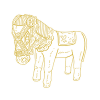
Horse
Ọyanyan
Horse

Ọyanyan (horses), along with their riders, are significant motifs in the visual language of the Emwin Arre (royal treasures), appearing across various media and periods. Although the Benin Kingdom lies in the tropical region of West Africa affected by the tsetse fly, according to oral tradition, a small, stocky breed of horses introduced via trade routes from Nupe and Hausa was known in the kingdom from the 13th century.

In 1505, King Manuel of Portugal sent a horse, alongside other luxurious gifts such as satin and Indian silk, to one of the Ọbas, most likely Ẹsigie, as a gift. An account believed to have been written by the Dutch traveller Dierick Ruiters in 1602 described how he travelled from the port of Ughoton to Benin City on horseback. In the same account, Ruiters also described how the Ọba and his courtiers rode on horseback as part of ceremonial processions. A scene of this kind is also featured in the view of the city of Benin in Olfert Dapper’s Description of Africa.

Ọyanyan therefore embody themes relating to military power, foreign interaction, and royal authority, as well as “dignity and achievement”.

1 annotation
Ọyanyan
Iconography image
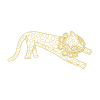
Ẹkpẹn
Leopard

The Ẹkpẹn (leopard) is an animal that appears most often among the motifs decorating the Emwin Arhe (royal treasures). The Ẹkpẹn symbolises the valour and strength of the Ọba, as well as his political authority. The Benin people eulogise the Ọba as the ‘ẹkpẹn n'owa’ (leopard of the home).

When a hunter kills a leopard, he must say “ẹkpẹn n'oha” (I killed a bush leopard), as it is taboo to say that a hunter killed a leopard without specifying that it is a bush leopard, as otherwise this would “be tantamount to symbolically killing the king” (Nevadomsky 1988, p. 81). For this reason, leopards of the bush are called Atalakpa to distinguish them from those that represent the Ọba.

1 annotation
Ẹkpẹn

Provenance

8 events
Production
unknown to February 22, 1897 (day approximate)
Production of Ikoro by the Igbesamwan guild in Benin City
Loot
February 19, 1897 (day approximate) to June 1899 (month approximate)
Looting of the Emwin Arre - Inalienable Cultural Artefacts - during the Invasion of the Benin Kingdom in February 1897 and until the end of overt military activity in June 1899
Inheritance
1910
Transfer of Rawson's looted Benin objects to his family
Unknown
1928
The object is known to have come into contact with Han Coray.
Inheritance
1979
The object was inherited by Hans Coray from Han Coray.
Unknown
1985
The object is known to have come into contact with Hans W. Kopp.
Purchase
2011
The object was purchased by the Museum Rietberg Zürich from Hans W. Kopp.
Restitution
March 20, 2026
Transfer of ownership of 11 Emwin Arre from the Museum Rietberg Zürich to Omo n'Oba n'Edo Uku Akpolokpolo, Ọba of Benin, and the National Commission for Museums and Monuments, 20 March 2026

Related archival documents

3 documents
See all
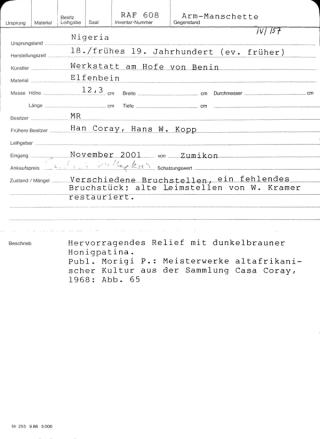
An archival document representing a Catalogue Cards of 1 page(s)
Catalogue Card
Museum Rietberg Zürich
File Cards - Museum Rietberg Zürich
Date
November 1, 2001
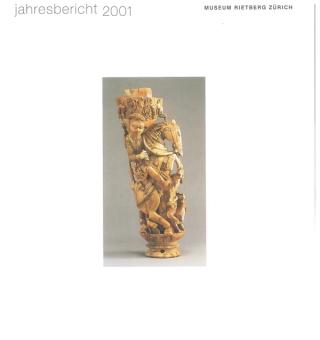
An archival document representing a Scans of published works of 5 page(s)
Scan of published works
Museum Rietberg Zürich
Publications - Museum Rietberg Zürich
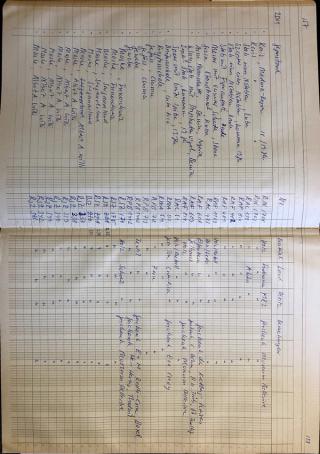
An archival document representing a Inventories of 1 page(s)
Inventory
Museum Rietberg Zürich
Written Archive - Museum Rietberg Zürich
Date
January 1, 2001

Institution data

Museum Rietberg Zürich
The data was transferred directly through the Swiss Benin Initiative.
Last updated: 2022-07-04
Language: english
Institution fieldValue
Reg No.
object id
RAF 608
Object name and materials
designation
Armlet
Material
material
ivory
Dimension/s
dimensions
H. 12.3 cm W. 8,3 D. 7,5
Provisional dating
date made
18th/19th century
Creditline
prior source
Purchased from: Hans W. Kopp
Provenances
provenance
18th/19th century, comissioned from the Royal Ivory-sculptors Guild (Igbesanmwan) by the Royal Palace of Benin; by descent to Oba Ovonramwen (Ovonramwen Nogbaisi, b. about 1857 - d. about 1914; r. 1888 - 1897); 1897, looted from the Royal Palace during the British military occupation of Benin by Admiral Harry Rawson (1843-1910); 1897 - 1910, Admiral Harry Rawson; 1910 - at least 1919, heirs Rawson (?); [...]; 1928-1979, Han Coray (collector, Agnuzzo) (Reg. No: EA 1(?)); 1979-1985, Hans Coray (Zürich) (Reg. No.:HC 40); 1985-2001, Hans W. Kopp, Zumikon; 2011, purchased by the Rietberg Museum Zurich with private funds and with support of the Rietberg Circle
Institution
department and institution
MRZ Museum Rietberg Zürich
Institution acquisition date
accession date
2001
Additional IDs
object id
Sensitive content

Sensitive Content Digital Benin includes colonial material that may contain inaccurate, derogatory or harmful language relating to African and African diasporic communities. Such language may appear in catalogue records, transcriptions, and book, exhibition or museum titles. We recognize that this material may cause distress. Sensitive-content warnings are being implemented across the collection, but this process is ongoing. The language does not reflect Digital Benin’s views; we take an anti-colonial and anti-racist position and are committed to centring the humanity of historically marginalised communities.

Read more about our approach