Ọyanyan
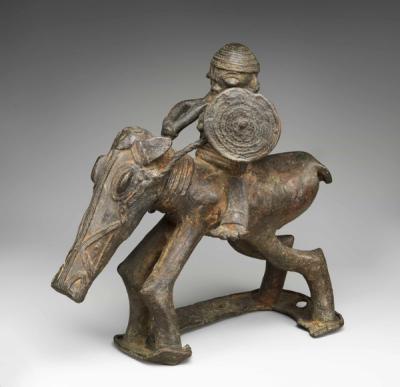
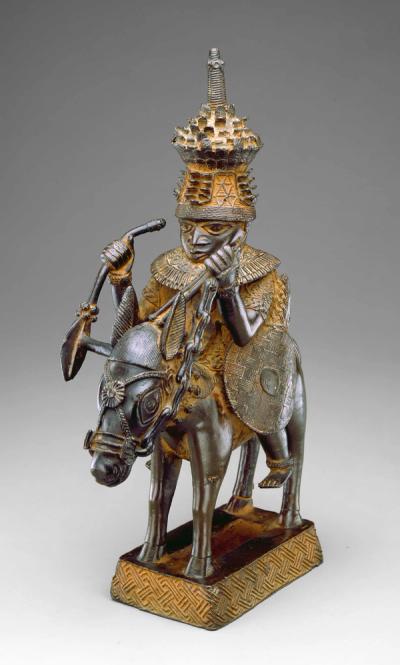
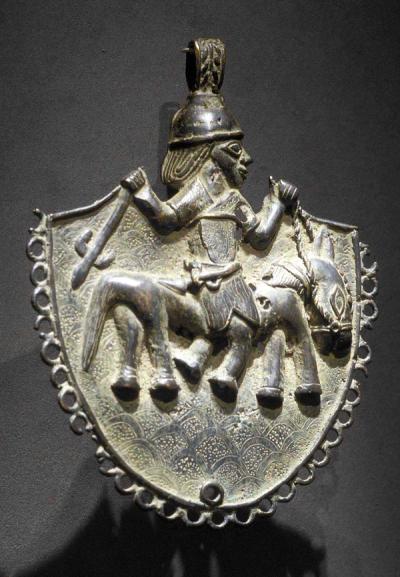
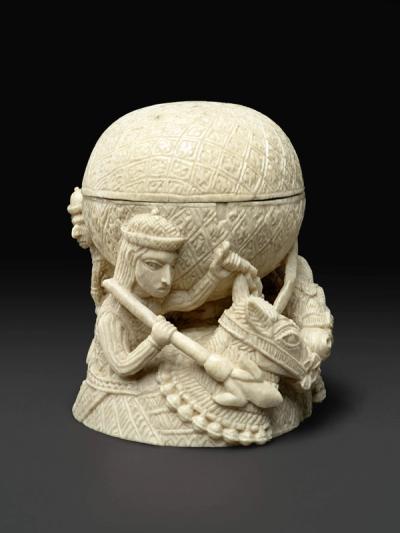
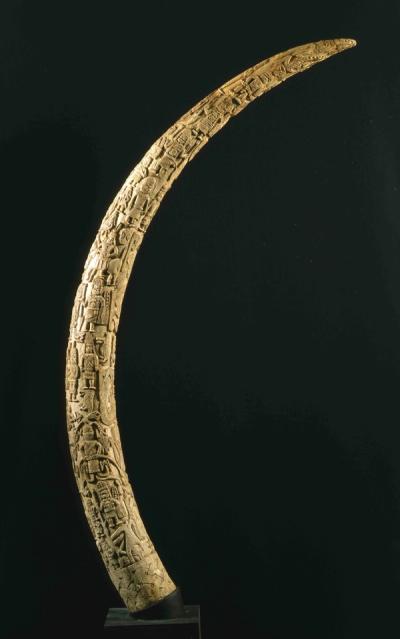
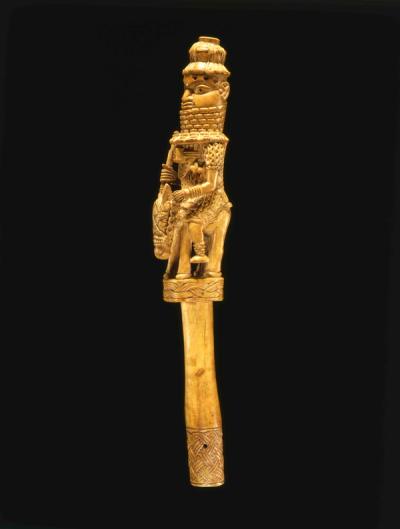
Ọyanyan (horses), along with their riders, are significant motifs in the visual language of the Emwin Arhe (royal treasures), appearing across various media and periods. Although the Benin Kingdom lies in the tropical region of West Africa affected by the tsetse fly, according to oral tradition, a small, stocky breed of horses introduced via trade routes from Nupe and Hausa was known in the kingdom from the 13th century (Dolz in Plankensteiner 2007, cat. no. 215, p. 434).
In 1505, King Manuel of Portugal sent a horse, alongside other luxurious gifts such as satin and Indian silk, to one of the Ọbas, most likely Ẹsigie, as a gift (Ryder 1969, p. 41). An account believed to have been written by the Dutch traveller Dierick Ruiters in 1602 described how he travelled from the port of Ughoton to Benin City on horseback (Blackmun in Plankensteiner 2007, cat. no. 138, p. 367). In the same account, Ruiters also described how the Ọba and his courtiers rode on horseback as part of ceremonial processions (Blackmun in Plankensteiner 2007, cat. no. 221, p. 441). A scene of this kind is also featured in the view of the city of Benin in Olfert Dapper’s Description of Africa (1668).
Ọyanyan therefore embody themes relating to military power, foreign interaction, and royal authority (Nevadomsky 1986), as well as “dignity and achievement” (Curnow in Plankensteiner 2007, cat. no. 115, p. 351).
Digital Benin collates digital material from institutions, and some of this material is inherently colonial and contains words, terms and phrases that are inaccurate, derogatory and harmful towards African and African diasporic communities. Catalogue transcriptions, book titles, exhibition titles and museum titles may contain harmful terms. We recognise the potential for the material to cause physical and mental distress as well as evoke strong emotions. Owing to the scale of the collection’s data, a process to implement sensitive-content warnings in the displayed data is still incomplete. The material within the catalogue does not represent Digital Benin’s views. Digital Benin maintains a strong anti-colonial, anti-racist position and affirms its support for centring the humanity of historically marginalised and disenfranchised communities. Read more about the background of this statement here