Loading...


Registration Number
Af1944,04.12
Institution
British Museum Edo designations

English designations
Categories
Institution Location
Great Russell St, Bloomsbury, London WC1B 3DG, United Kingdom
Registration Number
Af1944,04.12
Institution
British Museum Edo designations
English designations
Odudua Mask
Categories
Ceremonial Objects
Institution Location
Great Russell St, Bloomsbury, London WC1B 3DG, United Kingdom
Iconographies
6
annotations

Ẹyẹn
Snake
1 annotation


Ẹghughu
Crocodile
2 annotations



Ikharo
Forehead markings
2 annotations



Uman-ague
Equal-armed cross
1 annotation

Provenance
6
events
Institution data
British Museum
The data was transferred directly by the institution.
Last updated: 2022-08-04
Language: english
| Institution field | Value |
|---|---|
Registration Number object id | Af1944,04.12 |
Object Name - Comment designation | |
Object Name - Object Name designation | helmet mask |
Title designation | |
Title translation designation | |
Title type designation | |
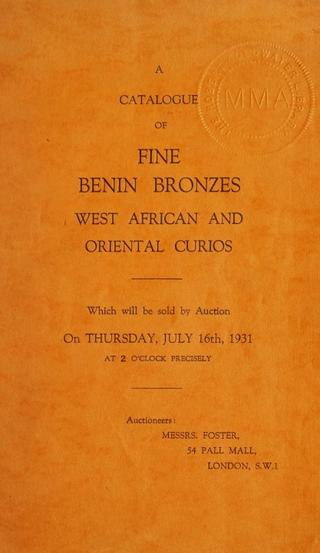
Object History Note / Acquisition Note description provenance notes | Sold at auction on 16 July 1931 through Messrs Foster, The Galleries, Pall Mall, London, lot 160, to Harry Beasley. This object was previously in the collection of the Cranmore Ethnographical Museum established in 1928 by Harry Geoffrey Beasley and his wife Irene Marguerite Beasley. The Beasley collection was distributed following Harry Beasley’s death in 1939. This piece was part of the donation made by Irene Beasley to the British Museum in 1944. |
Physical description description | Odudua helmet mask; lost-wax cast in brass. In form of human head with tapering projection from top of head. Three vertical scarification marks above each eyebrow. Serpents and long-nosed crocodiles crawling down the projection and on cap. Serpents and crocodiles on chin. Under chin and on right and left sides of neck are crosses. Bottom of mask pierced with holes. |
Material material | brass |
Material - Comment material | |
Dimension dimensions | H~W~X~M |
Dimension comment dimensions | ~~~ |
Dimension measurement unit dimensions | cm~cm~cm~kg |
Dimension note dimensions | |
Dimension value dimensions | 69.00~21.00~23.00~5.30 |
Dimension value end dimensions | ~~~ |
Inscription - Note inscriptions | |
Inscription - Quoted inscriptions | |
Inscription language inscriptions | |
Inscription position inscriptions | |
Inscription translation inscriptions | |
Inscription type inscriptions | |
Production date date made | 18thC |
Production date - Comment date made | |
Producer/Artist - Association producer | |
Producer/Artist - Name producer | |
Technique production technique | lost-wax cast~pierced |
Technique - Comment production technique | ~ |
Production place production place | Benin City |
Production place - Association production place | M |
Production place - Comment production place | |
Production place - Site details production place | |
Previous owner - Association prior source | PO |
Previous owner - Comment prior source | |
Previous owner - Name prior source | Beasley, Harry Geoffrey |
Acquisition Funding Source Name provenance | |
Acquisition Funding Source Name Association provenance | |
Acquisition Funding Source Name Comment provenance | |
Acquisition Name provenance | Beasley, Irene Marguerite |
Acquisition Name Association provenance | D |
Acquisition Name Comment provenance | |
Excavation/Field Collection Note provenance | Looted during the British Expedition to Benin City in 1897 where Dr Allman served as Principal Medical Officer. |
Excavator/Field collector - Association provenance | FC |
Excavator/Field collector - Name provenance | Allman, Robert |
Associated event - Association event | IU |
Associated event - Event event | Ododua masquerade at the Ague Osa ritual during New Yam festival (Ague) |
Associated place place collected | |
Associated place - Association place collected | |
Findspot - Association place collected | F |
Findspot - Comment place collected | |
Findspot - Place place collected | Benin City |
Findspot - Site details place collected | |
Associated name - Association reign associated name | |
Associated name - Comment reign associated name | |
Associated name - Name reign associated name | |
Associated ethnic name - Association ethnic attribution | |
Associated ethnic name - Ethnic Name ethnic attribution | |
Production ethnic name - Association ethnic attribution | M |
Production ethnic name - Comment ethnic attribution | |
Production ethnic name - Ethnic Name ethnic attribution | Edo |
Responsible department department and institution | E |
Comment notes | This male Ododua helmet mask cast in brass possibly dates to the eighteenth century and used to be one of the characters of the Ododua masquerade at the Ague Osa ritual, as part of the New Yam festival (Ague), an agricultural rite marking the end of the year. According to tradition, the Ododua royal masquerades were introduced under Oba Oresonyen's reign (c.1735), as a subsidiary performance to the New Yam festival. The Ododua masquerade is said to honour Ododua, the progenitor of the Benin royal dynasty, and the royal ancestors. The Ododua masks have important political significance which is suggested by their predominant royal symbolism. This mask represents a mythic healer. The iconography of the mask, including the serpents and crocodiles, as well as the grimace of the face, refers to the close relationship between the cosmological order or disorder, the natural world and kingship. It reflects also the symbolic relation between identified animal species and the powers of the king. The mask integrates also important Yoruba references including the name 'Odudua' which refers to the earth deity of the Yoruba people and founder of the ancient Ife. |
Exhibitions Loans and Displays - Current and Past exhibition history | Exhibited: 1970-1973, London, Museum of Mankind, Divine Kingship in Africa 1991 Feb-Apr, Norwich, Sainsbury Centre for Visual Arts, Man and Metal in Ancient Nigeria |
Bibliographic reference - Citation bibliography | Ben-Amos 1995~Blier 1998~Craddock & Picton 1986 |
Bibliographic reference - Comment bibliography | ~~ |
Bibliographic reference - Reference bibliography | ~~ |
Condition condition | Good. |
BM/Big No - Number | |
BM/Big No - Prefix | |
BM/Big No - item | |
Collection | |
DAMS Asset - Number | 249943001;250017001;498405001;603708001 |
Other number object id | |
Other number - Comment | |
Other number type | |
PRN object id | |
School/Style | |
Subject - Comment | ~~ |
Subject - Subject iconography | reptile~crocodile~masquerade/party |
calc acquisition link.spec acquisition date text | 1944 |
Sections
About
Other
Sensitive content
Sensitive Content Digital Benin includes colonial material that may contain inaccurate, derogatory or harmful language relating to African and African diasporic communities. Such language may appear in catalogue records, transcriptions, and book, exhibition or museum titles. We recognize that this material may cause distress. Sensitive-content warnings are being implemented across the collection, but this process is ongoing. The language does not reflect Digital Benin’s views; we take an anti-colonial and anti-racist position and are committed to centring the humanity of historically marginalised communities.