Loading...
Relief Plaque
Relief Plaque
Registration number
Af1898,0115.65
Institution
British Museum
Edo designations
English designations
Categories
Institution Location
Great Russell St, Bloomsbury, London WC1B 3DG, United Kingdom
Registration number
Af1898,0115.65
Institution
British Museum
Edo designations
English designations
Relief Plaque
Categories
Palace Architecture & Ornamentation
Institution Location
Great Russell St, Bloomsbury, London WC1B 3DG, United Kingdom

Iconographies

19 annotations
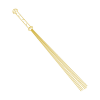
Switch
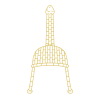
Unwẹnrhiẹnọtan
Switch

The Unwẹnrhiẹnọtan (switch) is made from branches of a tall shrub and is held by the Ọba and certain chiefs, such as the Osuan and Ooton, during sacrificial rituals and ceremonies, particularly Ugie Erha Ọba. Figures carrying Unwẹnrhiẹnọtan are depicted in brass on the Ama-Ẹrọnmwọn (bronze relief plaques) and also carved in ivory on the Aken'ni Elao (altar tusk).

According to Barbara Blackmun, the Unwẹnrhiẹnọtan “is required whenever the sacrifice of a living creature takes place within the Ọba’s palace complex, to drive away intrusive spiritual forces. The upright position of this essential implement suggests that the person who holds it is about to preside over a sacrificial ceremony.”

2 annotations
Unwẹnrhiẹnọtan
Unwẹnrhiẹnọtan
Headdress/crown with single projection
Oro
Headdress/crown with single projection

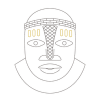
Figures wearing a headdress with a single protrusion from the crown of the head, known as the Oro, are found only among the Ọba and a select category of palace dignitaries whose ancestors originated in ancient Ile Ife. Only the Osa and Osuan, custodians of the Uwen and Ora deities, as well as members of the Emuru, who are responsible for the care of Iru vessels, may wear a headdress with the Oro. The identification of different figures is therefore interpreted based on the combination of the Oro with other items of regalia. Artists in the Igun-Ẹrọnmwọn and Igbesamwan depicted figures with the Oro on Ama-Ẹrọnmwọn (bronze relief plaques) and Aken'ni Elao (carved tusks), respectively. The Oro would either be made of coral beads as part of the crown or headdress, or be woven from itoto fibre.

3 annotations
Oro
Oro
Oro
Ram
Ogho
Ram

The Ogho (ram) is associated with masculine and aggressive qualities, bravery and agility in Edo belief, as well as with conflict and trouble. Due to these symbolic associations, the Ogho is one of the animals often used for sacrifice, particularly at the Ikẹgobọ (altar to the hand), as an offering associated with physical strength and power. Rams, particularly ram’s heads, are a common motif used to decorate the flanges of Uhunmwu-Elao (commemorative heads), as well as serving as the central decorative motif on pendant plaques. These Ogho pendant plaques are believed to have been worn by the Ọba, based on evidence from depictions of a figure interpreted as Ọba Ewuakpe. According to Barbara Blackmun, the Ogho head motif was one of the dynastic motifs that were revived during the 18th century. The widespread use of the ram’s head motif suggests connections with other southern Nigerian casting centres, such as Ife, Owo, and the Lower Niger Bronzes.

In addition to the ram’s head motif, two unusual aquamaniles in the form of whole Ogho figures were also cast by artists from the Igun-Ẹrọnmwọn.

2 annotations
Ogho
Ogho
Forehead markings
Ikharo
Forehead markings

Ikharo are linear keloid markings depicted on the forehead of Uhunmwu-Elao (commemorative heads) in groups of three or four above each eye. The exact meaning of Ikharo is debated; some have argued that they relate to the gender or tribal identification of the person on whom they are depicted. For example, Gabriel Ọbazee has argued that they were worn only by men; however, their use in depictions is not consistent with this, and the Iy’Ọba are also shown wearing them. Flora Kaplan argued that they are instead a stylistic feature employed by artists that varied over time.

The naming of these markings differs between publications. For example, Ekhaguosa Aisien and Joseph Nevadomsky describe these markings as “agbaguda n'ehae”, which they write translates literally as “blades of the forehead”. However, Aisien later went on to call these “ikharo”, as used here. Kate Ezra referred to these forehead markings as ikharo, meaning “tribal mark [of eye]”.

3 annotations
Ikharo
Ikharo
Ikharo
Colar Bead
Odigba
Coral beaded collar

Odigba (beaded collar) is a rigid neck collar made of beads, worn as part of ceremonial attire only by senior princes who have been made Enigie. Although Ibafe (2007, p. 43) argued that the Odigba was introduced during the Ogiso period (c. 900–c. 1170 AD) by Ogiso Ere, along with other symbolically important Emwin Arre, such as the Ada (ceremonial sword) and the Ebẹn (ceremonial sword). The Odigba was initially made of beads, while coral was incorporated only later, following its introduction through trade with Portuguese merchants in the late fifteenth century.

3 annotations
Odigba
Odigba
Odigba
Osuan
Osuan
Osuan

“Only Osa and the Osuan know what is in the palm frond”.

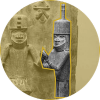
The title of Osuan is paired with that of Osa, and both were created by Ọba Ewuare I to protect the Ọba and the Edo people as a whole. According to Inneh, the Osuan is responsible for Ora, the deity associated with fertility. The Osuan is therefore responsible for ensuring the fecundity of the land and people of the Kingdom.

During ceremonies such as Ugie and Oduduwa, the Osa and Osuan support the Ọba on either side, a pose that is frequently reflected in the visual language of Emwin Arre (royal treasures). Both are often depicted wearing basketry headwear with a pointed Oro projection, similar to the headwear still worn by holders of these titles today. The Osuan, as well as other members of the Ooton guild to which the titleholder belongs, are often depicted holding an Unwẹnrhiẹnọtan (switch) in one or both hands. This pose reflects the historical role of the Osuan during sacrificial ceremonies, when the Unwẹnrhiẹnọtan was held aloft to “fend off intrusive spirits that crowded around as the victim died”.

During the Igue festival, both the Osa and Osuan wrap raffia palm cloth around their waists, which “indicate[s] the deep secrecy of the inner details of the palace worship and Ugie ceremonies”.

1 annotation
Osuan
Emuru figures
Emuru
Emuru figures

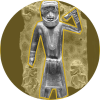
The Emuru are a guild established during the reign of Ọba Ẹwuare I, who appointed its members to care for the sacred Uru (brass vessels). The Emuru are responsible for ensuring that the Uru are brought to the palace for the festivals and ceremonies in which they are required, including Ugie.

Members of the Emuru are represented on both Ama-Ẹrọnmwọn (bronze relief plaques) and Aken'ni Elao (carved tusks), although their appearance differs between the two media. On the Ama-Ẹrọnmwọn, artists from the Igun-Ẹrọnmwọn depict Emuru carrying sacred Uru topped with a ram’s-head finial and flanked by coiled braids. Like the Osa and Osuan, members of the guild were permitted to wear the tall Oro projection woven from itoto fibre extending from the crown. They also wear a chain around the hips and skirts with patterned sashes hanging down on either side.

On Aken'ni Elao produced from the 18th century onward, however, the Emuru are generally depicted in a more simplified form. In all but one known example, they carry a simplified Uru without the ram’s-head finial, holding it directly in front of the torso rather than on the left shoulder. Their skirt-like garments are also replaced by a traditional wrapper. The single exception is an Aken'ni Elao dated to approximately 1730–1750. Here, the Emuru remain simplified, but the figures retain the Oro projection on their crowns; the characteristic coiled braids are absent and their clothing is likewise simplified.

2 annotations
Emuru
Emuru
hairstyles
Eto
hairstyles

Hairstyles are used to determine a person's status in the society, as chiefs, common folks, chief's wives and the wives of the Ọba all wear different hairstyles. We have Okuku, Ikpe~okhokho, Idu~akpata

3 annotations
Eto
Eto
Eto

Provenance

5 events
Production
1504 (approximate) to 1550 (approximate)
Production of the Ama-Ẹrọnmwọn by the Igun-Ẹrọnmwọn guild in Benin City
Loot
February 19, 1897 (day approximate) to June 1899 (month approximate)
Looting of the Emwin Arre - Inalienable Cultural Artefacts - during the Invasion of the Benin Kingdom in February 1897 and until the end of overt military activity in June 1899
Transfer
March 19, 1897 (day approximate)
Transfer of the Ama-Ẹrọnmwọn prize group to the British Foreign Office by Consul General Ralph Moor
Loan
September 7, 1897 to January 1898 (month approximate)
Loan and exhibition of the Foreign Office Ama-Ẹrọnmwọn group to the British Museum, September 1897
Donation
January 15, 1898
Donation of part of the British Foreign Office Ama-Ẹrọnmwọn group to the British Museum, January 15th, 1898

Related archival documents

3 documents
See all
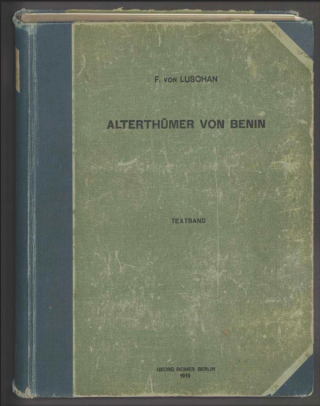
Museum Catalogue
Staatsbibliothek zu Berlin
Die Altertümer von Benin
Date
January 1, 1919 at 12:00:00 AM
An archival document representing a Research notes of 1 page(s)
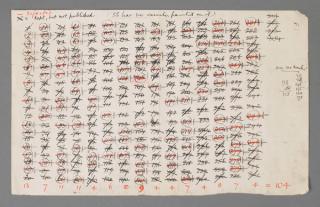
Research notes
British Museum
Fate of the Benin bronze plaques
Date
some day in March 1897 to sometime in 1899
An archival document representing a Research notes of 1 page(s)
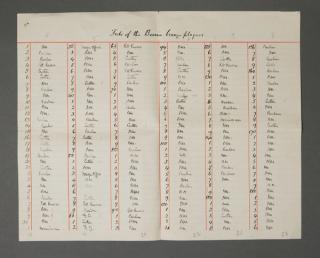
Research notes
British Museum
Foreign Office plaques retained and dispersed
Date
January 1, 1899

Institution data

British Museum
The data was transferred directly by the institution.
Last updated: 2025-06-10
Language: english
Institution fieldValue
Registration number
object id
Af1898,0115.65
Additional IDs
object id
48 (Foreign Office number)
PRN
object id
EAF26507
Object Type
designation
plaque
Description
description
Relief plaque, lost-wax cast in brass. Wide plaque, rectangular in form with side flanges. Background surface decorated with river leaf patterns and stippling. Two nail holes at top centre and right; two holes at midway left and right. Depicts three titleholders, facing front. Emuru figures at centre and left hold ram-headed rattles in left hands. Figures have elaborate tiered hairstyles with coiled plaits at either side and oro protrusion. Large bead on forehead and marks along nose. Wear deep beaded collars, multi-string necklaces, bracelets and beaded anklets. Dressed in patterned skirts with side panels and chain belt. Osuan high priest figure on right holds switch in each hand. Priest has divided hairstyle with oro protrusion. Wears deep beaded collar and beaded anklets. Dressed in long-sleeved patterned tunic with fringe at hem.
Ethnic name (made by)
ethnic attribution
Edo
Date
date made
16thC-17thC
Production place
production place
Made in: Benin City
Findspot
place collected
Found/Acquired: Benin City
Materials
material
brass
Technique
production technique
lost-wax cast
Dimensions
dimensions
Height: 42.70 cm~Width: 38.00 cm~Depth: 7.20 cm~Weight: 9.80 kg
Curator’s comments
provenance
The relief brass plaques that used to decorate the Oba's (king's) palace are among the most well-known of all the royal arts of Benin. Although frequently described as 'Benin Bronzes' most plaques are made of leaded brass in various compositions. It is widely accepted that they date to the 16th-17th centuries. In the years prior to the British royal influence in Benin was increasingly under threat from rival powers, both internal and external, with a focus on economic power and control of the important trading monopolies. However, the court and palace remained the political and spiritual centre of the Benin Kingdom. Earlier accounts written by Europeans visiting the city describe its size and scale. The palace complex was set up around atrium courtyards; some had galleries with wooden pillars supporting the roof. Brass plaques, probably made in matching pairs, were fixed to these pillars. The Benin brass plaques represent a distinct and unique corpus of work, unparalleled elsewhere on the continent. They are cast using the cire perdue (lost wax) technique and show significant variation in the depth of the relief. Some of the plaques portray historical events or commemorate successful wars, while others are a vivid depiction of Benin court life and ritual. Several groups of plaques show clear stylistic similarities. William B. Fagg suggested that these plaques represent the work of master brass casters. Fagg, William, 1973, 'Nigerian Images', London: Lund Humphries Gunsch, Kathryn, 2018, 'Benin plaques: a 16th century imperial monument', London: Routledge, Taylor and Francis Group ; Emuru figures are members of ancient guild that serves within palace. Hold sacred iru vessels (rattles) in hands. Osuan high priest holds flexible uwenrhien-otan switch used at all sacrifical rituals that take place within the palace. Used to fend off intrusive spirits. ; Part of Cow Sacrifice Set. Row 2A. (Gunsch, 2018). High priest Osuan and two members of Emuru guild.
Bibliographic references
bibliography
Gunsch 2018: p.188 (2A); p.189, fig. 6.72; pp.190-1
Exhibition history
exhibition history
Exhibited: 1965, Oxford, Pitt Rivers Museum, Art from the Guinea Coast 1970-1973, London, Museum of Mankind, Divine Kingship in Africa
Condition
condition
Fair; missing small sections from top right and left corners. Small section missing from top centre edge. Entire bottom edge missing. Sections of flange missing from top and bottom right side.
Subjects
iconography
palace/mansion
Associated events
event
Associated Event: British to Benin City - Feb 1897
Acquisition name (acquisition)
provenance
Secretary of State for Foreign Affairs
Acquisition date
accession date
1898
Acquisition notes (excavation)
provenance
This plaque was looted during the British to Benin City in 1897.
Sensitive content

Sensitive Content Digital Benin includes colonial material that may contain inaccurate, derogatory or harmful language relating to African and African diasporic communities. Such language may appear in catalogue records, transcriptions, and book, exhibition or museum titles. We recognize that this material may cause distress. Sensitive-content warnings are being implemented across the collection, but this process is ongoing. The language does not reflect Digital Benin’s views; we take an anti-colonial and anti-racist position and are committed to centring the humanity of historically marginalised communities.

Read more about our approach