Osuan
“Only Osa and the Osuan know what is in the palm frond” ( )
The title of Osuan is paired with that of Osa, and both were created by Ọba Ewuare I to protect the Ọba and the Edo people as a whole ( ). According to Inneh ( ), the Osuan is responsible for Ora, the deity associated with fertility. The Osuan is therefore responsible for ensuring the fecundity of the land and people of the Kingdom ( ).
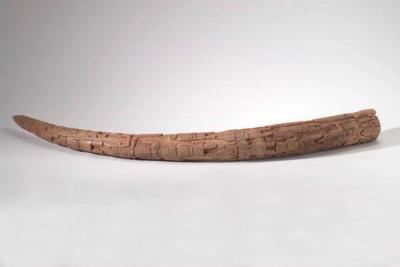
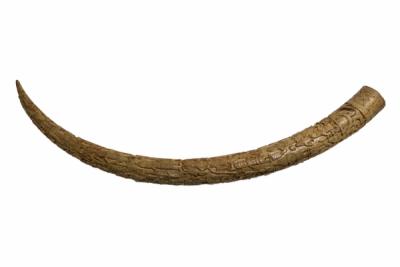
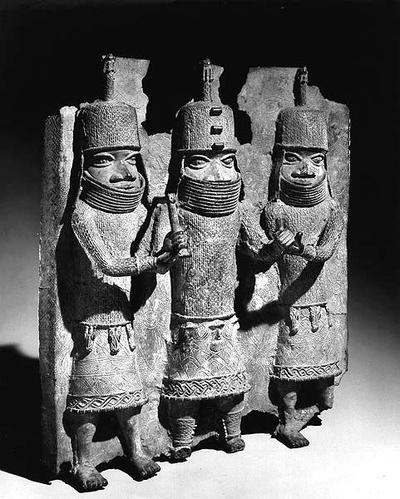
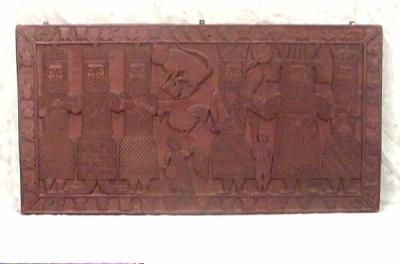
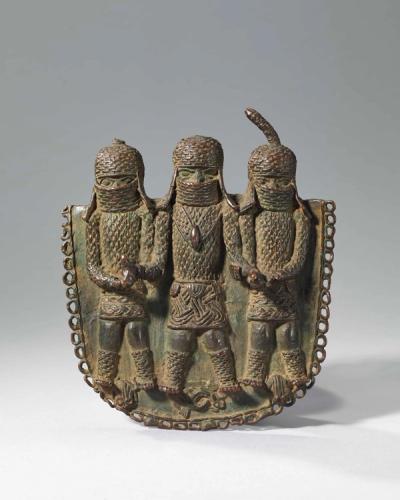
During ceremonies such as Ugie and Oduduwa, the Osa and Osuan support the Ọba on either side, a pose that is frequently reflected in the visual language of Emwin Arhe (royal treasures) ( ). Both are often depicted wearing basketry headwear with a pointed Oro projection, similar to the headwear still worn by holders of these titles today ( ). The Osuan, as well as other members of the Ooton guild to which the titleholder belongs, are often depicted holding an Unwẹnrhiẹnọtan (switch) in one or both hands. This pose reflects the historical role of the Osuan during sacrificial ceremonies, when the Unwẹnrhiẹnọtan was held aloft to “fend off intrusive spirits that crowded around as the victim died” ( ).
During the Igue festival, both the Osa and Osuan wrap raffia palm cloth around their waists, which “indicate[s] the deep secrecy of the inner details of the palace worship and Ugie ceremonies” ( ).
Digital Benin collates digital material from institutions, and some of this material is inherently colonial and contains words, terms and phrases that are inaccurate, derogatory and harmful towards African and African diasporic communities. Catalogue transcriptions, book titles, exhibition titles and museum titles may contain harmful terms. We recognise the potential for the material to cause physical and mental distress as well as evoke strong emotions. Owing to the scale of the collection’s data, a process to implement sensitive-content warnings in the displayed data is still incomplete. The material within the catalogue does not represent Digital Benin’s views. Digital Benin maintains a strong anti-colonial, anti-racist position and affirms its support for centring the humanity of historically marginalised and disenfranchised communities. Read more about the background of this statement here