Ogho
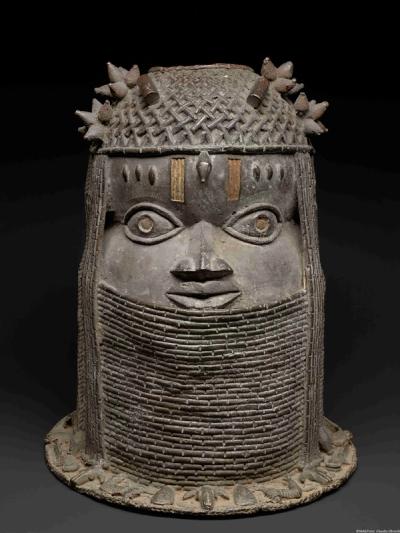
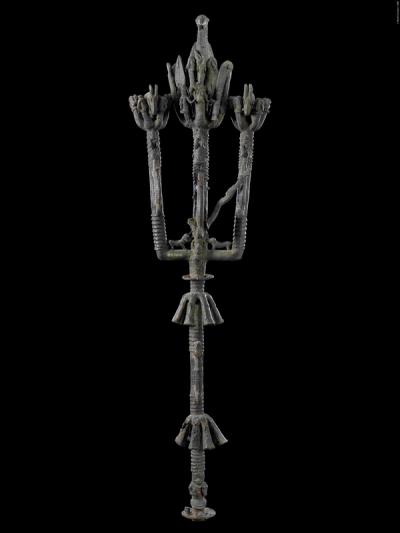
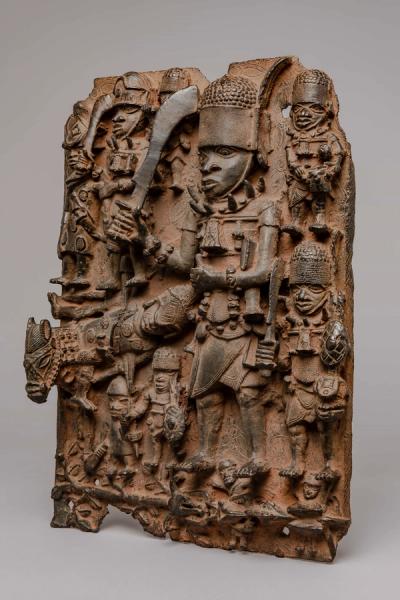
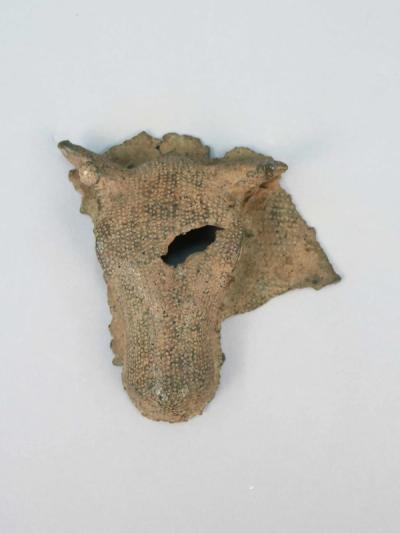
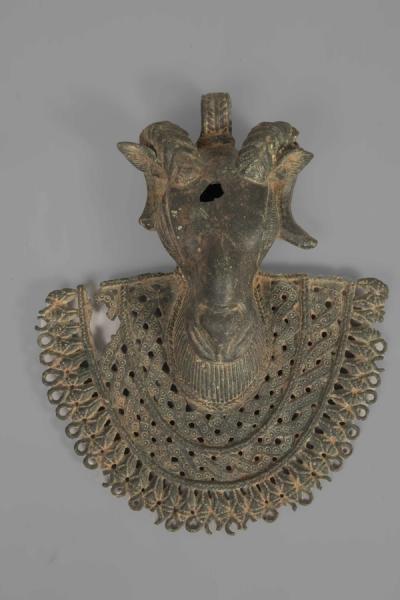
The Ogho (ram) is associated with masculine and aggressive qualities, bravery and agility in Edo belief, as well as with conflict and trouble ( ). Due to these symbolic associations, the Ogho is one of the animals often used for sacrifice, particularly at the Ikẹgobọ (altar to the hand), as an offering associated with physical strength and power. Rams, particularly ram’s heads, are a common motif used to decorate the flanges of Uhunmwu-Elao (commemorative heads), as well as serving as the central decorative motif on pendant plaques. These Ogho pendant plaques are believed to have been worn by the Ọba, based on evidence from depictions of a figure interpreted as Ọba Ewuakpe ( ; ). According to Barbara Blackmun ( ), the Ogho head motif was one of the dynastic motifs that were revived during the 18th century. The widespread use of the ram’s head motif suggests connections with other southern Nigerian casting centres, such as Ife, Owo, and the Lower Niger Bronzes.
In addition to the ram’s head motif, two unusual aquamaniles in the form of whole Ogho figures were also cast by artists from the Igun-Ẹrọnmwọn.
Digital Benin collates digital material from institutions, and some of this material is inherently colonial and contains words, terms and phrases that are inaccurate, derogatory and harmful towards African and African diasporic communities. Catalogue transcriptions, book titles, exhibition titles and museum titles may contain harmful terms. We recognise the potential for the material to cause physical and mental distress as well as evoke strong emotions. Owing to the scale of the collection’s data, a process to implement sensitive-content warnings in the displayed data is still incomplete. The material within the catalogue does not represent Digital Benin’s views. Digital Benin maintains a strong anti-colonial, anti-racist position and affirms its support for centring the humanity of historically marginalised and disenfranchised communities. Read more about the background of this statement here