Loading...
Catalog Number
80B:R:39
Institution
Omo n'Oba n'Edo Uku Akpolokpolo, Ọba of Benin & National Commission for Museums and Monuments, Nigeria Edo designations

English designations
Institution Location
1 Adesogbe (Plymouth) Road, P.M.B. 1115, Benin City , Edo State
Catalog Number
80B:R:39
Institution
Omo n'Oba n'Edo Uku Akpolokpolo, Ọba of Benin & National Commission for Museums and Monuments, Nigeria Edo designations
English designations
Girdle
Institution Location
1 Adesogbe (Plymouth) Road, P.M.B. 1115, Benin City , Edo State
Iconographies
1
annotations

Ahianmwẹ
Birds
1 annotation

Provenance
3
events
Institution data
Omo n'Oba n'Edo Uku Akpolokpolo, Ọba of Benin & National Commission for Museums and Monuments, Nigeria
The data was transferred directly by the institution and digitized by Digital Benin in collaboration with the NCMM
Last updated: 2023-11-30
Languages: english, bini; edo
| Institution field | Value |
|---|---|
Catalog Number object id | 80B:R:39 |
Material material | Bronze |
Dimension H (cm) dimensions | 3 |
Dimension W (cm) dimensions | 2 |
Dimension L (cm) dimensions | 13 |
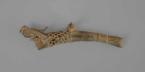
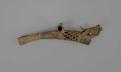
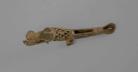
Description description | Ugbẹkun (girdle) is the literal translation for ‘objects which are tied around the waist’. Ugue-egen is another word which can be used to describe a girdle-like object. These may be worn by the Ọba or chiefs either underneath or on top of clothing. When underneath, medicine or potent charms may be added for protection. When worn over clothing, pendant masks may be hung from the girdle. Included in the institution data is a leather object called Akpalode, which is a girdle produced by Isekpokin, the royal leather workers, and is infused with herbs and medicine worn by warriors for protection. Also included in the institution data is an object known as Ukugbohamwen, which is worn by the Ọba and the great chiefs during ceremonies. When Ukugbohamwen is worn the Ọba does not feel hunger, and it is believed that he could wear it for two weeks without food or drink. Ugbẹkun could be made from a range of materials, from animal skins to textiles to beads. Some feature a rectangular section made from textile or beads at the front, similar to an apron. A rare example is cast in brass and is known as ‘Enowe’s girdle’. Enowe was a giant Edo warrior and wore this girdle along with vessels of medicine from Osun to protect him in battle (Peek, 2021, p.175). |
Object count object count | 3 |
Associated Guild producer | Igun Ẹrọnmwọn |
Production Place production place | Benin City |
URL weblink | https://digitalbenin.org/catalogue/36_80BR39 |
Production Technique production technique | Casting |
P.N. object id | |
Diameter dimensions | |
Title designation | |
Date Made date made | |
Inscription inscriptions | |
fileNames images | 80BR39_1.jpg, 80BR39_3.jpg, 80BR39_2.jpg |
Omo n'Oba n'Edo Uku Akpolokpolo, Ọba of Benin & National Commission for Museums and Monuments, Nigeria
The data was transferred directly from the institution and transcribed by the Digital Benin from Catalogue Cards.
Last updated: 2021-01-15
Language: english
| Institution field | Value |
|---|---|
Catalogue No object id | 80B:R:39 |
Description description | A fragment of waist bangle, with a bird design at the dorsal anterior part which is attached to the main body. There is also a small horn-like object attached to the main body at the dosal potion. There is a net design in the main body in between the bird and the horn-like dosal attached to the objects. There are lines running a design at the handle. |
Material material | Bronze |
Diam dimensions | |
Dimension H (cm) dimensions | 13 |
Dimension L (cm) dimensions | |
Dimension W (cm) dimensions | |
Weight KG weight | 0.3 |
Classification object type | A Fragment of Waist Bangle "Bronze" |
Patina and colour colour | Greenish Brown |
Method of Manufacture production technique | Casting |
State production place | Bendel |
Later Notes provenance | |
Vendor provenance | |
Ethnic Group ethnic attribution | Edo |
Division department and institution | |
Condition Incl condition | Fair |
Photo Number images | 2:23:12 |
P.N. object id | |
Price value | |
Signature of Cataloguer | Pat Ugowe |
Sections
About
Other
Sensitive content
Sensitive Content Digital Benin includes colonial material that may contain inaccurate, derogatory or harmful language relating to African and African diasporic communities. Such language may appear in catalogue records, transcriptions, and book, exhibition or museum titles. We recognize that this material may cause distress. Sensitive-content warnings are being implemented across the collection, but this process is ongoing. The language does not reflect Digital Benin’s views; we take an anti-colonial and anti-racist position and are committed to centring the humanity of historically marginalised communities.