Ahianmwẹ
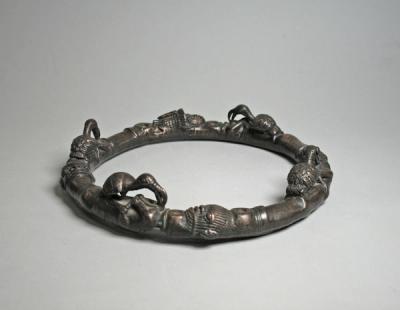
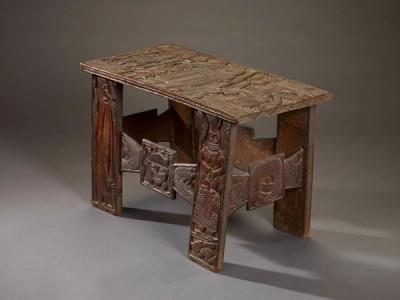
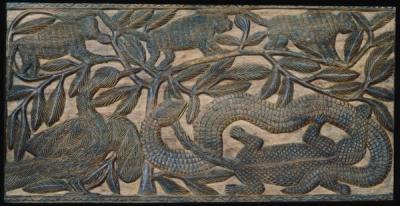
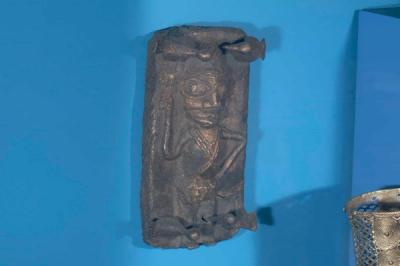
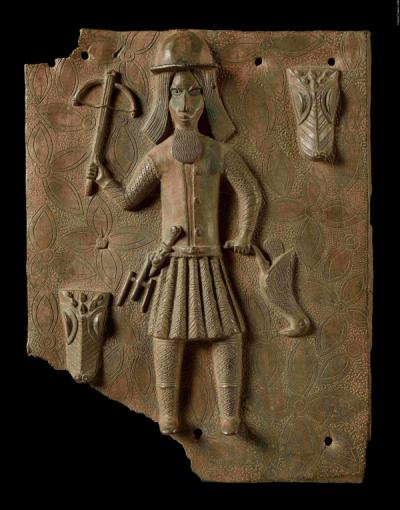
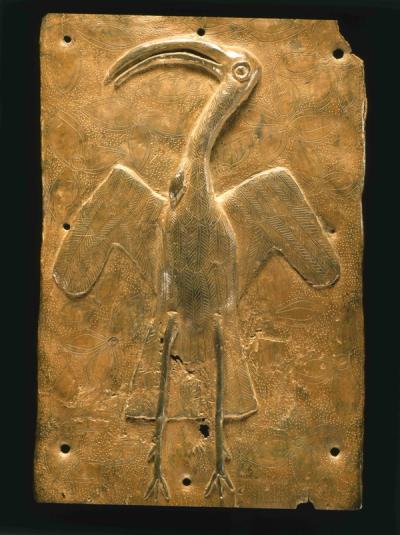
A variety of different kinds of Ahianmwẹ (birds) were depicted by artists from the palace guilds on royal artefacts over the centuries. The precise identification and interpretation of these birds, and the meanings attributed to them, vary. Some of the most commonly depicted are the Akala (white-backed vulture), Oɛɣohɔ (vulturine fish eagle), and Esughusughu (owl).
The Akala is usually depicted on top of Osogan, potent staffs kept by priests for the worship of Osun. Its ewawa (beak) is associated with the azen (witches), and the Akala is associated with “death, abandonment, morbidity, and spoils” ( ). The Oɛɣohɔ is known as the “king of the day birds,” and its feathers are often worn by chiefs in their headwear as symbols of respected old age and proper chieftaincy ( ).
Digital Benin collates digital material from institutions, and some of this material is inherently colonial and contains words, terms and phrases that are inaccurate, derogatory and harmful towards African and African diasporic communities. Catalogue transcriptions, book titles, exhibition titles and museum titles may contain harmful terms. We recognise the potential for the material to cause physical and mental distress as well as evoke strong emotions. Owing to the scale of the collection’s data, a process to implement sensitive-content warnings in the displayed data is still incomplete. The material within the catalogue does not represent Digital Benin’s views. Digital Benin maintains a strong anti-colonial, anti-racist position and affirms its support for centring the humanity of historically marginalised and disenfranchised communities. Read more about the background of this statement here