Loading...


ID
200251
Institution
Omo n'Oba n'Edo Uku Akpolokpolo, Ọba of Benin & National Commission for Museums and Monuments, Nigeria Restituted
Previously owned by Ethnologisches Museum, Staatliche Museen zu Berlin
Edo designations

English designations
Categories
Institution Location
1 Adesogbe (Plymouth) Road, P.M.B. 1115, Benin City , Edo State
ID
200251
Institution
Omo n'Oba n'Edo Uku Akpolokpolo, Ọba of Benin & National Commission for Museums and Monuments, Nigeria Restituted
Previously owned by Ethnologisches Museum, Staatliche Museen zu Berlin
Edo designations
English designations
Bell
Categories
Altar & Shrine Objects
Musical Instruments
Institution Location
1 Adesogbe (Plymouth) Road, P.M.B. 1115, Benin City , Edo State
Iconographies
1
annotations

Uhunmwu Ikpotoki
Portuguese Head
1 annotation

Provenance
5
events
Institution data
Ethnologisches Museum, Staatliche Museen zu Berlin
The data was transferred directly by the institution.
Last updated: 2021-06-14
Language: german
| Institution field | Value |
|---|---|
ID object id | 200251 |
Sachbegriff designation | Sachbegriff: Glocke; Sachbegriff: Bronzeglocke |
Titel designation | |
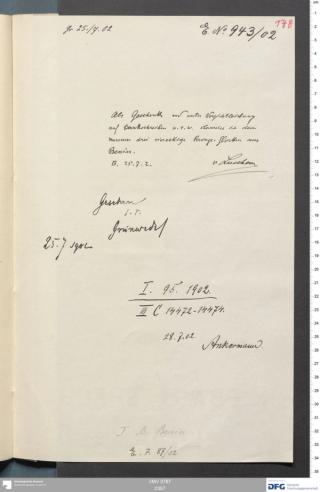
Objektref. description | III C 14474, Beninglocke; E 943/1902, Erwerbung: I/95/1902: III C 14472-14474, 3 Bronzeplastiken (Benin), Schenkung Prof. v. Luschan, 1902, Felix von Luschan (11.8.1854 - 7.2.1924) |
Texte Online description | Online Beschreibung, [Benin_Königreich] |
Material / Technik material | Material: Messing; Ausgabe: Messing |
Material / Technik // Alle material | Messing, Messing |
Maße dimensions | ca. 8,60 x 5,00 x 5,50 cm; 0,15 kg |
Objekttyp object type | Musikinstrument |
Sachbegr. Ausgabe object type | Glocke |
Anzahl Teile object count | 1 |
Datierung date made | 18. Jh. - 19. Jh. |
Geogr. Bezüge production place | Nigeria ( Land ); Benin ( Königreich ) |
Geogr. Bezüge // Alle production place | Nigeria, Benin |
Beteiligte prior source | Felix von Luschan (11.8.1854 - 7.2.1924), Veräußerer |
Beteiligte // (Name, Sortierung=kleinste) prior source | Luschan, Felix von |
Veräußerer prior source | null |
Erwerb. Notiz provenance | Notiz: Rückführung Leipzig; Ausgabe: 18. Jh. - 19 Jh., Auftrag bei der Messinggießergilde Igun Eronmwon im Königreich Benin; vermutlich geplündert im Zusammenhang mit der britischen Eroberung von Benin, 1897; in unbekanntem Besitz nach Feb. 1897; erworben vom Museum für Völkerkunde als Geschenk von Felix von Luschan, 1902. |
Verw. Institution department and institution | Ethnologisches Museum, Staatliche Museen zu Berlin |
Erwerb. Datum accession date | 1902 |
Besitzart accession method | |
Erwerbungsart accession method | Schenkung |
Digital Assets images | III C 14474.JPG, Repro Digitalisat |
Erwerb. Nr. | I/95/1902 |
Ident. Nr. object id | III C 14474 |
Ident. Nr. // (Sortiernr.) object id | 0003 C 14474 |
Obj. Status | vorhanden |
object_images/creator license | Jörg von Bruchhausen |
Sections
About
Other
Sensitive content
Sensitive Content Digital Benin includes colonial material that may contain inaccurate, derogatory or harmful language relating to African and African diasporic communities. Such language may appear in catalogue records, transcriptions, and book, exhibition or museum titles. We recognize that this material may cause distress. Sensitive-content warnings are being implemented across the collection, but this process is ongoing. The language does not reflect Digital Benin’s views; we take an anti-colonial and anti-racist position and are committed to centring the humanity of historically marginalised communities.