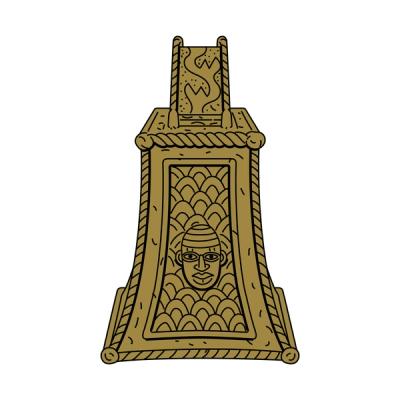
Ẹroro
Ẹroro are an important part of the spiritual worship of Benin people. They are lined along the front of the ancestral altar and are used to summon the ancestors to join their descendants and partake in the ceremony.
In English, the term bell is used to describe the objects described as Ẹroro as well as Aza. Most bells are Ẹroro and are made from brass and less commonly ivory. The clappers can be made of brass/bronze, iron, bone or wood. Ẹroro, which are quadrangular in form, were also depicted in other objects, such as plaques and sculptures of individuals. These offer an insight into how such objects were used and indeed worn, usually as part of regalia worn by the Ọba, chiefs and warriors. For example, quadrangular bells are seen being worn around the necks of warriors on relief plaques.
Educational Material
Digital Benin collates digital material from institutions, and some of this material is inherently colonial and contains words, terms and phrases that are inaccurate, derogatory and harmful towards African and African diasporic communities. Catalogue transcriptions, book titles, exhibition titles and museum titles may contain harmful terms. We recognise the potential for the material to cause physical and mental distress as well as evoke strong emotions. Owing to the scale of the collection’s data, a process to implement sensitive-content warnings in the displayed data is still incomplete. The material within the catalogue does not represent Digital Benin’s views. Digital Benin maintains a strong anti-colonial, anti-racist position and affirms its support for centring the humanity of historically marginalised and disenfranchised communities. Read more about the background of this statement here