
Ughegbe
“One does not look at a mirror with bad eyes; if you are angry or hostile, you do not want to look into the mirror” ( ).
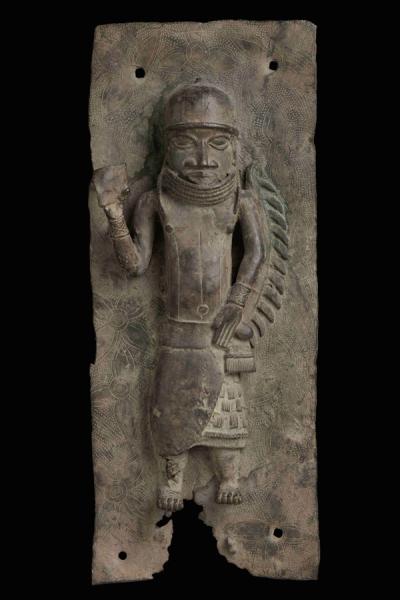
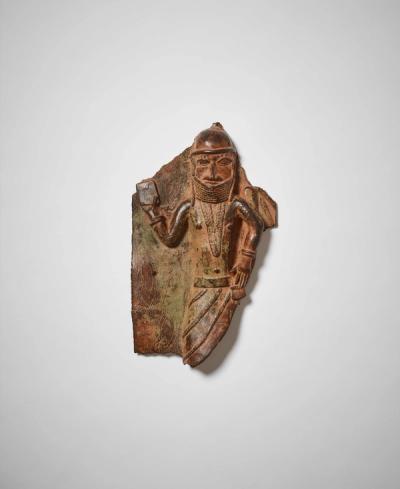
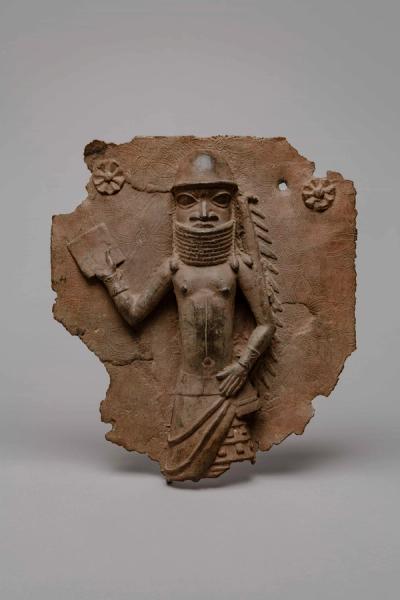
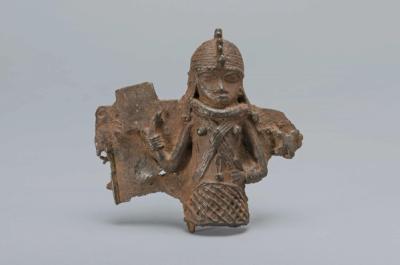
Ughegbe (mirrors) were not only utilitarian objects in the Benin Kingdom but also spiritually and symbolically potent. Their reflective surfaces were understood as a means of seeing spirits and deities ( ; Okunoghae in Bradbury 1960, 4). Mirrors are also associated with Olokun, their reflective surfaces being compared to the smooth, shimmering surface of the water in Olokun’s realm. They are associated with beauty and peace and are understood to have a protective function, allowing users to see danger before it arrives and to “scatter evil away” ( ). When depicted on Emwin Arhe (royal treasures), such as brass Urhotọ, Ughegbe are often held up by attendants around figures such as the Iy’Ọba, seemingly serving as a form of protection.
Ughegbe were among the trade goods brought to the Benin Kingdom by European merchants and were therefore also valuable prestige objects ( ). They were usually placed inside carved wooden frames with sliding covers that protected the mirror when not in use. Barbara Blackmun ( ) suggests that, given the spiritual nature of mirrors, these covers served more than a practical protective function: they also closed “the cosmic window,” thereby shielding the owner from beings that might otherwise emerge undetected from the reflection.

Digital Benin collates digital material from institutions, and some of this material is inherently colonial and contains words, terms and phrases that are inaccurate, derogatory and harmful towards African and African diasporic communities. Catalogue transcriptions, book titles, exhibition titles and museum titles may contain harmful terms. We recognise the potential for the material to cause physical and mental distress as well as evoke strong emotions. Owing to the scale of the collection’s data, a process to implement sensitive-content warnings in the displayed data is still incomplete. The material within the catalogue does not represent Digital Benin’s views. Digital Benin maintains a strong anti-colonial, anti-racist position and affirms its support for centring the humanity of historically marginalised and disenfranchised communities. Read more about the background of this statement here