Emada
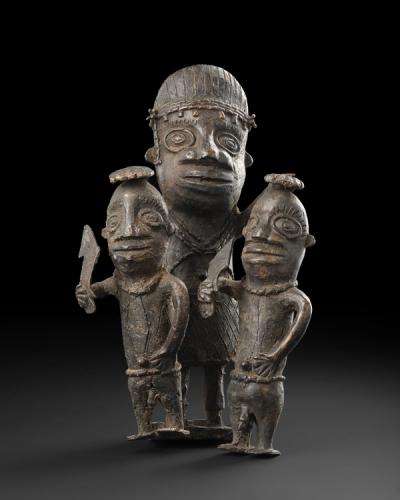
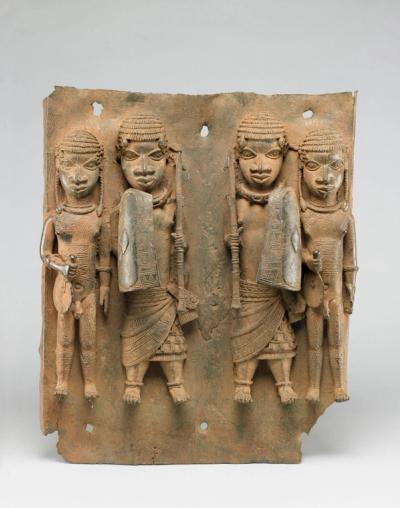
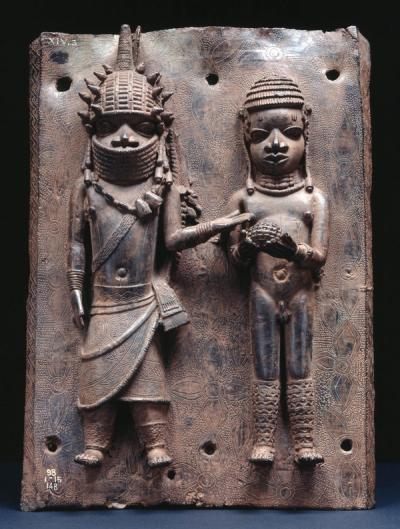
The Emada (singular: Omada) are palace pages who serve the Ọba and belong to the Iwegue Palace Society. Standing at the Ọba’s side, they carry the stately Ada (ceremonial sword) during public appearances and are therefore sometimes referred to as “Ada bearers” ( ). Emada typically served the Ọba for between six and twenty years, beginning in childhood. At the end of their service, the Ọba would provide each Omada with a wife and a plot of land, formally releasing him from palace service and marking his transition into adulthood (Kaplan 2007, p. 149).
Although the institution of the Emada predates his reign, Ọba Adolo was the first to allow his palace pages to train in woodcarving. This led to the development of a distinctive carving style and visual language that differed from that of the Igbesamwan, the royal guild of wood and ivory carvers.
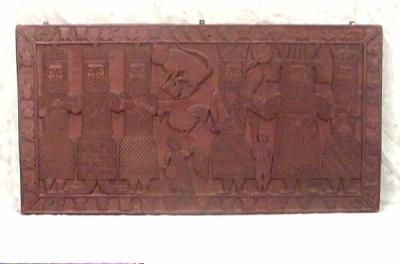
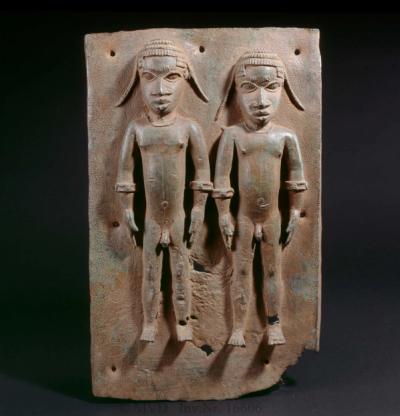
Emada are consistently depicted naked, signifying their unmarried status ( ; ), and are most commonly shown accompanying representations of the Ọba. In addition to carrying the Ada, they may hold Ẹzuzu (fans), used to cool the Ọba, or Ugianranran (manillas), which signal wealth and overseas trade ( ). Emada appear across several types of Emwin Arhe (royal treasures), particularly Ama-Ẹrọnmwọn (bronze relief plaques), Aken'ni Elao (carved tusks), and Urhotọ (altar tableaux).
Digital Benin collates digital material from institutions, and some of this material is inherently colonial and contains words, terms and phrases that are inaccurate, derogatory and harmful towards African and African diasporic communities. Catalogue transcriptions, book titles, exhibition titles and museum titles may contain harmful terms. We recognise the potential for the material to cause physical and mental distress as well as evoke strong emotions. Owing to the scale of the collection’s data, a process to implement sensitive-content warnings in the displayed data is still incomplete. The material within the catalogue does not represent Digital Benin’s views. Digital Benin maintains a strong anti-colonial, anti-racist position and affirms its support for centring the humanity of historically marginalised and disenfranchised communities. Read more about the background of this statement here