Ekhara
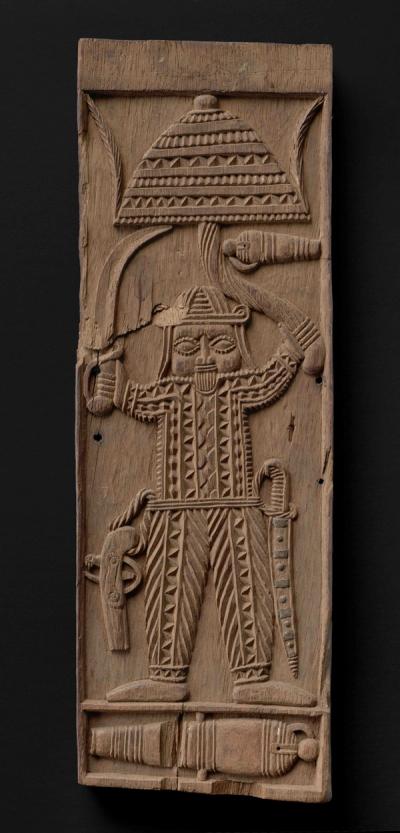
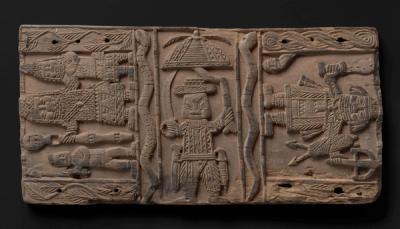
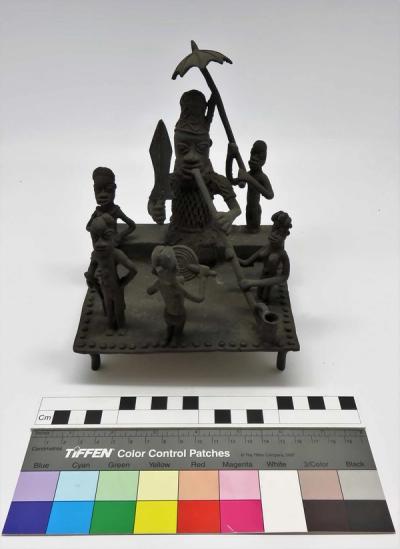
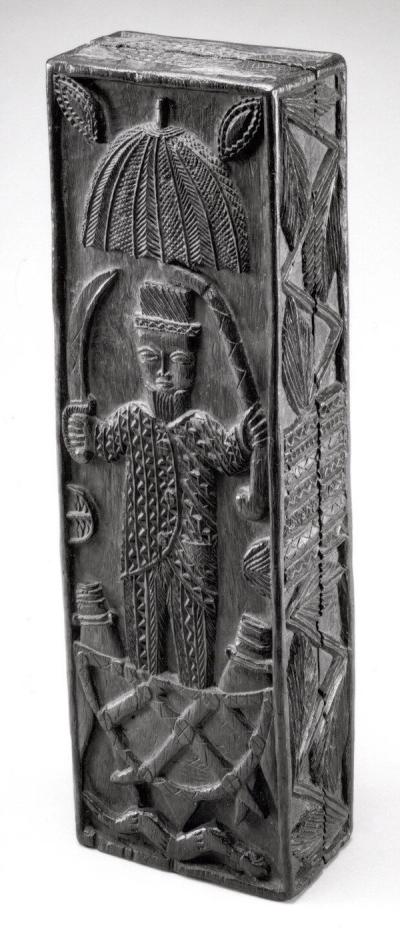
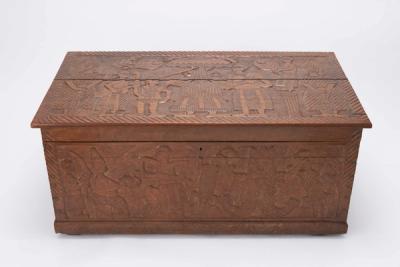
Ekhara (umbrellas) play a multifaceted role in Benin art, reflecting both their function as status symbols and their association with European visitors. On some Ama-Ẹrọnmwọn (bronze relief plaques), sunshades resembling Asa are held by the Ọba’s attendants to protect him from the sun. European-style Ekhara, as we know them today, are also depicted in late 19th-century wooden carvings produced by the Emada. In her analysis of the Aken'ni Elao, Barbara Blackmun ( ) observed that on earlier objects, umbrellas were generally depicted only in the hands of foreign figures rather than those identified as members of the Benin Kingdom.
On later objects, particularly those dating to the late 19th century, this changes. The Ọba and high-ranking chiefs such as the Ezọmọ are depicted being shielded from the sun by attendants carrying Ekhara, a practice also described by Europeans visiting Benin City (e.g., ). Like many imported luxury goods, the Ekhara was incorporated into the visual language of royal power and became an important status symbol, associated with the wealth, authority, and elevated position of those permitted to use it.
Digital Benin collates digital material from institutions, and some of this material is inherently colonial and contains words, terms and phrases that are inaccurate, derogatory and harmful towards African and African diasporic communities. Catalogue transcriptions, book titles, exhibition titles and museum titles may contain harmful terms. We recognise the potential for the material to cause physical and mental distress as well as evoke strong emotions. Owing to the scale of the collection’s data, a process to implement sensitive-content warnings in the displayed data is still incomplete. The material within the catalogue does not represent Digital Benin’s views. Digital Benin maintains a strong anti-colonial, anti-racist position and affirms its support for centring the humanity of historically marginalised and disenfranchised communities. Read more about the background of this statement here