Aghadaghada
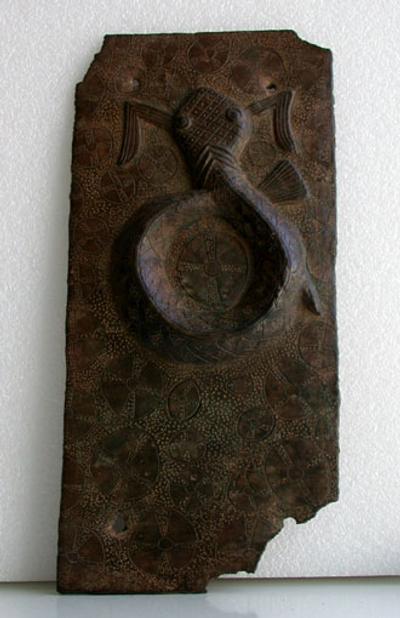
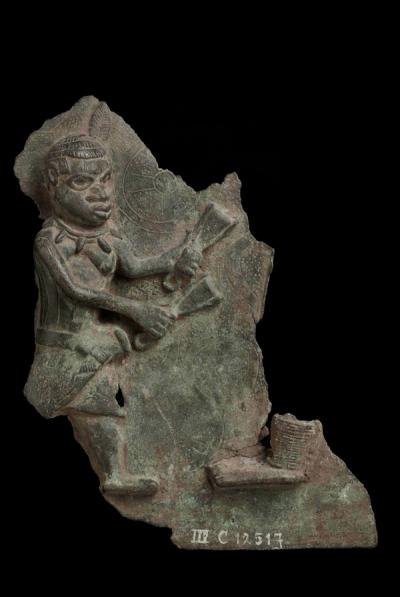
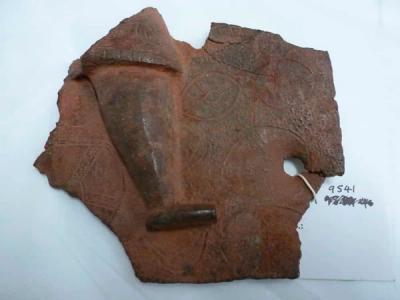
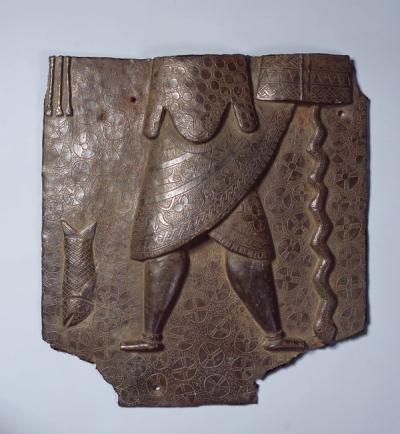
According to , this motif is known as Aghadaghada, a “play on the word ada,” meaning “crossroads.” The design appears as a background motif on a small number of Ama-Ẹrọnmwọn (bronze relief plaques) and is associated with Olokun and the period of close contact between the Benin Kingdom and the Portuguese Empire during the reigns of Ọba Ọzọlua, Ọba Ẹsigie, and Ọba Orhogbua ( ). At the time of Ben-Amos’s research, the same symbol was drawn in chalk at the centre of Olokun shrine courtyards in Benin City. described the design more literally as a “circled cross” and suggested that the Ama-Eronmwon bearing this background motif may have been cast by a particular ‘master’ or member of the Igun-Ẹrọnmwọn.
More broadly, the cross, with its four points, references the number four, which has significance in Edo belief: the Edo week consists of four days, and each day is divided into four parts ( ). Other cross forms are treated as distinct motifs and are discussed separately under Uman-Ague (equal-armed cross).
Digital Benin collates digital material from institutions, and some of this material is inherently colonial and contains words, terms and phrases that are inaccurate, derogatory and harmful towards African and African diasporic communities. Catalogue transcriptions, book titles, exhibition titles and museum titles may contain harmful terms. We recognise the potential for the material to cause physical and mental distress as well as evoke strong emotions. Owing to the scale of the collection’s data, a process to implement sensitive-content warnings in the displayed data is still incomplete. The material within the catalogue does not represent Digital Benin’s views. Digital Benin maintains a strong anti-colonial, anti-racist position and affirms its support for centring the humanity of historically marginalised and disenfranchised communities. Read more about the background of this statement here