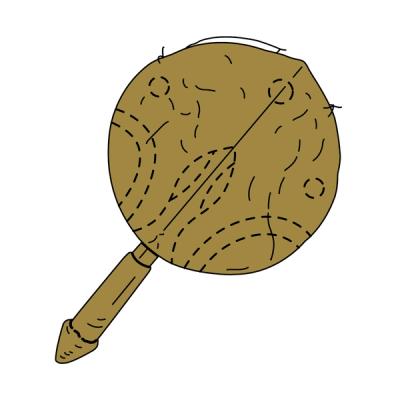
Ẹzuzu
Ẹzuzu (fans) were particularly important when it came to the comfort of the Ọba and other high-ranking individuals, such as the Iy’Ọba. In the past, at least two servants were always with the Ọba to fan him, although today the use of fans is more symbolic. Some fans were specially decorated with mirrors and used specifically by Olokun devotees. Fans are usually made from skins, antelope or cow, with embroidered appliqué designs made by the Isekpokin (Roth, 1903, p.123 ). Highly decorated fans were used by the Ọba and chiefs, and fans made from leopard skin with certain patterns were made only for the Ọba.
While smaller fans could be considered everyday domestic items, larger fans would have been a symbol of high status and may have had ritual importance too (Dolz in Plankensteiner, 2007, p.319 ). In addition to hide specimens, a small number of large brass fans is held in institutional collections which would likely have been used by and for the royal family on ancestral altars. As well as seen today during ceremonies, scenes depicting this are common on altar tableaux, and depictions of Ẹzuzu themselves are also on a number of relief plaques.
Educational Material
Digital Benin collates digital material from institutions, and some of this material is inherently colonial and contains words, terms and phrases that are inaccurate, derogatory and harmful towards African and African diasporic communities. Catalogue transcriptions, book titles, exhibition titles and museum titles may contain harmful terms. We recognise the potential for the material to cause physical and mental distress as well as evoke strong emotions. Owing to the scale of the collection’s data, a process to implement sensitive-content warnings in the displayed data is still incomplete. The material within the catalogue does not represent Digital Benin’s views. Digital Benin maintains a strong anti-colonial, anti-racist position and affirms its support for centring the humanity of historically marginalised and disenfranchised communities. Read more about the background of this statement here