Ama-Erhan

Ama-Erhan

Description
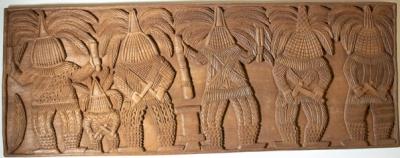
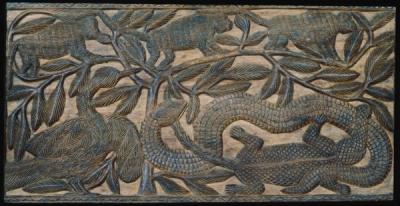
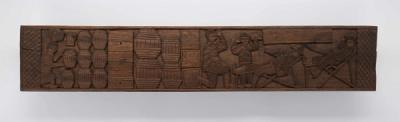
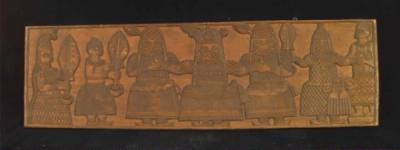
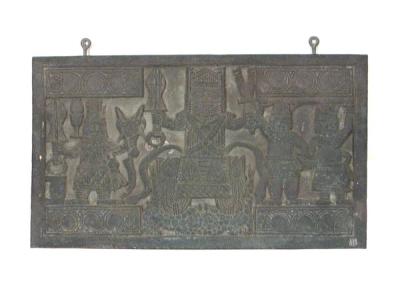
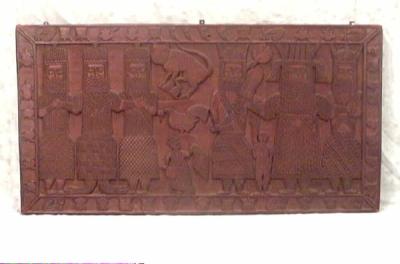
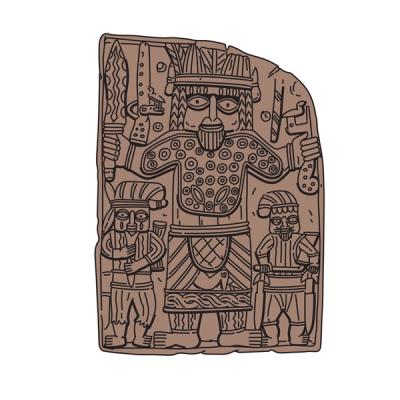
According to Obazee, ‘ama’ is an Edo term referring to identification marks, symbols, pictures, and designs. Wooden panels are carved to record events in a similar manner to Ama-Ẹrọnmwọn, and are typically rectangular in form. However, these carved wooden panels were not used to decorate the walls and pillars of the impluvium in the royal palace. Some of the Ama-Erhan grouped here were carved in the twentieth century by Edo artists such as Chief Ovia Idah, H. I. Erhabor, and S. E. Owie.

Objects defined as Ama-Erhan

26 objects
See all
Institution
National Museums Scotland
object_number
A.1949.205
Edo designations
Ama-Erhan
Carved Wooden Panel
Institution
Denver Art Museum
Object ID
1952,644
Edo designations
Ama-Erhan
Carved Wooden Panel
Institution
Übersee-Museum Bremen
Objektnummer
B13340
Edo designations
Ama-Erhan
Carved Wooden Panel
Institution
Fowler Museum at UCLA
Object ID
X65.10882
Edo designations
Ama-Erhan
Relief Plaque
Institution
Fowler Museum at UCLA
Object ID
X65.10883
Edo designations
Ama-Erhan
Carved Wooden Panel
Institution
Fowler Museum at UCLA
Object ID
X65.1388
Edo designations
Ama-Erhan

Objects defined as Ama-Erhan

26
Institution
National Museums Scotland
object_number
A.1949.205
Edo designations
Ama-Erhan
Carved Wooden Panel
Institution
Denver Art Museum
Object ID
1952,644
Edo designations
Ama-Erhan
Carved Wooden Panel
Institution
Übersee-Museum Bremen
Objektnummer
B13340
Edo designations
Ama-Erhan
Carved Wooden Panel
Institution
Fowler Museum at UCLA
Object ID
X65.10882
Edo designations
Ama-Erhan
Relief Plaque
Institution
Fowler Museum at UCLA
Object ID
X65.10883
Edo designations
Ama-Erhan
Carved Wooden Panel
Institution
Fowler Museum at UCLA
Object ID
X65.1388
Edo designations
Ama-Erhan
Sensitive content

Sensitive Content Digital Benin includes colonial material that may contain inaccurate, derogatory or harmful language relating to African and African diasporic communities. Such language may appear in catalogue records, transcriptions, and book, exhibition or museum titles. We recognize that this material may cause distress. Sensitive-content warnings are being implemented across the collection, but this process is ongoing. The language does not reflect Digital Benin’s views; we take an anti-colonial and anti-racist position and are committed to centring the humanity of historically marginalised communities.

Read more about our approach