Loading...
idno
Z 12112
Edo designations


English designations
Categories
Institution Location
Downing St, Cambridge CB2 3DZ, United Kingdom
idno
Z 12112
Edo designations
English designations
Pot
Categories
Altar & Shrine Objects
Containers
Institution Location
Downing St, Cambridge CB2 3DZ, United Kingdom
Iconographies
2
annotations
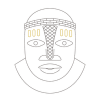
Ikharo
Forehead markings
1 annotation

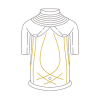
Iwu
Facial and Body Markings
1 annotation

Provenance
3
events
Institution data
Museum of Archaeology and Anthropology, University of Cambridge
The data was transferred directly by the institution.
Last updated: 2022-07-18
Language: english
| Institution field | Value |
|---|---|
idno object id | Z 12112 |
local edo designation | oluebo |
Physical description/0 description | Pot (oluebo) used as olokum. [different hand] This is large and has 3 big and 2 little strap handles and the moulded figure of a seated woman forming a fourth large handle. [different hand in pencil] This was broken; not boxed; awaited repair. |
Physical description/1 description | Large ceramic vessel, only partially fired, with rounded base, three vertical strap handles and two horizontal loop handles. There is a large seated, female figure at the front of the vessel with a platform under the splayed, amphibian-like feet. The head is disproportionately large for the body and shows scarification marks and an elaborate headdress. The entire vessel is decorated with incised lines, indented dots and modelled snakes on the vertical handles. |
Physical description/2 description | |
Physical description/3 description | |
Physical description/4 description | |
d_Description Name description | Large ceramic vessel, only partially fired, with rounded base, three vertical strap handles and two horizontal loop handles. There is a large seated, female figure at the front of the vessel with a platform under the splayed, amphibian-like feet. The head is disproportionately large for the body and shows scarification marks and an elaborate headdress. The entire vessel is decorated with incised lines, indented dots and modelled snakes on the vertical handles. |
height dimensions | 405 mm |
length dimensions | 320 mm |
width dimensions | 345 mm |
weight weight | |
Inscription inscriptions | |
Labels - Markings/0 inscriptions | Luggage tag bagged and tied on with string. Broken into several pieces, too deteriorated to read writing. |
Labels - Markings/1 inscriptions | |
Labels - Markings/2 inscriptions | |
Labels - Markings/3 inscriptions | |
Labels - Markings/4 inscriptions | |
Labels - Markings/5 inscriptions | |
period date made | |
maker producer | |
d_Place production place | Africa; West Africa; Nigeria; Edo State; Benin City [Bini] |
Other owners prior source | |
source prior source | Thomas, Northcote Whitridge [field collector]; Bevan, Anthony Ashley (Prof.) [monetary donor] |
Collection or Excavation Year date collected | |
culture group ethnic attribution | Edo |
source date accession date | |
Amendments - updates/0 notes | Pot has been broken into numerous pieces and repaired. [T.Cotterill] |
Amendments - updates/1 notes | Record updated as part of the Museum Affordances project 2018-2020 |
Amendments - updates/2 notes | |
Amendments - updates/3 notes | |
Amendments - updates/4 notes | |
Exhibition/0 exhibition history | Brunei Gallery, SOAS, London, 14/10/2020 to 19/12/2020, [Re:]Entanglements |
Exhibition/1 exhibition history | |
Reference Numbers bibliography | Z 12112 Other: 105 [Thomas Collection number - 1st Catalogue]; 1177 [Label for Thomas field photograph] |
References/0 bibliography | These objects are mentioned in the [Re:]Entanglements blog post, 'Meeting themselves again. An object-oriented perspective?' which can be found at: https://re-entanglements.net/object-oriented-perspective/?fbclid=IwAR2XfOVA_90O-PC4eo6fexBAjlC8RBcceI-8W-hdsOBtCxF4go9h4WnXk9Y |
References/0 2 bibliography | |
References/1 bibliography | |
Related Documents/0 bibliography | See E 1910.118 and E 1913.3 records for further details about the Thomas Collection from Nigeria. [T.Cotterill] |
Related Documents/1 bibliography | Numbered '105' in the Thomas Collection, 1st Catalogue. |
Related Documents/2 bibliography | Sticky label originally on rear handle reads: 'DON'T HOLD BY THIS HANDLE' |
Related Documents/3 bibliography | |
Related Documents/4 bibliography | |
Related Documents/5 bibliography | |
Related Documents/6 bibliography | |
Acquisition Details/0 provenance | |
Acquisition Details/1 provenance | |
Acquisition Details/2 provenance | |
Analysis/0 | Department of Conservation, UCL Institute of Archaeology, 31-4 Gordon Square, London WC1H 0TY , 27/02/2020 to 30/06/2020, Museum Affordances Project |
Analysis/1 | |
Archaeology | |
Auction - Sale/0 provenance | |
Auction - Sale/1 provenance | |
CMS Context/0 | |
CMS Description description | |
Catalogue | |
Display/0 exhibition history | |
Display/1 exhibition history | |
Display/2 exhibition history | |
Display/3 exhibition history | |
Field_collection/0 provenance | The vessel Z 12112 was photographed by Thomas during fieldwork and is shown in P.29327.NWT, Image 336441. |
Field_collection/1 provenance | |
Found_together - assemblage | Colour photograph found with object depicts it on a table in front of a window with numerous other African objects, at least some of which are in the UCMAA collection. [T.Cotterill] |
Freezing | |
Online Only | Basu, Paul (2018) Meeting themselves again. An object-oriented perspective? . ; . https://re-entanglements.net/object-oriented-perspective/?fbclid=IwAR2XfOVA_90O-PC4eo6fexBAjlC8RBcceI-8W-hdsOBtCxF4go9h4WnXk9Y |
Other/0 | |
Other/1 | |
Production - use | Anthropomorphic African pots usually have religious significance. [T.Cotterill] |
Remedial/0 | CON.2020.4357 | Remedial |
Remedial/1 | |
Surface Clean | |
unknown |
Sections
About
Other
Sensitive content
Sensitive Content Digital Benin includes colonial material that may contain inaccurate, derogatory or harmful language relating to African and African diasporic communities. Such language may appear in catalogue records, transcriptions, and book, exhibition or museum titles. We recognize that this material may cause distress. Sensitive-content warnings are being implemented across the collection, but this process is ongoing. The language does not reflect Digital Benin’s views; we take an anti-colonial and anti-racist position and are committed to centring the humanity of historically marginalised communities.