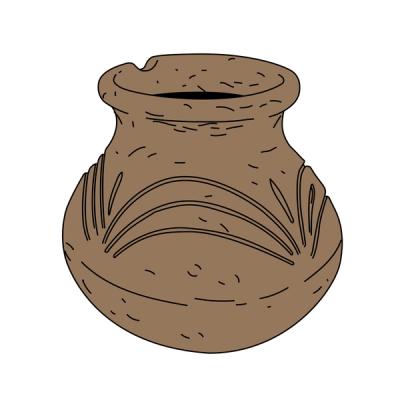
Akhẹ
Akhẹ is the general term for all earthenware pots. Pottery is one of the oldest traditional crafts practised in Benin, and Akhẹ continue to be made and used today in Benin City. Potters were, and continue to be, known as Imakhe, and they are often women.
Akhẹ had a variety of purposes in Benin Kingdom, and the amount and type of decoration indicate what they may have been used for in the past. For example, simply decorated globular pots identified as Akhẹ-Amẹ likely would have been used to store water. Meanwhile, pots decorated with snakes, frogs and small representations of people are considered Akhẹ-Osun (Osun pots) and would have been used by ritual experts who were associated with the deity of medicine, Osun. Those whose function cannot be identified have been grouped here under the general term Akhẹ.
Educational Material
Digital Benin collates digital material from institutions, and some of this material is inherently colonial and contains words, terms and phrases that are inaccurate, derogatory and harmful towards African and African diasporic communities. Catalogue transcriptions, book titles, exhibition titles and museum titles may contain harmful terms. We recognise the potential for the material to cause physical and mental distress as well as evoke strong emotions. Owing to the scale of the collection’s data, a process to implement sensitive-content warnings in the displayed data is still incomplete. The material within the catalogue does not represent Digital Benin’s views. Digital Benin maintains a strong anti-colonial, anti-racist position and affirms its support for centring the humanity of historically marginalised and disenfranchised communities. Read more about the background of this statement here