Loading...
Altar Tableau
Altar Tableau
ObjectNumber_Original
VO_64782
Institution
Weltmuseum Wien
Edo designations
English designations
Categories
Institution Location
Heldenplatz, 1010 Wien, Austria
ObjectNumber_Original
VO_64782
Institution
Weltmuseum Wien
Edo designations
English designations
Altar Tableau
Categories
Altar & Shrine Objects
Institution Location
Heldenplatz, 1010 Wien, Austria

Iconographies

22 annotations

Colar Bead
Odigba
Coral beaded collar

Odigba (beaded collar) is a rigid neck collar made of beads, worn as part of ceremonial attire only by senior princes who have been made Enigie. Although Ibafe (2007, p. 43) argued that the Odigba was introduced during the Ogiso period (c. 900–c. 1170 AD) by Ogiso Ere, along with other symbolically important Emwin Arre, such as the Ada (ceremonial sword) and the Ebẹn (ceremonial sword). The Odigba was initially made of beads, while coral was incorporated only later, following its introduction through trade with Portuguese merchants in the late fifteenth century.

1 annotation
Odigba
tribal marks
Iwu
Facial and Body Markings

Iwu are facial and body markings (scarifications) that were historically worn by Edo men and women. However, since the 1960s, the practice has been nearly extinct. ). In the past, Iwu were used as a way of proving that one was an Edo citizen, and the ceremony of having Iwu completed was an important rite of passage for men and women. The Osiwu, who also practised circumcision and other surgical procedures, would carry out the procedure of adding Iwu. There are different types of Iwu: ‘blades’ worn on the torso (Iwu-eko), and those worn on the face, such as Ikharo (three or four markings above the eyebrows), Irho (two narrow ‘blades’ worn on each cheek), Ovbihue (nasal ‘blades’), Ovbi-agbanmwen (chin ‘blade’), and Igho-okpa/Ukpgho (three forehead ‘blades’).

The number of Iwu also varied depending on the identity of the person wearing them. For example, royal men would wear six ‘blades’ on their torso, whilst men who were not royal would wear seven ‘blades’. Meanwhile, the Ọba’s female children would wear fifteen ‘blades’, and all other women would wear sixteen.

2 annotations
Iwu
Iwu
Attendant
Ibierugha
Attendant

Figures of young men and women, often depicted nude except for waist beads, occur frequently throughout the visual language of Emwin Arre (royal artefacts), particularly on Ama-Ẹrọnmwọn (bronze relief plaques), Urhotọ (altar tableaux), and Aken'ni Elao (carved tusks). These figures are typically shown attending or supporting high-status individuals such as the Ọba, Iy’Ọba, or warrior chiefs. Their smaller scale visually reinforces their subordinate status.

Attendants may carry symbols of state, such as the Ada and Ẹbẹn (ceremonial swords), on behalf of the Ọba; Ẹzuzu (fans), used to cool the Ọba and Iy’Ọba and to waft away evil spirits; or Asa (shields), held over the heads of higher-status figures to protect them from malevolent forces.Kaplan 2007, p. 149 Other attendants are shown carrying offerings, sometimes contained in specialised vessels such as Ẹkpoki (cylindrical boxes) or Orhiẹvbẹ (kola-nut bowls).

Ibierugha (male attendant figures) are distinguished by a characteristic crest-like hairstyle with a braided lock of hair falling over the left ear. The Ọba was typically attended by young men, while the Iy’Ọba was attended by young women. Attendants of both genders were usually provided with clothing by the Ọba or Iy’Ọba once they reached maturity, at which point the royal household would also arrange suitable marriage partners for them.

5 annotations
Ibierugha
Ibierugha
Ibierugha
Ibierugha
Ibierugha
Crossed Beaded Baldrics
Ukpan obọ eva
Crossed Beaded Baldrics

The Ukpan obọ eva (coral-bead crossed baldrics) were worn as part of the ehaingbehia, the full ceremonial regalia, by only high-ranking members of the palace, including the Ọba himself, the Iy’Ọba, the Edaiken, and the Ezọmọ.

1 annotation
Ukpan obọ eva
hairstyles
Eto
hairstyles

Hairstyles are used to determine a person's status in the society, as chiefs, common folks, chief's wives and the wives of the Ọba all wear different hairstyles. We have Okuku, Ikpe~okhokho, Idu~akpata

2 annotations
Eto
Eto
Queen Mother
Iy'Ọba
Queen Mother

In the 16th century, Ọba Ẹsigie established the title of Iy'Ọba (Queen Mother) in honour of his mother, Iy'Ọba Idia, for the crucial role she played in the Benin–Idah War (1515–16). She is often described as “the only woman who went to war”.

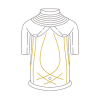
The Iy'Ọba can usually be identified by her distinctive curved, conical hairstyle, known as Ukpẹ ọkhọkhọ, which is said to have been introduced by Iy'Ọba Idia (Kaplan 1993, p. 58). In addition, the Iy'Ọba was permitted to wear certain items of attire otherwise reserved for the Ọba, such as the Ewu ivie (coral-beaded shirt) and Ukpan obọ eva (crossed coral-beaded baldrics), as well as regalia associated with senior chiefs, including the Odigba (coral-beaded collar) and Udahae (coral-beaded forehead band).

Representations of the Iy'Ọba appear on ivory Emwin Arhe (royal treasures), including the five famous Uhunmwu-Ẹkuẹ (pendant masks) believed to depict Iy'Ọba Idia, as well as on a number of Aken'ni Elao (carved altar tusks). She is also represented in brass and bronze, including on Ikẹgobọ (altars to the hand) and Urhotọ (altar tableaux) made for Iy'Ọba shrines and altars. In these representations, the Iy'Ọba is often accompanied by female attendants who form part of her retinue.

1 annotation
Iy'Ọba
Trunk hand
Ọbo Eni
Trunk hand

The trunk hand motif, comprising an elephant’s trunk ending in a fist, is believed to have complex and varied symbolic meanings. During the 15th and 16th centuries, the era of the warrior kings, the motif appeared only occasionally. During the 18th century, it was revived to honour the richest of all Ọbas, Ọba Akenzua I. This was particularly the case on the Aken'ni Elao (carved tusks), and the trunk hand motif commonly appears on these ivories from the 18th century and throughout the 19th and into the 20th centuries. In her PhD thesis, Barbara Blackmun identified eight different kinds of motifs of this type on the Aken’ni Elao alone, indicating that the form itself is variable. In addition to the ivory Aken’ni Elao, the motif also commonly appears on the flanges of Uhunmwu-Elao (commemorative heads), the bases of Urhotọ (altar tableaux), and some ornately decorated bronze Ukhurhẹ (ancestral staffs).

The elephant trunk hand has been interpreted as a symbol of physical power and strength, and as the “ultimate Hand of Hands”. . A past Ihama n’Igun-Ẹrọnmwọn interpreted the motif as a symbol of “taking life”. On some Emwin Arhe (royal treasures) where the trunk hand motif is present, depictions of human sacrifices are also present, representing the ultimate power held by the divine Ọbas. The potent nature of the trunk hand motif is further emphasised by Barbara Blackmun through the combination of “the head of one of the most powerful animals with a hand that grasps with enormous strength”; together, these signify “the acquisition of great wealth for the kingdom”.

2 annotations
Ọbo Eni
Ọbo Eni
Gong
Ẹgogo
Gong

Ẹgogo (gongs) hold significant importance in Benin art and ritual, serving as powerful instruments with both practical and symbolic roles. Ivory gongs, especially “double-bell” types, were highly prized and reserved for the royal court, particularly those made entirely of ivory, which were used exclusively by the Ọba. The whiteness of ivory Ẹgogo symbolises purity and peace and is linked to sacred Orhue (white kaolin chalk) and the deity Olokun.

When depicted in the imagery of the Emwin Arre (royal treasures), Ẹgogo are usually held by figures such as the Ọba or high-ranking chiefs, illustrating their historical and ongoing use as idiophones during ceremonies and festivals. The Ọba dances with an ornately carved ivory Ẹgogo during the Emobo festival, which takes place three days after the Iguẹ festival.

2 annotations
Ẹgogo
Ẹgogo
Curved conical hairstyle worn by Iy'Ọba
Ukpẹ ọkhọkhọ
Curved conical hairstyle worn by Iy'Ọba

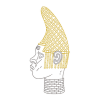
The Ukpẹ ọkhọkhọ is a distinctive hairstyle and coral-beaded headdress worn by the Iy’Ọba. The headdress includes a projection called the ‘ede Iy’Ọba’, which indicates that “her spiritual potentialities are closer in quality to those of her ruling son than they are to the powers of the nobles”. The Iy’Ọba’s hairstyle and headdress are meant to resemble ukpe-okhue, or the curved parrot’s beak.

Barbara Blackmun argued that “Benin art is multivocal, and any depiction of the Iye Ọba [sic] is a reference to Idia. Every woman who holds the office of lye Ọba plays the part of Idia, the ideal model of an Ọba’s mother.” Wearing the Ukpẹ ọkhọkhọ is one of the ways the Iy’Ọba plays the role of Idia.

1 annotation
Ukpẹ ọkhọkhọ
Iconography image
Udahae
Beaded forehead band

The Udahae is a forehead band made from coral beads and worn by chiefs. Sometimes a white Igan (feather) from the Oɛɣohɔ (vulturine fish eagle) is tucked into the left side of the Udahae. According to Benin oral tradition, the Udahae was introduced by Ọba Ezoti, the first son of Ọba Ewuare I. During his coronation, Ezoti was shot in the forehead with a poisoned arrow. To stop the bleeding, a band of red beads was wrapped around his forehead while he made public appearances. Fourteen days later, he died from his wound. Since then, Benin chiefs have worn the red-beaded Udahae around their foreheads to commemorate the cap used by Ezoti to stop the bleeding (Egharevba 1968, p. 21).

1 annotation
Udahae
Fan
Ẹzuzu
Hand fan

Ẹzuzu (round hand fans) are usually carried by attendants to the Ọba or Iy’Ọba. On the Ama-Ẹrọnmwọn (bronze relief plaques), male attendants to the Ọba carry fans, whereas on Urhotọ (altar tableaux), female attendants carrying fans are depicted flanking the Iy’Ọba. Ẹzuzu connote the status of both the person being fanned and the holder, who is usually an attendant fanning the superior Ọba or Iy’Ọba. Usually, male attendants—members of the Emada—would be represented with the Ọba, while young women would attend to the Iy’Ọba. Ẹzuzu have an important function in cooling; however, the wafting of the fans can also calm spiritual energy, thus making the fan a symbol of peace.

A further symbolic use for the Ẹzuzu includes blowing medicine across the surface of a fan and using mirrored fans by ritual specialists to make predictions about the future. The symbolic importance of fans in Edo belief is reflected in their use as one of a small group of inanimate objects that are the focal subjects of some Ama-Ẹrọnmwọn.

3 annotations
Ẹzuzu
Ẹzuzu
Ẹzuzu
Ubanu'hi / Obanu'hi
Ubanu'hi
Inifinity Symbol

The Ubanu'hi (infinity symbol) is a kind of guilloche or interlaced strapwork motif that can be angular or rounded. It was used by Edo artists in the decoration of many Emwin Arhe (royal treasures) and is ubiquitous in Benin royal arts. Ubanu'hi is a shortened form of “uba no Ọba ya de agbon ke ehimwin yi”, which means “the rope with which the Ọba ties the heaven and earth together” (pers. comm. Chief John Igbineweka Inneh n’Igbesawman, 2022). Similarly, Paula Ben-Amos Girshick described this as “Ọba n’iri agbon”, or the “rope of the world” pattern.

According to Ọbabanmu Ineh, the use of this motif indicates that objects were carved by members of the Igbesanmwan. However, the motif is found on all types of Emwin Arhe (royal treasures), not only those made of ivory or wood. On the flanges of the Ama-Ẹrọnmwọn (relief plaques) alone, Kathryn Gunsch identified three different versions of the Ubanu'hi and, through her analysis of over 850 plaques, found that these different Ubanu'hi forms align with other characteristics, such as dimensions, the prevalence of ornamental motifs, and stylistic qualities. Together, these provide evidence, she argues, of different production groups among the plaque makers.

Kate Ezra went on to argue that the use of these motifs indicates that certain objects were used in a “royal context” and were associated with “royal patronage”.

Ubanu’hi can also be spelt Obanu'hi, indicating different intonations in the pronunciation of the words.

1 annotation
Ubanu'hi

Provenance

5 events
Production
unknown to February 22, 1897 (day approximate)
Production of Urhotọ in Benin City
Loot
February 19, 1897 (day approximate) to June 1899 (month approximate)
Looting of the Emwin Arre - Inalienable Cultural Artefacts - during the Invasion of the Benin Kingdom in February 1897 and until the end of overt military activity in June 1899
Unknown
February 22, 1897 (day approximate) to 1899
Acquisition of a collection of Benin objects by W. A. Maschmann
Transfer
February 22, 1897 (day approximate) to 1898
Transfer of the Maschmann collection to Hamburg, c. 1898
Purchase
1899
Purchase of the Maschmann collection by the Weltmuseum Wien, 1899

Related archival documents

1 documents
See all
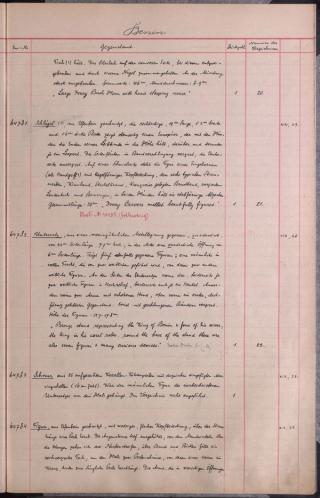
An archival document representing a Inventories of 1 page(s)
InventoryAccession Record
Weltmuseum Wien
Inventory book - objects

Institution data

Weltmuseum Wien
The data was transferred directly by the institution.
Last updated: 2022-05-24
Languages: german, english
Institution fieldValue
ObjectNumber_Original
object id
VO_64782
NativeTitle
edo designation
aseberia
TextEntry
description
Diese Altargruppe mit Iyoba ist Teil der historischen Sammlungen aus dem Königreich Benin im heutigen Nigeria. 1897 wurde das Königreich erobert und dessen Oba (König) Ovonramwen ins Exil verbannt. Die aus dem Königspalast geraubten Kunstschätze wurden an
Medium
material
Gelbguss
Medium_en
material
Brass
ObjectName
object type
Altargruppe mit Iyoba
ObjectName_en
object type
Altar Group with Iyoba
DateBegin
date made
DateEnd
date made
Dated
date made
Dated_en
date made
Period
date made
Term
production place
Afrika südlich der Sahara
Term2
production place
West-Afrika
Term3
production place
Nigeria
Term4
production place
Benin
Thesaurus
production place
Afrika südlich der Sahara/West-Afrika/Nigeria/Benin
Provenance
provenance
Role_person
provenance
Sammlung-Collection-Wilhelm Albert Maschmann|
Culture
ethnic attribution
Edo, Benin Königreich
Culture_en
ethnic attribution
Edo, Benin Kingdom
CreditLine
department and institution
Weltmuseum Wien
Department
department and institution
MVK Objekte - Afrika südlich der Sahara
Zugangsdatum
accession date
1899
LocationString
display status
FileName
images
VO_64782_201901_02.jpg|VO_64782_201901_04.jpg|VO_64782_201901_01.jpg|VO_64782_201901_05.jpg|VO_64782_201901_06.jpg|VO_64782_201901_09.jpg|
PrimaryImage
images
VO_64782_201901_01.jpg
Classification
||
DepartmentID
35
Department_cut
department and institution
Afrika südlich der Sahara
DisplayOrder
1|
Last_Modified
2021-12-06 08:15:34
LocationID
ObjectID
object id
441058
ObjectNumber
object id
64782
PublicAccess
1
SortNumber
VO 64782
TextDate_en
|
TextEntryHTML
description
Diese Altargruppe mit Iyoba ist Teil der historischen Sammlungen aus dem Königreich Benin im heutigen Nigeria. 1897 wurde das Königreich erobert und dessen Oba (König) Ovonramwen ins Exil verbannt. Die aus dem Königspalast geraubten Kunstschätze wurden an
TextEntryHTML_en
description
This Altar Group with Iyoba is part of the historical collections from the Benin Kingdom, in present-day Nigeria. In 1897, the kingdom was conquered and Oba (king) Ovonramwen banned into exile. The loot from the royal palace was then sold through the art
TextEntry_en
description
This Altar Group with Iyoba is part of the historical collections from the Benin Kingdom, in present-day Nigeria. In 1897, the kingdom was conquered and Oba (king) Ovonramwen banned into exile. The loot from the royal palace was then sold through the art
cxrDisplayOrder
1|
Sensitive content

Sensitive Content Digital Benin includes colonial material that may contain inaccurate, derogatory or harmful language relating to African and African diasporic communities. Such language may appear in catalogue records, transcriptions, and book, exhibition or museum titles. We recognize that this material may cause distress. Sensitive-content warnings are being implemented across the collection, but this process is ongoing. The language does not reflect Digital Benin’s views; we take an anti-colonial and anti-racist position and are committed to centring the humanity of historically marginalised communities.

Read more about our approach