Iy'Ọba
In the 16th century, Ọba Ẹsigie established the title of Iy'Ọba (Queen Mother) in honour of his mother, Iy'Ọba Idia, for the crucial role she played in the Benin–Idah War (1515–16). She is often described as “the only woman who went to war” ( ).
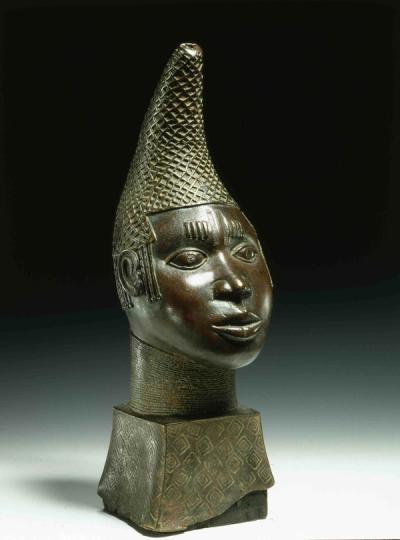
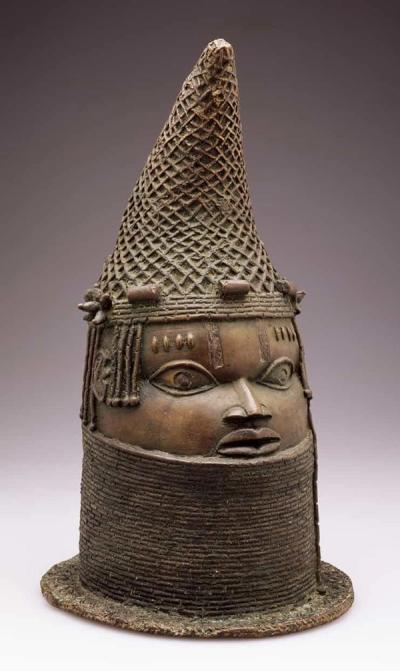
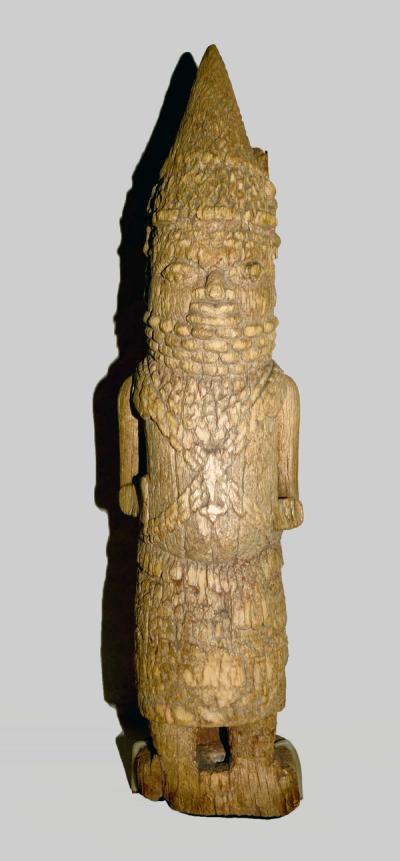
The Iy'Ọba can usually be identified by her distinctive curved, conical hairstyle, known as Ukpẹ ọkhọkhọ, which is said to have been introduced by Iy'Ọba Idia (Kaplan 1993, p. 58). In addition, the Iy'Ọba was permitted to wear certain items of attire otherwise reserved for the Ọba, such as the Ewu ivie (coral-beaded shirt) and Ukpan obọ eva (crossed coral-beaded baldrics), as well as regalia associated with senior chiefs, including the Odigba (coral-beaded collar) and Udahae (coral-beaded forehead band) ( ).
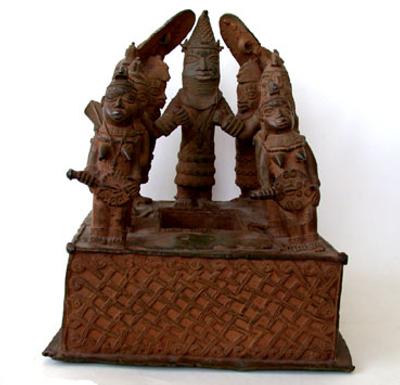
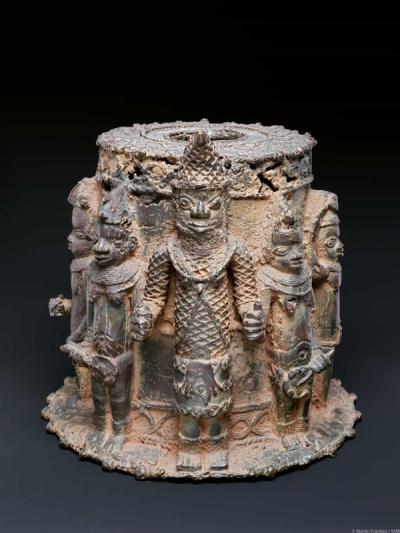
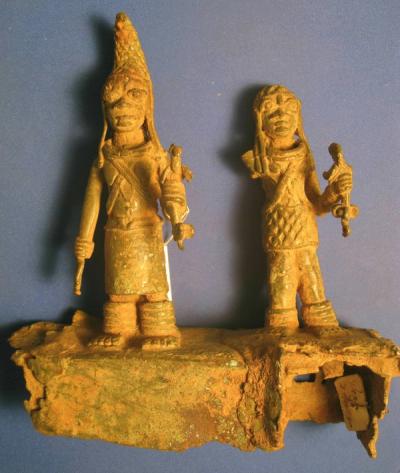
Representations of the Iy'Ọba appear on ivory Emwin Arhe (royal treasures), including the five famous Uhunmwu-Ẹkuẹ (pendant masks) believed to depict Iy'Ọba Idia, as well as on a number of Aken'ni Elao (carved altar tusks). She is also represented in brass and bronze, including on Ikẹgobọ (altars to the hand) and Urhotọ (altar tableaux) made for Iy'Ọba shrines and altars ( ). In these representations, the Iy'Ọba is often accompanied by female attendants who form part of her retinue.
Digital Benin collates digital material from institutions, and some of this material is inherently colonial and contains words, terms and phrases that are inaccurate, derogatory and harmful towards African and African diasporic communities. Catalogue transcriptions, book titles, exhibition titles and museum titles may contain harmful terms. We recognise the potential for the material to cause physical and mental distress as well as evoke strong emotions. Owing to the scale of the collection’s data, a process to implement sensitive-content warnings in the displayed data is still incomplete. The material within the catalogue does not represent Digital Benin’s views. Digital Benin maintains a strong anti-colonial, anti-racist position and affirms its support for centring the humanity of historically marginalised and disenfranchised communities. Read more about the background of this statement here