Loading...
ObjectNumber_Original
VO_64726
Institution
Weltmuseum Wien
Edo designations
English designations
Categories
Institution Location
Heldenplatz, 1010 Wien, Austria
ObjectNumber_Original
VO_64726
Institution
Weltmuseum Wien
Edo designations
English designations
Hand-held Clapper
Categories
Musical Instruments
Ceremonial Objects
Staffs
Institution Location
Heldenplatz, 1010 Wien, Austria

Iconographies

5 annotations

Colar Bead
Odigba
Coral beaded collar

Odigba (beaded collar) is a rigid neck collar made of beads, worn as part of ceremonial attire only by senior princes who have been made Enigie. Although Ibafe (2007, p. 43) argued that the Odigba was introduced during the Ogiso period (c. 900–c. 1170 AD) by Ogiso Ere, along with other symbolically important Emwin Arre, such as the Ada (ceremonial sword) and the Ebẹn (ceremonial sword). The Odigba was initially made of beads, while coral was incorporated only later, following its introduction through trade with Portuguese merchants in the late fifteenth century.

1 annotation
Odigba
Crossed Beaded Baldrics
Ukpan obọ eva
Crossed Beaded Baldrics

The Ukpan obọ eva (coral-bead crossed baldrics) were worn as part of the ehaingbehia, the full ceremonial regalia, by only high-ranking members of the palace, including the Ọba himself, the Iy’Ọba, the Edaiken, and the Ezọmọ.

1 annotation
Ukpan obọ eva
Cowrie
Ikpigho
Cowrie

Historically, Ikpigho (cowries) were used as a form of currency, and they continue to carry associations with wealth and prosperity. Further strengthening the association between Ikpigho and wealth is the fact that cowries were among the goods imported by European merchants to the kingdom from the 15th century until the 19th century, from as far afield as the Maldives in the Indian Ocean. Together with motifs such as Portuguese heads, cowries became associated with wealth brought from overseas and, therefore, are also associated with Olokun, god of the sea. The white colour of Ikpigho further associates them with Olokun, as well as with joy.

1 annotation
Ikpigho
Ubanu'hi / Obanu'hi
Ubanu'hi
Inifinity Symbol

The Ubanu'hi (infinity symbol) is a kind of guilloche or interlaced strapwork motif that can be angular or rounded. It was used by Edo artists in the decoration of many Emwin Arhe (royal treasures) and is ubiquitous in Benin royal arts. Ubanu'hi is a shortened form of “uba no Ọba ya de agbon ke ehimwin yi”, which means “the rope with which the Ọba ties the heaven and earth together” (pers. comm. Chief John Igbineweka Inneh n’Igbesawman, 2022). Similarly, Paula Ben-Amos Girshick described this as “Ọba n’iri agbon”, or the “rope of the world” pattern.

According to Ọbabanmu Ineh, the use of this motif indicates that objects were carved by members of the Igbesanmwan. However, the motif is found on all types of Emwin Arhe (royal treasures), not only those made of ivory or wood. On the flanges of the Ama-Ẹrọnmwọn (relief plaques) alone, Kathryn Gunsch identified three different versions of the Ubanu'hi and, through her analysis of over 850 plaques, found that these different Ubanu'hi forms align with other characteristics, such as dimensions, the prevalence of ornamental motifs, and stylistic qualities. Together, these provide evidence, she argues, of different production groups among the plaque makers.

Kate Ezra went on to argue that the use of these motifs indicates that certain objects were used in a “royal context” and were associated with “royal patronage”.

Ubanu’hi can also be spelt Obanu'hi, indicating different intonations in the pronunciation of the words.

1 annotation
Ubanu'hi
Stacked beaded anklet
Iviawẹ
Stacked Beaded Anklet

Ọba gha ye Ivie gie ọwan, ẹ ghi tama rẹn ehe nọ gha bae yi (When the Ọba gifts you a bead, he doesn’t tell you how to wear it) (Daniel Inneh, pers. comm., 27 September 2025).

Iviawẹ (also spelled ĺvîowẹ) are coral-beaded anklets, often worn stacked together. Many of the figures depicted on the Emwin Arre (royal treasures) in brass, bronze, ivory, and wood are shown wearing these. According to Daniel Inneh (pers. comm., 27 September 2025), beads were sent to people whom the Ọba wished to honour, although there was no directive on how to wear them.

Mostly, people who wear Iviawẹ are identified as palace chiefs or priests and priestesses. However, today anyone can wear them as cultural identifiers or fashion pieces.

1 annotation
Iviawẹ

Provenance

5 events
Production
unknown to February 22, 1897 (day approximate)
Production of Isẹ vbe ẹigho by the Igbesamwan guild in Benin City
Loot
February 19, 1897 (day approximate) to June 1899 (month approximate)
Looting of the Emwin Arre - Inalienable Cultural Artefacts - during the Invasion of the Benin Kingdom in February 1897 and until the end of overt military activity in June 1899
Unknown
February 22, 1897 (day approximate) to 1899
The object is known to have come into contact with William Downing Webster.
Purchase
1899
The object was purchased by Georg Haas from William Downing Webster.
Purchase
1899
haas

Related archival documents

2 documents
See all
An archival document representing a Inventories of 404 page(s)
Inventory
Museum of New Zealand Te Papa Tongarewa
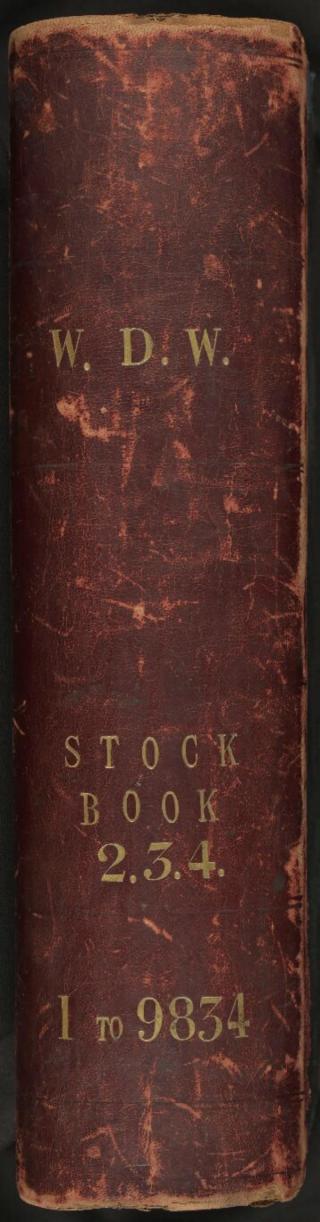
Stock books
Date
January 18, 1897 to March 26, 1900
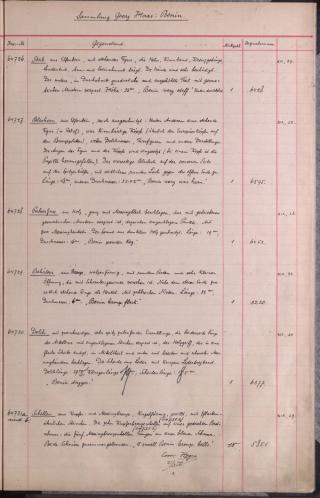
An archival document representing a Inventories of 1 page(s)
InventoryAccession Record
Weltmuseum Wien
Inventory book - objects

Institution data

Weltmuseum Wien
The data was transferred directly by the institution.
Last updated: 2022-05-24
Languages: german, english
Institution fieldValue
ObjectNumber_Original
object id
VO_64726
NativeTitle
edo designation
TextEntry
description
Dieser Elfenbeinstab mit Iyoba ist Teil der historischen Sammlungen aus dem Königreich Benin im heutigen Nigeria. 1897 wurde das Königreich erobert und dessen Oba (König) Ovonramwen ins Exil verbannt. Die aus dem Königspalast geraubten Kunstschätze wurde
Medium
material
Elfenbein
Medium_en
material
Ivory
ObjectName
object type
Elfenbeinstab mit Königinmutter (Iyoba)
ObjectName_en
object type
Ivory Staff with Queen Mother (Iyoba)
DateBegin
date made
1700
DateEnd
date made
1800
Dated
date made
18. Jahrhundert
Dated_en
date made
18th century
Period
date made
Term
production place
Afrika südlich der Sahara
Term2
production place
West-Afrika
Term3
production place
Nigeria
Term4
production place
Benin
Thesaurus
production place
Afrika südlich der Sahara/West-Afrika/Nigeria/Benin
Provenance
provenance
W.D. Webster, Nr. 6428
Role_person
provenance
Sammlung-Collection-William Downing Webster|Zugang über-Accession via-Georg Haas|
Culture
ethnic attribution
Edo, Benin Königreich
Culture_en
ethnic attribution
Edo, Benin Kingdom
CreditLine
department and institution
Weltmuseum Wien
Department
department and institution
MVK Objekte - Afrika südlich der Sahara
Zugangsdatum
accession date
1899
LocationString
display status
Raum Me.40
FileName
images
VO_64726_1.jpg|VO_64726_2.jpg|VIO_1899_64726.jpg|
PrimaryImage
images
VO_64726_1.jpg
Classification
||
DepartmentID
35
Department_cut
department and institution
Afrika südlich der Sahara
DisplayOrder
|
Last_Modified
2021-12-06 08:15:34
LocationID
75091
ObjectID
object id
441008
ObjectNumber
object id
64726
PublicAccess
1
SortNumber
VO 64726
TextDate_en
|
TextEntryHTML
description
Dieser Elfenbeinstab mit Iyoba ist Teil der historischen Sammlungen aus dem Königreich Benin im heutigen Nigeria. 1897 wurde das Königreich erobert und dessen Oba (König) Ovonramwen ins Exil verbannt. Die aus dem Königspalast geraubten Kunstschätze wurde
TextEntryHTML_en
description
This Ivory Staff with Queen Mother (Iyoba) is part of the historical collections from the Benin Kingdom, in present-day Nigeria. In 1897, the kingdom was conquered and Oba (king) Ovonramwen banned into exile. The loot from the royal palace was then sold t
TextEntry_en
description
This Ivory Staff with Queen Mother (Iyoba) is part of the historical collections from the Benin Kingdom, in present-day Nigeria. In 1897, the kingdom was conquered and Oba (king) Ovonramwen banned into exile. The loot from the royal palace was then sold t
cxrDisplayOrder
1|
Sensitive content

Sensitive Content Digital Benin includes colonial material that may contain inaccurate, derogatory or harmful language relating to African and African diasporic communities. Such language may appear in catalogue records, transcriptions, and book, exhibition or museum titles. We recognize that this material may cause distress. Sensitive-content warnings are being implemented across the collection, but this process is ongoing. The language does not reflect Digital Benin’s views; we take an anti-colonial and anti-racist position and are committed to centring the humanity of historically marginalised communities.

Read more about our approach