Loading...

Reg No.
VK C 3173
Institution
Historisches und Völkerkundemuseum St. Gallen Edo designations

English designations
Categories
Institution Location
Museumstrasse 50, 9000 St. Gallen, Switzerland
Reg No.
VK C 3173
Institution
Historisches und Völkerkundemuseum St. Gallen Edo designations
English designations
Relief Plaque
Categories
Palace Architecture & Ornamentation
Institution Location
Museumstrasse 50, 9000 St. Gallen, Switzerland
Iconographies
12
annotations

Ukpan obọ ọkpa
Single Beaded Baldric
1 annotation


Uhunmwu-Ẹkuẹ
Pendant Mask
1 annotation


Ebe Amẹ
Water Fern
1 annotation


Ẹghughu
Crocodile
1 annotation


Iviawẹ
Stacked Beaded Anklet
1 annotation


Akọn Ẹkpen
Leopard Teeth Neck Ornament
1 annotation


Iwu
Facial and Body Markings
1 annotation


Abuwa
Hand of Wealth
1 annotation


Ẹbẹn
Ceremonial Sword
1 annotation


Odigba
Coral beaded collar
1 annotation


Ikoro
Armcuff
1 annotation


Owẹn iba ẹdẹ ku
Rosette - 'The Sun Never Misses a Day'
1 annotation

Provenance
10
events
Institution data
Historisches und Völkerkundemuseum St. Gallen
The data was transferred directly through the Swiss Benin Initiative.
Last updated: 2022-07-04
Language: english
| Institution field | Value |
|---|---|
Reg No. object id | VK C 3173 |
Object name and materials designation | Relief plaque with a war chief |
Material material | brass |
Dimension/s dimensions | H. 46 cm W. 38 cm D. 7 cm |
Provisional dating date made | 18/19th century |
Creditline prior source | Acquisition through the mediation of Prof. Wehrli from the Museum of Ethnology Zurich |
Provenances provenance | 16th / 17th century, commissioned from the Royal Bronze-casting Guild (Igun Eronmwon) by the Royal Palace of Benin; by descent to Oba Ovonramwen (Ovonramwen Nogbaisi, b. about 1857 - d. about 1914; r. 1888 - 1897); 1897, looted from the Royal Palace during the British military occupation of Benin; 1897-1898 British Foreign Office (Plaque No.191); 1898, dealer Casper Andreas Valdemar Blad (?); 1898-1928, Museum für Völkerkunde Dresden (Reg.No.: 16058); 1928 Arthur Speyer II Berlin; until 1931 Han Coray (Reg.No.: BP 3); 1931-1940, Schweizerische Volksbank; 1940, Völkerkundemuseum der Universität Zürich; since 1940 Historisches und Völkerkundemuseum St. Gallen |
Institution department and institution | HVM Historisches und Völkerkundemuseum St. Gallen |
Institution acquisition date accession date | December 1940 |
Additional IDs object id | 16058 Dresden BP 3 (Slgsnr. Coray) |
Historisches und Völkerkundemuseum St. Gallen
The data was transferred directly through the Swiss Benin Initiative.
Last updated: 2022-07-04
Language: german
| Institution field | Value |
|---|---|
Reg No. object id | VK C 3173 |
Titel designation | VK_C_3173_138 Reliefplatte mit Kriegsfürst 16./17. Jh. Benin |
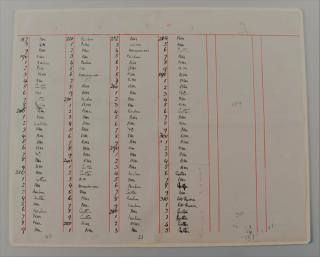
Beschreibung description | C 3173_138 Coray Nr. BP 3 weitere Nummer 16058 Nigeria Benin Reliefplatte 16./ 17. Jahrhundert Wandbekleidung der Königshäuser Schwert tragender Krieger Hofbeamter mit Panzerhaube, Halspanzerung durch Ringe, unterster gezähnt Oberkörper nackt, mit Band Gürtel mit Leopardenmaske gemusterter Schurz Grund gepanzt mit Vierblattmuster Rechts oben Rosette, unten seitlich zwei Tiermasken in Relief links unten beschädigt 46 cm hoch, 38 cm breit Bronze Kunst & und Kontext 04 2012, 44 ff.: Laut Andreas Schlothauer stammt die Platte ursprünglich aus Dresden. Eine Nummer 16058 (In Dresden liegt eine Karteikarte mit Foto vor: "16058 Benin, 1 Bronzeplatte mit einem Krieger, Kauf von Blad 1898, dazu zwei Vermerke "Im Tausch an Speyer Berlin, Juli 1928) Die Frontseite der Plat-te liefert den Hinweis. Speyer verbrachte die Platte innerhalb weniger Wochen nach Paris, wo Coray die Platte erwarb. Dies wird durch die französiche Zollplakette "Dounaes Frncaises – Recette de Paris Chapelle" gestärkt. Es handelt sich hierbei um die Zollstation am Gare du Nord als Indiz die Theorie, dass Coray viele Objekte im französischen Handel erworben hat. Siehe Dokumentation in der DB Das Königreich Benin wurde in Nigeria von den Edo gegründet. Auch die Platte war Teil der Coray-Sammlung. Auf der Rückseite sind Nummern und ein Etikett, die erst 2012 ausgewertet wurden. “16058“: Diese Inventarnummer wurde im Museum für Völkerkunde Dresden ver-wendet. Auf der dortigen Karteikarte finden sich eine Abbildung und genaue Maß-angaben, was eine sichere Identifizierung gewährleistet. Dort ist auch der Erwerb von einem Herrn Blad im Jahr 1898 und der Verkauf im Juli 1928 an den Berliner Händler Arthur Speyer II vermerkt. „Douanes Francaises - Recette de Paris Chapelle“: Die französische Zollmarke ver-weist auf den Erwerb der Platte im Pariser Kunsthandel. „BP3“ ist von Han Coray, der einen Teil seiner Sammlung um 1930 nummerierte und in einem Fotoalbum dokumentierte. Da Coray seine letzten Objekte spätestens im Herbst 1928 erwarb, zeigt dieses Beispiel auch, wie schnell damals Stücke vom Museum durch den Handel an Privatsammler gelangten: In weniger als vier Mona-ten von Dresden über Berlin nach Paris in die Schweiz. Ergebnis: Der Kopf gehört zu den Altbeständen aus Benin vor 1897, was sich deut-lich auf den Wert auswirkt. Schlothauer, Andreas: Gefunden – St. Galler Benin-Platte ehemals Dresden. In: Kunst&Kontext Nr. 4, 2012: 44-47 |
Legende description | Reliefplatte mit Kriegsfürst Messingtafeln verkleideten einstmals die Säulen im Palast des Oba von Benin. Sie trugen meist Bildnisse von Männern, die eine Stellung bei Hofe innehatten. Der Kriegsfürst mit dem Zeremonialschwert „eben“ weist alle Merkmale der typisierenden Menschendarstellung Benins auf. In der gegliederten Gesellschaft kennzeichneten nicht individuelle Züge die Person, sondern ihr Rang, der sich aus der äusseren Erscheinung ablesen liess. Daher widmete der Künstler seine Aufmerksamkeit der prachtvollen Aufmachung des Würdenträgers, da aber nur Stellvertreter der königli-chen Macht - deren Bedrohlichkeit die Krokodilsköpfe ausdrücken – war. Gelbguss Benin/Nigeria; frühes 17. Jh.n.Chr. Reliefplatte mit Kriegsfürst Gelbguss Nigeria, Königreich Benin, Edo frühes 17. Jh. Ankauf Coray, 1940 Messingtafeln bekleideten einstmals die Säulen im Palast des Königs «Oba» von Benin. Sie zeigen meist Bildnisse von Männern, die eine Stellung am Hofe innehatten. Der Kriegsfürst mit dem Zeremonialschwert «eben» weist alle Merkmale der typisierenden Menschendarstellung Benins auf. In der hierarchisch gegliederten Gesellschaft kennzeichneten nicht die individuellen Züge eine Per-son, sondern ihr Rang, der sich aus der äusseren Erscheinung ablesen liess. Da-her widmete der Künstler seine Aufmerksamkeit der prachtvollen Aufmachung des Würdenträgers, der aber nur Stellvertreter der königlichen Macht war. Seine Stel-lung ist vermutlich an den Krokodilsköpfen erkennbar. C 3173 Platte Westafrika, Benin (Nigeria) vor 1928 Ankauf Han Coray, 1940 HVM VK C 3173 |
Masse material | Maximalmass H 46 x B 38 x T 7 cm |
Oberbegriff object type | Relief |
Entstehungsjahre date made | frühes 17. Jarhundert |
Material/Technik production technique | Bronze, Gelbguss |
Techn. Kategorie production technique | Gussarbeit |
Herkunft production place | Afrika, Westafrika, Nigeria, Königreich Benin |
Unterkategorie production place | Afrika |
Provenienz provenance | 12.1940 / Han Coray / Ankauf / Erwerb aus der Privatsammlung Coray, Agnuzzo / 1200 CHF |
Ethnie ethnic attribution | Edo |
Ausstellungen exhibition history | Dauerausstellung Afrika bis 2012 Dauerausstellung Afrikasaal Vitrine 26 ab 2014 Dauerausstellung Afrikasaal Vitrine Afrika 23 ab 2016 |
Objektzustand condition | Fragment |
Depotplätze/Anzahl | 1 |
Depotplätze/Standort | Intern |
Kategorie | Völkerkunde |
Prüfungsart | Augenschein |
Restaurierung | 15.08.2018 Trockenreinigung mit Pinsel Trockenreinigung mit Pinsel Sabina Carraro, Rahel Spirig |
Sections
About
Other
Sensitive content
Sensitive Content Digital Benin includes colonial material that may contain inaccurate, derogatory or harmful language relating to African and African diasporic communities. Such language may appear in catalogue records, transcriptions, and book, exhibition or museum titles. We recognize that this material may cause distress. Sensitive-content warnings are being implemented across the collection, but this process is ongoing. The language does not reflect Digital Benin’s views; we take an anti-colonial and anti-racist position and are committed to centring the humanity of historically marginalised communities.