Loading...


Inventory number
LG1953.22.13
Institution
Omo n'Oba n'Edo Uku Akpolokpolo, Ọba of Benin & National Commission for Museums and Monuments, Nigeria Edo designations

English designations
Categories
Institution Location
1 Adesogbe (Plymouth) Road, P.M.B. 1115, Benin City , Edo State
Inventory number
LG1953.22.13
Institution
Omo n'Oba n'Edo Uku Akpolokpolo, Ọba of Benin & National Commission for Museums and Monuments, Nigeria Edo designations
English designations
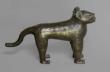
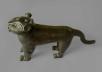
Leopard Figure
Aquamanile
Categories
Figures
Institution Location
1 Adesogbe (Plymouth) Road, P.M.B. 1115, Benin City , Edo State
Provenance
5
events
Institution data
Omo n'Oba n'Edo Uku Akpolokpolo, Ọba of Benin & National Commission for Museums and Monuments, Nigeria
The data was transferred directly by the institution and digitized by Digital Benin in collaboration with the NCMM
Last updated: 2023-11-30
Languages: english, bini; edo
| Institution field | Value |
|---|---|
Inventory number object id | LG1953.22.13 |
URL weblink | https://digitalbenin.org/catalogue/37_LG19532213 |
Object Description description | Ẹkpẹn (leopard figures) are widely featured in Benin arts. In Benin, leopards are considered the king of the forest and as such seen as a symbol of authority. The leopard is a royal symbol of kingship because it embodies the qualities of courage, strength, ferocity and wisdom. Leopards were hunted by Iviekpen. In Edo, leopards are described as the ‘king of the bush’, whereas the Ọba is the ‘king of the home’. Although ferocious, leopards are seen as natural leaders, as powerful animals with qualities of moderation and restraint (Ben-Amos, 1976, p.247). Therefore, the Ọba is seen as similar to the leopard, and when depicted on objects or as objects, the leopard symbolises the Ọba. As such, the Ọba is sometimes referred to as the ‘leopard of the house’ (Vogel, 1978, p.93). |
Diameter dimensions | |
Dimension L (cm) dimensions | 46.8 |
Dimension W (cm) dimensions | 8.9 |
Dimension H (cm) dimensions | 28.7 |
Brief Object Description designation | Leopard Aquamanille |
Material material | |
Object Count object count | 1 |
Date Made date made | |
Associated Guild producer | Igun Ẹrọnmwọn |
Production Technique production technique | Casting |
Production Place production place | Benin City |
Inscriptions inscriptions | |
Note notes | |
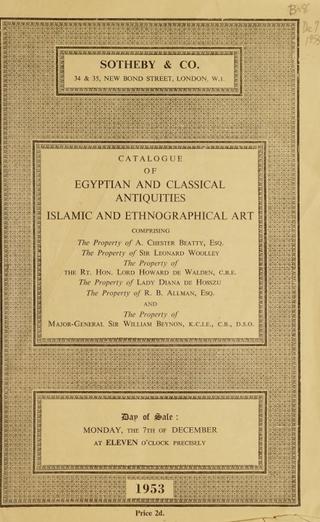
Inventory Book Description | "Brass Leopard from Benin. No. 185 in the sale catalogue where it is described as follows: ""A PAIR OF FINE BENIN BRASS WATER VESSELS in the form of standing leopards, their ears pricked and with long tails, the eyes, and fangs strongly cast, hinged openings at the top of the heads and the hollow noses forming the spouts, 11"" and 12"". Pair with No. 53.22.12 Purchased by the Nigerian Government at a sale by Messrs. Sotheby & Co. Bond Street, London on December 7th, 1953: Mr. W. B. Fagg assistant keeper, British Museum acted for the Nigerian Government at the sale. |
fileNames images | LG19532213_2.jpg, LG19532213_4.jpg, LG19532213_3.jpg, LG19532213_1.jpg |
Omo n'Oba n'Edo Uku Akpolokpolo, Ọba of Benin & National Commission for Museums and Monuments, Nigeria
The data was transferred directly from the institution and transcribed by the Digital Benin from Inventory book.
Last updated: 2021-02-19
Language: english
| Institution field | Value |
|---|---|
Inventory No object id | LG 1953. 22. 13 |
Department of Antiquities Nigerian Museum Catalogue provenance | Purchases by the Nigerian Government at the Sale by Messrs. Sotheby & Co. Bond Street, London on December 7th, 1953: Mr. W. B. Fagg assistant keeper, British Museum acted for the Nigerian Government at the Sale. n° 185 - pair of brass leopards for £500 |
Object Name (as specified in the 2019 Lagos National Museum store/gallery inventory) designation | Benin bronze leopard |
Sections
About
Other
Sensitive content
Sensitive Content Digital Benin includes colonial material that may contain inaccurate, derogatory or harmful language relating to African and African diasporic communities. Such language may appear in catalogue records, transcriptions, and book, exhibition or museum titles. We recognize that this material may cause distress. Sensitive-content warnings are being implemented across the collection, but this process is ongoing. The language does not reflect Digital Benin’s views; we take an anti-colonial and anti-racist position and are committed to centring the humanity of historically marginalised communities.