Loading...

Identifikationsnummer
C 2955
Institution
Omo n'Oba n'Edo Uku Akpolokpolo, Ọba of Benin & National Commission for Museums and Monuments, Nigeria Restituted
Previously owned by MARKK Museum am Rothenbaum Kulturen und Künste der Welt
Edo designations

English designations
Categories
Institution Location
1 Adesogbe (Plymouth) Road, P.M.B. 1115, Benin City , Edo State
Identifikationsnummer
C 2955
Institution
Omo n'Oba n'Edo Uku Akpolokpolo, Ọba of Benin & National Commission for Museums and Monuments, Nigeria Restituted
Previously owned by MARKK Museum am Rothenbaum Kulturen und Künste der Welt
Edo designations
English designations
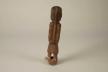
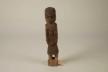
Male Figure
Categories
Figures
Institution Location
1 Adesogbe (Plymouth) Road, P.M.B. 1115, Benin City , Edo State
Iconographies
3
annotations

Uko
Container
1 annotation


Eto
hairstyles
1 annotation

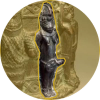
Ibierugha
Attendant
1 annotation

Provenance
5
events
Institution data
MARKK Museum am Rothenbaum Kulturen und Künste der Welt
The data was transferred directly by the institution.
Last updated: 2022-06-10
Languages: german, english
| Institution field | Value |
|---|---|
Identifikationsnummer object id | C 2955 |
Titel designation | Holzfigur |
Materialien material | ORGANISCH/ PFLANZLICH/Holz |
Heutiges Staatsgebiet des Herstellungsortes production place | Afrika/Westafrika/Nigeria/Benin-Reich |
Provenienz/Name prior source provenance | Schultz |
Provenienz Objektitinerar Akteure Orte Daten provenance | H. Schultz |
Provenienz/Affiliation provenance | |
Provenienz/Country provenance | |
Provenienz/Date of Birth provenance | unknown |
Provenienz/Date of Death provenance | unknown |
Provenienz/First Name provenance | Christoph |
Provenienz/No provenance | 34 |
Provenienz/Place of Birth provenance | unknown |
Provenienz/Place of Death provenance | unknown |
Provenienz/Profession provenance | Presumably Merchant or Sailor |
Provenienz/Role-Function/0 provenance | Consignor |
Provenienz/Role-Function/1 provenance | Collector |
Provenienz/Sex provenance | male |
Provenienz/Short Biography provenance | Christoph Schultz offered a relief plaque from the Kingdom of Benin for sale to the then Berliner Kunstgewerbemuseum and later to the Königlichen Museum für Völkerkunde in 1902. Schulz, who was based in Harburg, who presumably worked as a merchant or sailor, was most likely the same person who sold two pieces from the Kingdom of Benin to the Hamburg Museum für Völkerkunde (today MARKK) in the same year. |
Provenienz/Street provenance | |
Provenienz/Town provenance | |
Hersteller kulturhist. Herkunftsgesellschaft ethnic attribution | --/Edo |
Heutiger Aufbewahrungsort Sammlung department and institution | Museum am Rothenbaum. Kulturen und Künste der Welt (MARKK) |
Akquisitionsdatum accession date | 1901 |
Alte Inventarnummer object id | |
Inventurdatum | 11.08.2009 |
Label Text (deu) description | Figur eines Priesters Unbekannter Künstler der Holzschnitzergilde Igbesanmwan / Königreich Benin, Nigeria, 19. Jh. / Holz / Ankauf von Christoph Schultz, 1901, Inv. Nr. C 2955 |
Label Text (eng) description | Figure of a Priest Unidentified workshop of the Guild of Wood Carvers Igbesanmwan / Benin Kingdom, Nigeria, 19th century / Wood / Acquired from Christoph Schultz, 1901, Inv. no. C 2955 |
Maße dimensions |
Sections
About
Other
Sensitive content
Sensitive Content Digital Benin includes colonial material that may contain inaccurate, derogatory or harmful language relating to African and African diasporic communities. Such language may appear in catalogue records, transcriptions, and book, exhibition or museum titles. We recognize that this material may cause distress. Sensitive-content warnings are being implemented across the collection, but this process is ongoing. The language does not reflect Digital Benin’s views; we take an anti-colonial and anti-racist position and are committed to centring the humanity of historically marginalised communities.