Loading...


Identifikationsnummer
C 2391
Institution
Omo n'Oba n'Edo Uku Akpolokpolo, Ọba of Benin & National Commission for Museums and Monuments, Nigeria Restituted
Previously owned by MARKK Museum am Rothenbaum Kulturen und Künste der Welt
English designations
Categories
Institution Location
1 Adesogbe (Plymouth) Road, P.M.B. 1115, Benin City , Edo State
Identifikationsnummer
C 2391
Institution
Omo n'Oba n'Edo Uku Akpolokpolo, Ọba of Benin & National Commission for Museums and Monuments, Nigeria Restituted
Previously owned by MARKK Museum am Rothenbaum Kulturen und Künste der Welt
English designations
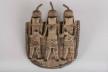
Pendant Plaque
Categories
Ceremonial Regalia
Institution Location
1 Adesogbe (Plymouth) Road, P.M.B. 1115, Benin City , Edo State
Iconographies
4
annotations
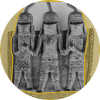
Royal Triad
Royal Triad
1 annotation


Ọba
King
1 annotation


Odigba
Coral beaded collar
2 annotations


Provenance
6
events
Institution data
MARKK Museum am Rothenbaum Kulturen und Künste der Welt
The data was transferred directly by the institution.
Last updated: 2022-06-10
Languages: german, english
| Institution field | Value |
|---|---|
Identifikationsnummer object id | C 2391 |
Titel designation | Anhänger, König mit zwei ihn stützenden Würdenträgern |
Materialien material | ANORGANISCH/Metall/Gelbguß |
Heutiges Staatsgebiet des Herstellungsortes production place | Afrika/Westafrika/Nigeria/Benin-Reich |
Provenienz/Name prior source provenance | Lembcke |
Provenienz Objektitinerar Akteure Orte Daten provenance | John Lembcke |
Provenienz/Affiliation provenance | L. Pagenstecher & Co. |
Provenienz/Country provenance | Germany |
Provenienz/Date of Birth provenance | 19.03.1873 |
Provenienz/Date of Death provenance | unknown |
Provenienz/First Name provenance | John |
Provenienz/No provenance | 25 |
Provenienz/Place of Birth provenance | |
Provenienz/Place of Death provenance | unknown |
Provenienz/Profession provenance | Merchant |
Provenienz/Role-Function/0 provenance | Consignor |
Provenienz/Role-Function/1 provenance | |
Provenienz/Sex provenance | male |
Provenienz/Short Biography provenance | John Lembcke (1873-?) originally came from Mecklenburg and was a Hamburg merchant. He worked as an agent for the trading company L. Pagenstecher & Co. in southern Nigeria. The company maintained several branches in Cameroon and Nigeria and traded raw rubber, among other things.Lembcke was probably employed at a branch of the firm in Warri, from where he went to nearby Benin City. There, he found objects which he eventually brought to Hamburg. Between 1899 and 1905, he sold 40 objects from the Kingdom of Benin to the museum. |
Provenienz/Street provenance | Hammmerlandstr. 75 II (Address Mrs. C. Lembcke, widow) |
Provenienz/Town provenance | Hamburg |
Hersteller kulturhist. Herkunftsgesellschaft ethnic attribution | --/Edo |
Heutiger Aufbewahrungsort Sammlung department and institution | Museum am Rothenbaum. Kulturen und Künste der Welt (MARKK) |
Akquisitionsdatum accession date | 1899 |
Alte Inventarnummer object id | |
Inventurdatum | 23.07.2015 |
Label Text (deu) description | Anhänger mit königlicher Triade Unbekannte Werkstatt der Bronzegießergilde Igun Eronmwon / Königreich Benin, Nigeria, 16./17. Jh. / Gelbguss / Ankauf von John Lembcke, 1899, Inv. Nr. C 2391 Anhänger mit Triadendarstellung wurden früher zu je drei Stück vom Oba und von bestimmten Würdenträgern um die Körpermitte getragen. Die kleinen Ösen entlang der Ränder hielten Kettchen mit Schellen. Auf der Brust des Oba in der Mitte der Dreiheit ist die große Königsperle sichtbar, ein Symbol seiner Herrschaft. |
Label Text (eng) description | Pendant with Royal Triad Unidentified workshop of the Bronze Casters Guild Igun Eronmwon / Benin Kingdom, Nigeria, 16th/17th century / Brass / Acquired from John Lembcke, 1899, Inv. no. C 2391 Pendants with a royal triad were once worn in groups of three around the waist by the Oba and certain dignitaries. The small loops along the edges held chains of crotals. The Oba in the middle of the trinity is distinguished by the large king’s bead, a signifier of his supremacy. |
Maße dimensions | Höhe: 19,00 cm; Breite: 15,30 cm |
Sections
About
Other
Sensitive content
Sensitive Content Digital Benin includes colonial material that may contain inaccurate, derogatory or harmful language relating to African and African diasporic communities. Such language may appear in catalogue records, transcriptions, and book, exhibition or museum titles. We recognize that this material may cause distress. Sensitive-content warnings are being implemented across the collection, but this process is ongoing. The language does not reflect Digital Benin’s views; we take an anti-colonial and anti-racist position and are committed to centring the humanity of historically marginalised communities.