Loading...


Identifikationsnummer
C 2301
Institution
Omo n'Oba n'Edo Uku Akpolokpolo, Ọba of Benin & National Commission for Museums and Monuments, Nigeria Restituted
Previously owned by MARKK Museum am Rothenbaum Kulturen und Künste der Welt
Edo designations

English designations
Categories
Institution Location
1 Adesogbe (Plymouth) Road, P.M.B. 1115, Benin City , Edo State
Identifikationsnummer
C 2301
Institution
Omo n'Oba n'Edo Uku Akpolokpolo, Ọba of Benin & National Commission for Museums and Monuments, Nigeria Restituted
Previously owned by MARKK Museum am Rothenbaum Kulturen und Künste der Welt
Edo designations
English designations
Relief Plaque
Categories
Palace Architecture & Ornamentation
Institution Location
1 Adesogbe (Plymouth) Road, P.M.B. 1115, Benin City , Edo State
Iconographies
9
annotations

Uhanbọ & Ifẹnmwẹ
Bow & Arrow
3 annotations



Ẹrhu
Headwear
1 annotation

Ẹkpẹn
Leopard
2 annotations



Ebe Amẹ
Water Fern
1 annotation

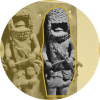
Ivẹkpẹn
Leopard Hunter
2 annotations


Provenance
6
events
Institution data
MARKK Museum am Rothenbaum Kulturen und Künste der Welt
The data was transferred directly by the institution.
Last updated: 2022-06-10
Languages: german, english
| Institution field | Value |
|---|---|
Identifikationsnummer object id | C 2301 |
Titel designation | Reliefplatte mit zwei Leopardenjägern |
Materialien material | ANORGANISCH/Metall/Gelbguß |
Heutiges Staatsgebiet des Herstellungsortes production place | Afrika/Westafrika/Nigeria/Benin-Reich |
Provenienz/Name prior source provenance | Erdmann |
Provenienz Objektitinerar Akteure Orte Daten provenance | Friedrich Erdmann |
Provenienz/Affiliation provenance | H. Bey & Co., Bey & Zimmer |
Provenienz/Country provenance | Germany |
Provenienz/Date of Birth provenance | 23.10.1866 |
Provenienz/Date of Death provenance | presumably 1907 |
Provenienz/First Name provenance | Friedrich |
Provenienz/No provenance | 10 |
Provenienz/Place of Birth provenance | Altona (today Hamburg) |
Provenienz/Place of Death provenance | presumably South Africa |
Provenienz/Profession provenance | Merchant |
Provenienz/Role-Function/0 provenance | Consignor |
Provenienz/Role-Function/1 provenance | Collector |
Provenienz/Sex provenance | male |
Provenienz/Short Biography provenance | Friedrich Erdmann (1866-presumably 1907) was a merchant from Hamburg and worked as a managing director for the trading company Bey & Zimmer in Lagos, Warri and Sapele in southern Nigeria. Erdmann is known to have visited Benin City after it was conquered by British troops, taking the artefacts that remained there to sell with the permission of the British military, as well as photographing the area. Erdmann was one of the key figures in Bey’s Benin business, selling a total of 13 objects from the Kingdom of Benin to the museum in 1898. His widow, Alma, corresponded with Felix von Luschan (1854–1924) in Berlin, and later sold objects from her husband’s collection. His son Kurt (1901–1964) was an art historian; he also sold pieces from his father’s estate. |
Provenienz/Street provenance | Große Bäckerstraße 24 |
Provenienz/Town provenance | Hamburg |
Hersteller kulturhist. Herkunftsgesellschaft ethnic attribution | --/Edo |
Heutiger Aufbewahrungsort Sammlung department and institution | Museum am Rothenbaum. Kulturen und Künste der Welt (MARKK) |
Akquisitionsdatum accession date | 1898 |
Alte Inventarnummer object id | |
Inventurdatum | 16.12.2009 |
Label Text (deu) description | Reliefplatte mit zwei Leopardenjägern Unbekannte Werkstatt der Bronzegießergilde Igun Eronmwon / Königreich Benin, Nigeria, 16./17. Jh. / Gelbguss / Ankauf von Friedrich Erdmann, 1898, Inv. Nr. C 2301 Leopardenjäger waren in einer königlichen Gilde organisiert. In den Händen halten sie Bogen und Pfeilbündel, an den linken Handgelenken ist ein beutelartiger Sehnenschutz erkennbar. Ihre Aufgabe war es, lebende Leoparden zu fangen, die entweder gezähmt am Hof gehalten oder bei den alljährlichen Festen vom König geopfert wurden. |
Label Text (eng) description | Relief Plaque with two Leopard Hunters Unidentified workshop of the Bronze Casters Guild Igun Eronmwon / Benin Kingdom, Nigeria, 16th/17th century / Brass / Acquired from Friedrich Erdmann, 1898, Inv. no. C 2301 Leopard hunters were organized in a royal guild. They are holding bows and bundles of arrows in their hands, and on their left wrists a pouch-like string protection is visible. Their duty was to capture leopards alive which were either tamed and kept at the court or sacrificed by the king at the annual festivals. |
Maße dimensions | Länge: 50,00 cm; Breite: 37,00 cm; Tiefe: 12,00 cm; Gewicht: 24,50 kg |
Sections
About
Other
Sensitive content
Sensitive Content Digital Benin includes colonial material that may contain inaccurate, derogatory or harmful language relating to African and African diasporic communities. Such language may appear in catalogue records, transcriptions, and book, exhibition or museum titles. We recognize that this material may cause distress. Sensitive-content warnings are being implemented across the collection, but this process is ongoing. The language does not reflect Digital Benin’s views; we take an anti-colonial and anti-racist position and are committed to centring the humanity of historically marginalised communities.