Loading...
Catalog Number
61B:1:47
Institution
Omo n'Oba n'Edo Uku Akpolokpolo, Ọba of Benin & National Commission for Museums and Monuments, Nigeria Edo designations

English designations
Categories
Institution Location
1 Adesogbe (Plymouth) Road, P.M.B. 1115, Benin City , Edo State
Catalog Number
61B:1:47
Institution
Omo n'Oba n'Edo Uku Akpolokpolo, Ọba of Benin & National Commission for Museums and Monuments, Nigeria Edo designations
English designations
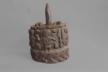
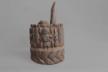
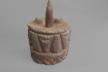
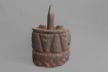
Altar of the Hand
Categories
Altar & Shrine Objects
Institution Location
1 Adesogbe (Plymouth) Road, P.M.B. 1115, Benin City , Edo State
Iconographies
5
annotations

Owẹn iba ẹdẹ ku
Rosette - 'The Sun Never Misses a Day'
1 annotation

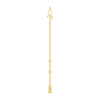
Asoro
Spears
1 annotation

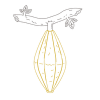
Umwenkhen
Pumpkin fruit
1 annotation


Ukpan obọ eva
Crossed Beaded Baldrics
1 annotation


Ubanu'hi
Inifinity Symbol
1 annotation

Provenance
3
events
Institution data
Omo n'Oba n'Edo Uku Akpolokpolo, Ọba of Benin & National Commission for Museums and Monuments, Nigeria
The data was transferred directly by the institution and digitized by Digital Benin in collaboration with the NCMM
Last updated: 2023-11-30
Languages: english, bini; edo
| Institution field | Value |
|---|---|
Catalog Number object id | 61B:1:47 |
Material material | Wood |
Description description | Obọ, the hand or arm, is recognised to be the seat of power of accomplishing things. Its worship is specific to warriors as well as wealthy and high-ranking people. It is worshipped to ensure success for special undertakings and give thanks. The Ọba and some people of high rank still have special altars of the hand, called Ikẹgobọ, which take the form of sculptured cylindrical objects in wood, or occasionally bronze, depending on the status of the sponsor. Ikẹgobọ are placed on ancestral altars. Typically, the Ọba, Iy’Ọba and certain privileged chiefs may use cast forms, whereas chiefs use wooden ones (Dean, 1983). Altars of the hand are cylindrical, the outer sides decorated with relief carving. They are sometimes topped with sculptural elements, elephant tusks or antelope horns, and wooden altars are topped with a conical projection which mimics a tusk. Worship of the hand is important in Edo belief; the hand relates to an individual’s success with different skills, qualities or characteristics, such as craftsmanship, hunting or warcraft. Chief Jacob Egharevba (1949, pp.88-89) worship of the ‘god of the hand’ emerged during the fifteenth century, during the reign of Ọba Ewaure I. What is less certain is whether altars of the hand also emerged at this time, or were a later development. Today, Ikẹgobọ continue to be used on altars by individuals who have high-ranking positions within the palace societies. |
P.N. object id | 61B:1:64 |
Object count object count | 1 |
Associated Guild producer | Igbesamwan |
Production Place production place | Benin City |
URL weblink | https://digitalbenin.org/catalogue/36_61B147 |
Production Technique production technique | Carving |
Dimension H (cm) dimensions | |
Dimension W (cm) dimensions | |
Dimension L (cm) dimensions | |
Diameter dimensions | |
Title designation | |
Date Made date made | |
Inscription inscriptions | |
fileNames images | 61B147_4.jpg, 61B147_5.jpg, 61B147_6.jpg, 61B147_2.jpg, 61B147_3.jpg, 61B147_1.jpg |
Omo n'Oba n'Edo Uku Akpolokpolo, Ọba of Benin & National Commission for Museums and Monuments, Nigeria
The data was transferred directly from the institution and transcribed by the Digital Benin from Catalogue Cards.
Last updated: 2021-01-15
Language: english
| Institution field | Value |
|---|---|
Catalogue No object id | 61B:1:47 |
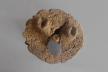
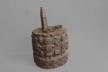
Description description | A circular alter of the hand having some human designs, with some holding snakes and others holding swords. At the base it has a net like design. The object bis also having two stumps with one pointed projection at the top. |
Material material | Wood |
Diam dimensions | |
Dimension H (cm) dimensions | 33 |
Dimension L (cm) dimensions | |
Dimension W (cm) dimensions | |
Weight KG weight | 4 |
Classification object type | Wooden Shrine (Ukengobo) |
Patina and colour colour | Black |
Method of Manufacture production technique | Carving |
State production place | Bendel |
Later Notes provenance | |
Vendor provenance | |
Ethnic Group ethnic attribution | Edo |
Division department and institution | |
Condition Incl condition | Good |
Photo Number images | 2:143:28 |
P.N. object id | 61B:1:64 |
Price value | |
Signature of Cataloguer | Lawale A. A. |
Sections
About
Other
Sensitive content
Sensitive Content Digital Benin includes colonial material that may contain inaccurate, derogatory or harmful language relating to African and African diasporic communities. Such language may appear in catalogue records, transcriptions, and book, exhibition or museum titles. We recognize that this material may cause distress. Sensitive-content warnings are being implemented across the collection, but this process is ongoing. The language does not reflect Digital Benin’s views; we take an anti-colonial and anti-racist position and are committed to centring the humanity of historically marginalised communities.