Loading...
Object Number
1991.17.134a, b
Institution
Metropolitan Museum of Art Edo designations

English designations
Categories
Institution Location
1000 5th Ave, New York, NY 10028, United States
Object Number
1991.17.134a, b
Institution
Metropolitan Museum of Art Edo designations
English designations
Altar Ring
Categories
Altar & Shrine Objects
Institution Location
1000 5th Ave, New York, NY 10028, United States
Iconographies
1
annotations
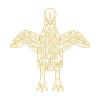
Ahianmwẹ
Birds
1 annotation

Provenance
7
events
Institution data
Metropolitan Museum of Art
The data was transferred directly by the institution.
Last updated: 2021-07-30
Language: english
| Institution field | Value |
|---|---|
Object Number object id | 1991.17.134a, b |
Object Sort Number object id | 1991 17 134a b |
Primary Rendition No object id | DT6617 |
Title designation object type | Altar Ring |
Medium material | Brass |
Dimensions dimensions | H. 1 7/8 × W. 8 1/2 × D. 8 1/2 in. (4.8 × 21.6 × 21.6 cm) |
Classification object type | Metal-Sculpture |
Date date made | 17th–19th century |
Geo: City production place | Court of Benin (?) |
Geo: Country production place | Nigeria |
Credit Line prior source | Gift of Mr. and Mrs. Klaus G. Perls, 1991 |
Provenance provenance | Court of Benin; taken from the Royal Palace in 1897 during the British military occupation of Benin by Norman Burrows; [W. D. Webster, until 1898]; Augustus Lane-Fox Pitt-Rivers, Farnham, Dorset, U.K., from 1898; [Alvin Abrams, Conneticut and New York]; Mr. and Mrs. Klaus G. Perls, New York, until 1991 |
Dynasty reign associated name | Oranmiyan |
Culture ethnic attribution | Edo peoples |
ExhibitionHistory exhibition history | Royal Art of Benin from the Perls Collection The Metropolitan Museum of Art, January 16, 1992–September 13,1992 |
Bibliography bibliography | Ezra, Kate. Royal Art of Benin: The Perls Collection in the Metropolitan Museum of Art. New York: The Metropolitan Museum of Art, 1992, pp. 102–103, no. 32. |
Published References bibliography | Pitt-Rivers, Lieutenant General Lane-Fox. 1900. Antique Works of Art from Benin. London: pl. 25. Vogel, Susan Mullin. "Rapacious Birds and Severed Heads: Early Bronze Rings from Nigeria" The Art Institute of Chicago Centennial Lectures / Museum Studies 10, 1983, p331-357. "ROYAL ART OF BENIN. The Perls Collection in The Metropolitan Museum of Art." Kate Ezra. The Metropolitan Museum of Art and Harry N. Abrams Inc., New York 1992, no. 32 |
Metropolitan Museum of Art
The data was downloaded via a public data access of the institution.
Last updated: 2025-05-26
Language: english
| Institution field | Value |
|---|---|
Is Highlight | False |
Is Timeline Work | True |
Is Public Domain license | True |
Object ID object id | 316602 |
Department department and institution | Arts of Africa, Oceania, and the Americas |
AccessionYear accession date | 1991 |
Object Name object type | Altar ring |
Title designation | Altar Ring |
Culture ethnic attribution | Edo peoples |
Object Date date made | 17th–19th century |
Object Begin Date date made | 1600 |
Object End Date date made | 1897 |
Medium material | Brass |
Dimensions dimensions | H. 1 7/8 × W. 8 1/2 × D. 8 1/2 in. (4.8 × 21.6 × 21.6 cm) |
Credit Line prior source | Gift of Mr. and Mrs. Klaus G. Perls, 1991 |
City production place | Court of Benin (?) |
Country production place | Nigeria |
Classification object type | Metal-Sculpture |
Link Resource weblink | http://www.metmuseum.org/art/collection/search/316602 |
Object Wikidata URL weblink | https://www.wikidata.org/wiki/Q96064588 |
Repository department and institution | Metropolitan Museum of Art, New York, NY |
Tags iconography | Birds |
Tags AAT URL iconography | http://vocab.getty.edu/page/aat/300266506 |
Tags Wikidata URL iconography | https://www.wikidata.org/wiki/Q5113 |
Sections
About
Other
Sensitive content
Sensitive Content Digital Benin includes colonial material that may contain inaccurate, derogatory or harmful language relating to African and African diasporic communities. Such language may appear in catalogue records, transcriptions, and book, exhibition or museum titles. We recognize that this material may cause distress. Sensitive-content warnings are being implemented across the collection, but this process is ongoing. The language does not reflect Digital Benin’s views; we take an anti-colonial and anti-racist position and are committed to centring the humanity of historically marginalised communities.