Loading...


Accession Number
11.10.98.7 (Ethnology)
Institution
World Museum, National Museums Liverpool Edo designations

English designations
Categories
Institution Location
William Brown St, Liverpool L3 8EN, United Kingdom
Accession Number
11.10.98.7 (Ethnology)
Institution
World Museum, National Museums Liverpool Edo designations
English designations
Commemorative Head
Categories
Altar & Shrine Objects
Heads
Institution Location
William Brown St, Liverpool L3 8EN, United Kingdom
Iconographies
4
annotations

Odigba
Coral beaded collar
1 annotation


Ititi ako
Star beads
1 annotation

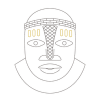
Ikharo
Forehead markings
1 annotation

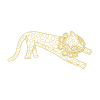
Ẹkpẹn
Leopard
1 annotation

Provenance
4
events
Institution data
World Museum, National Museums Liverpool
The data was transferred directly by the institution.
Last updated: 2022-01-06
Language: english
| Institution field | Value |
|---|---|
Accession Number object id | 11.10.98.7 (Ethnology) |
Object Name designation object type | Religion |
Description - Historic description | |
Description - Online label/0 description provenance | This cast brass commemorative altarpiece represents the head of an Oba, wearing a coral bead headpiece and necklaces. It would have been commissioned as one of a pair to be placed symmetrically on the shrine of a deceased Oba by his successor. The circular hole in the top of the head was designed to support a commemorative elephant tusk. Such tusks (see 7.10.97.10) were typically carved with relief imagery reflecting the authority and divine attributes of the Oba. A lot of brass would have gone into the casting of this head. Large quantities of brass became available when Benin’s trade with European merchants was revived in the 18th century. As yet nothing is known about the Mr Miller who sold this commemorative head to the museum in 1898 or how he acquired it. |
Description - Online label/1 description | |
Materials material | Copper Alloy; Brass |
Measurements dimensions | Overall: 398 mm x 320 mm x 310 mm; 15 11/16 in x 12 5/8 in x 12 3/16 in |
Object Type object type | Commemorative Altar head; Uhunmwun Elao |
Item Count object count | 1,00 |
Date Made date made | 18th Century; 19th Century early |
Place Made production place | Africa: Western Africa: Nigeria: Southern Nigeria: Benin City |
Collector prior source | |
Credit Line prior source | Purchase from Mr. Miller, 1898. |
Date Collected date collected | 1897 - 1898 |
Place Collected place collected | Africa: Western Africa: Nigeria: Southern Nigeria: Benin City |
Culture ethnic attribution | Edo [Bini] |
Legal Status legal status | PERMANENT COLLECTION |
Category | Globalisation: Africa |
World Museum, National Museums Liverpool
The data was transferred directly by the institution.
Last updated: 2026-09-28
Language: english
| Institution field | Value |
|---|---|
Accession Number object id | 11.10.98.7 (Ethnology) |
Object Name designation object type | Religion |
Description - Historic description | |
Description - Online label/0 description provenance | This cast brass commemorative altarpiece represents the head of an Oba, wearing a coral bead headpiece and necklaces. It would have been commissioned as one of a pair to be placed symmetrically on the shrine of a deceased Oba by his successor. The circular hole in the top of the head was designed to support a commemorative elephant tusk. Such tusks (see 7.10.97.10) were typically carved with relief imagery reflecting the authority and divine attributes of the Oba. A lot of brass would have gone into the casting of this head. Large quantities of brass became available when Benin’s trade with European merchants was revived in the 18th century. As yet nothing is known about the Mr Miller who sold this commemorative head to the museum in 1898 or how he acquired it. |
Description - Online label/1 description | |
Materials material | Copper Alloy; Brass |
Measurements dimensions | Overall: 398 mm x 320 mm x 310 mm; 15 11/16 in x 12 5/8 in x 12 3/16 in |
Object Type object type | Commemorative Altar head; Uhunmwun Elao |
Item Count object count | 1.00 |
Date Made date made | 18th Century; 19th Century early |
Place Made production place | Africa: Western Africa: Nigeria: Southern Nigeria: Benin City |
Collector prior source | |
Credit Line prior source | Purchase from Mr. Miller, 1898. |
Date Collected date collected | 1897 - 1898 |
Place Collected place collected | Africa: Western Africa: Nigeria: Southern Nigeria: Benin City |
Culture ethnic attribution | Edo [Bini] |
Legal Status legal status | PERMANENT COLLECTION |
Category | Global Cultures: Africa |
Sections
About
Other
Sensitive content
Sensitive Content Digital Benin includes colonial material that may contain inaccurate, derogatory or harmful language relating to African and African diasporic communities. Such language may appear in catalogue records, transcriptions, and book, exhibition or museum titles. We recognize that this material may cause distress. Sensitive-content warnings are being implemented across the collection, but this process is ongoing. The language does not reflect Digital Benin’s views; we take an anti-colonial and anti-racist position and are committed to centring the humanity of historically marginalised communities.