About About
Digital Benin was developed between 2020 and 2026 through an international and interdisciplinary collaboration, bringing together researchers, developers, designers and Edo scholars and knowledge holders across Nigeria, Europe, the US and beyond. Hosted by MARKK and supported by the Ernst von Siemens Kunststiftung, Gerda Henkel Foundation and Mellon Foundation, the project connected diverse forms of knowledge and perspectives to shape research, documentation, data, design and technical infrastructure, deepening understanding of histories and continuing cultural lives of Benin heritage.
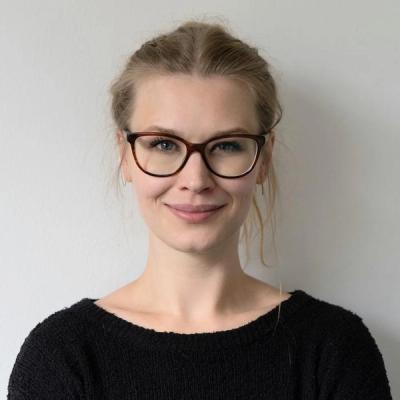
Gwenlyn Tiedemann played the critical role on the receiving end of the data transfer of all institutions between 2021-2022. Her expertise in digital humanities and software engineering, specialising in research data management and digital art history, data processing and modelling, made it possible to show and link the platform – first for the researchers in the team and ultimately on the launched platform. She processed the transferred data and the image-to-object mapping for research and study by the team and worked alongside the team’s technical leads to develop data pipelines for data organisation and online publication. In addition, she has viewed, sorted and prepared the archival materials received from the museums for further processing and research. She engaged with all team members to provide updates and feedback and to share documentation on the received and processed data and communicated directly with institutions on more complex technical issues and image matching. She worked closely with Krystelle Denis and Alex Horak on bringing the transferred data onto the platform and played a foundational role in the launch of the platform.
Gwenlyn Tiedemann is a digital humanties expert and software engineer, specialising in research data management and digital art history. Especially data processing, modelling, visualisation, as well as virtual (reality) museums and 3D modelling. She studied Information Processing and Art History at the University of Cologne. There she also worked at the WiSo IT and Infrastructure, the Institute of Art History, the Institute of Musicology and the Cologne Center for eHumanities. In recent years, she was head of the information infrastructure project of the Collaborative Research Centre 1167 “Macht and Herrschaft – Premodern Configurations in a Transcultural Perspective” at the University of Bonn. Her work focuses on the digital preservation of cultural heritage. She has conducted numerous projects. Including the conception and implementation of a VR museum for the instrument museum of the Cologne Musicology and of a digital edition of letters from World War II. Moreover, she has developed platforms and apps for museums and cultural institutions.
Sensitive Content Digital Benin includes colonial material that may contain inaccurate, derogatory or harmful language relating to African and African diasporic communities. Such language may appear in catalogue records, transcriptions, and book, exhibition or museum titles. We recognize that this material may cause distress. Sensitive-content warnings are being implemented across the collection, but this process is ongoing. The language does not reflect Digital Benin’s views; we take an anti-colonial and anti-racist position and are committed to centring the humanity of historically marginalised communities.