Ugianranran
Ugianranran (manillas) are highly important objects in the visual language of the Emwin Arhe (royal treasures). Although Ugianranran were made in a variety of sizes, forms, and weights, they share the characteristics of being made from copper or copper alloys, namely brass or bronze, and having a curved, ring- or horseshoe-shaped form.
In the early years of trade between the Portuguese and Edo, during the late 15th and early 16th centuries, manillas were made primarily of copper. During the early 16th century, Edo traders increasingly sought manillas made of brass. This changing preference is believed to have corresponded with the growing demand for brass among artists of the Igun-Ẹrọnmwọn ( ). During the 17th and early 18th centuries, the Dutch also traded manillas with the Edo, although to a lesser extent than the Portuguese. Recent scientific analysis has shown similarities between the composition of metals in manillas from the southern Rhineland region of Germany and the copper alloys used in some Emwin Arhe, supporting earlier scholarship suggesting that manillas were used by casters to produce Emwin Arhe (Skowronek et al. 2023).
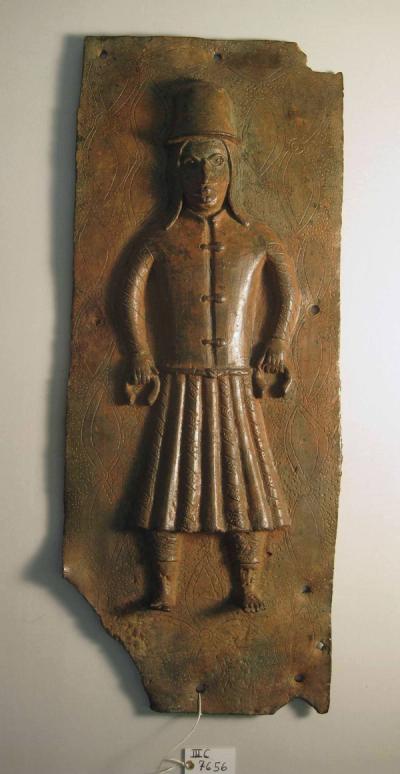
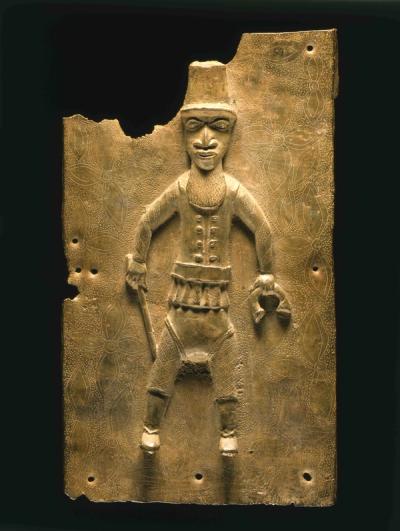
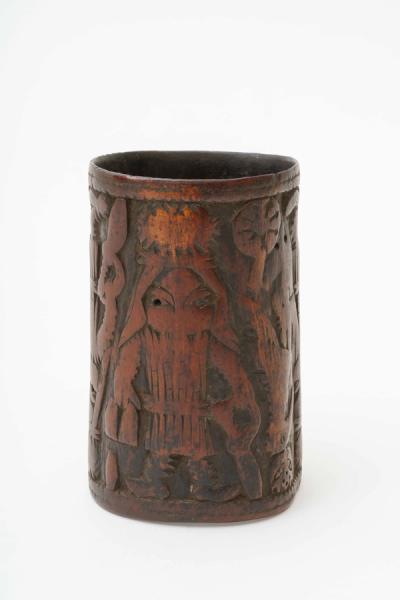
When depicted on objects, Ugianranran are often shown alongside or being held by figures identified as Portuguese. In one case, figures identified as Benin traders or royal emissaries are shown holding manillas in their hands ( ). This is particularly the case on the Ama-Ẹrọnmwọn (bronze relief plaques), which are believed to have been commissioned by Ọba Esigie. Esigie is understood to have encouraged the production of artworks, made possible in part by the increased supply of manillas and other copper-alloy objects resulting from trade ( ). Ugianranran are therefore associated with overseas trade, wealth, and Olokun, the deity of the seas ( ). In addition to being held by figures or appearing alongside them on artworks, Ugianranran sometimes serve as focal decorative motifs, further indicating their symbolic and economic potency.
Digital Benin collates digital material from institutions, and some of this material is inherently colonial and contains words, terms and phrases that are inaccurate, derogatory and harmful towards African and African diasporic communities. Catalogue transcriptions, book titles, exhibition titles and museum titles may contain harmful terms. We recognise the potential for the material to cause physical and mental distress as well as evoke strong emotions. Owing to the scale of the collection’s data, a process to implement sensitive-content warnings in the displayed data is still incomplete. The material within the catalogue does not represent Digital Benin’s views. Digital Benin maintains a strong anti-colonial, anti-racist position and affirms its support for centring the humanity of historically marginalised and disenfranchised communities. Read more about the background of this statement here