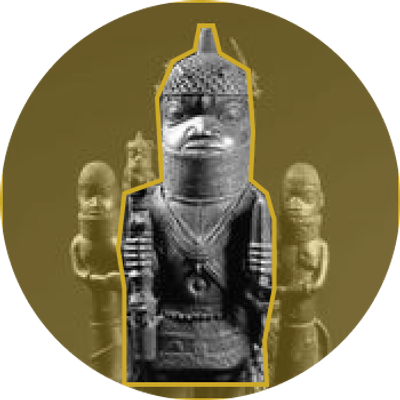
King Akẹnzua I

Ọba Akẹnzua I

King Akẹnzua I
Description
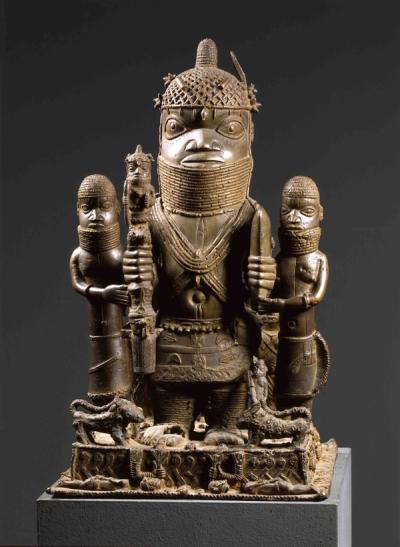
Ọba Akẹnzua I faced a difficult beginning to his reign, despite his father Ọba Ẹwuakpẹ’s efforts to reinstate the principle of primogeniture. His succession was challenged by his younger brother, who was supported by the Iyasẹ and other Town Chiefs. Following a civil war, Akẹnzua I, with the support of the Ezọmọ, ultimately prevailed. His victory over the Iyasẹ is often represented through the motif of the Ọba standing on an elephant. The elephant is understood to symbolise the Iyasẹ, whose home village was the centre of the Oregbeni (guild of elephant hunters).

Despite the political turmoil surrounding his accession, Akẹnzua I ultimately became a wealthy monarch, benefiting from the expansion of trade with European powers. His reign also reflects broader changes in the position and representation of the Ọba during the 18th century. Unlike earlier monarchs, 18th-century Ọbas could no longer leave the capital for extended periods and increasingly withdrew into the palace, becoming more secluded from public life.

Objects with Ọba Akẹnzua I

1 objects
See all
Altar Tableau
Institution
Omo n'Oba n'Edo Uku Akpolokpolo, Ọba of Benin & National Commission for Museums and Monuments, Nigeria
ID
209795
Edo designations
Urhotọ
Restituted

Objects with Ọba Akẹnzua I

1
Altar Tableau
Institution
Omo n'Oba n'Edo Uku Akpolokpolo, Ọba of Benin & National Commission for Museums and Monuments, Nigeria
ID
209795
Edo designations
Urhotọ
Restituted
Sensitive content

Sensitive Content Digital Benin includes colonial material that may contain inaccurate, derogatory or harmful language relating to African and African diasporic communities. Such language may appear in catalogue records, transcriptions, and book, exhibition or museum titles. We recognize that this material may cause distress. Sensitive-content warnings are being implemented across the collection, but this process is ongoing. The language does not reflect Digital Benin’s views; we take an anti-colonial and anti-racist position and are committed to centring the humanity of historically marginalised communities.

Read more about our approach