Iyase or Ezomo
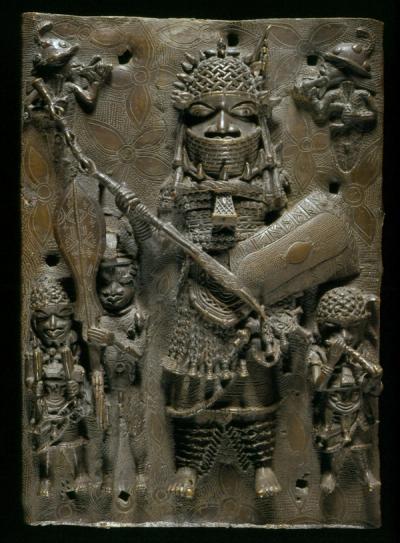
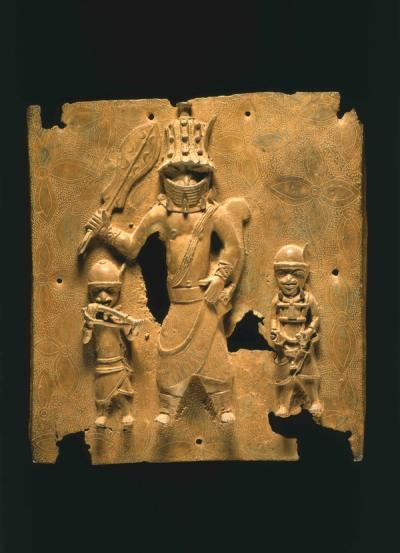
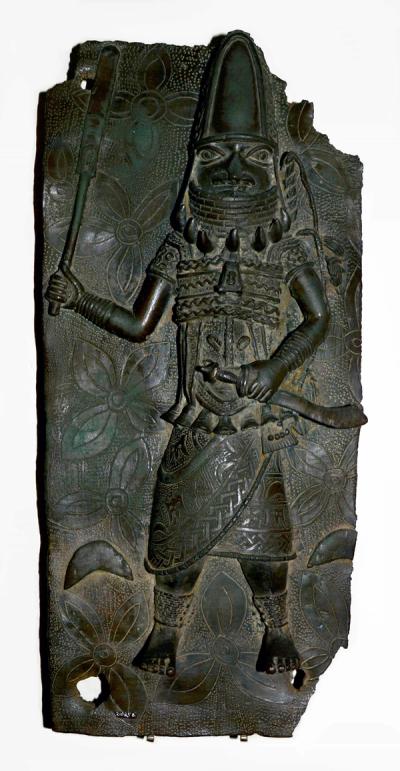
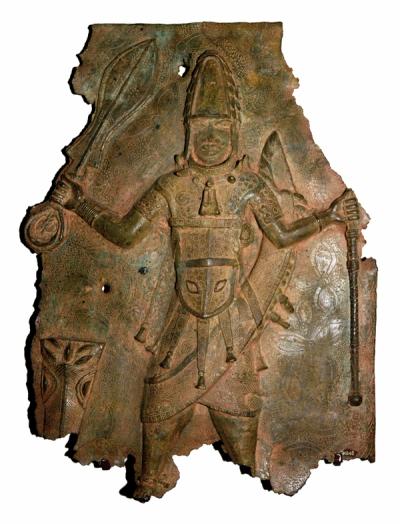
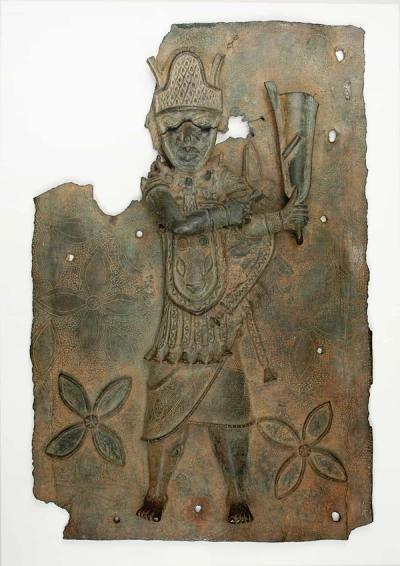
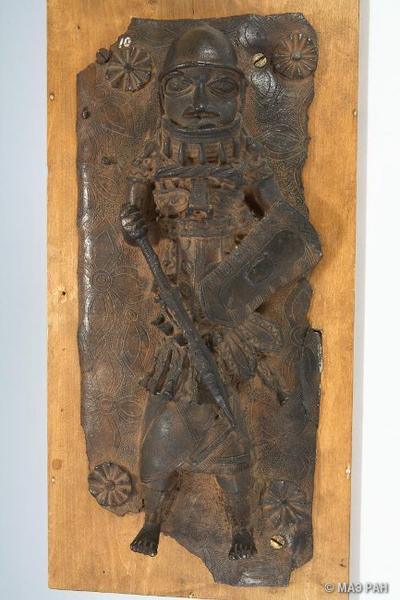
Warrior chiefs or commanders are often depicted on the Emwin Arhe, in particular the Ama - Eronmwon (bronze relief plaques) and the Aken’ni Elao (carved tusks). Edo artists often represented Warrior Chiefs using attire such as Ohian Ẹkpẹn (leopard tunics) and Akọn Ẹkpen (leopard’s tooth neck ornament), which they are often shown wearing during ceremonial occasions such as Isiokuo. Warrior chiefs, or the attendants who often accompany them, may also carry an Asa (shield) or an Ẹbẹn (ceremonial sword). Additionally, a number of representations in both brass and ivory show War Chiefs riding on horseback, an indication of their social status, military rank and prowess (Osadolor in Plankensteiner 2007, cat. nr.62, p.316; cat. nr.244, p.459).
In the Edo military hierarchy, there are four key titles for those bestowed with the highest rank, namely the Iyase or the Generalissimo who was second in command to the Ọba. Next in line is the non-hereditary title of Ezomo, part of the Uzama Nihinron. Next in command, is the Edogun, commander of the Ekaiwe, made up of the sons of the Ọba’s daughters. The Edogun would brief the Ọba on war plans, strategies and tactics, the general appraisal of military strength and also had the role of declaring war by displaying the Asa (battle shield) and then marking the end of war by returning the Asa. The Ekegbian, head of the Isienmwenro (royal guards in the Ọba Palace and with detachments in most Edo towns), was next in the chain of command. Only the Ọba could command the Ekegbian to mobilise the Isienmwenro for battle (Osadolor 2007, pp.78-9).
The Iyase can often be identified by the rounded bell-shaped headwear artists depict him wearing across different types of Emwin Arhe, from Ama - Eronmwon (bronze relief plaques), to Aken ni’Elao, and carved representations on idiophone staffs. However, identifying the Ezomo is less easy to identify, although figures wearing a peaked helmet and the usual symbols of military commanders have been identified as representations of the Ezomo (Blackmun in Plankensteiner 2007, cat. nrs. 118-9, p.363)
Digital Benin collates digital material from institutions, and some of this material is inherently colonial and contains words, terms and phrases that are inaccurate, derogatory and harmful towards African and African diasporic communities. Catalogue transcriptions, book titles, exhibition titles and museum titles may contain harmful terms. We recognise the potential for the material to cause physical and mental distress as well as evoke strong emotions. Owing to the scale of the collection’s data, a process to implement sensitive-content warnings in the displayed data is still incomplete. The material within the catalogue does not represent Digital Benin’s views. Digital Benin maintains a strong anti-colonial, anti-racist position and affirms its support for centring the humanity of historically marginalised and disenfranchised communities. Read more about the background of this statement here