Drummer

Ikpema

Drummer
Description
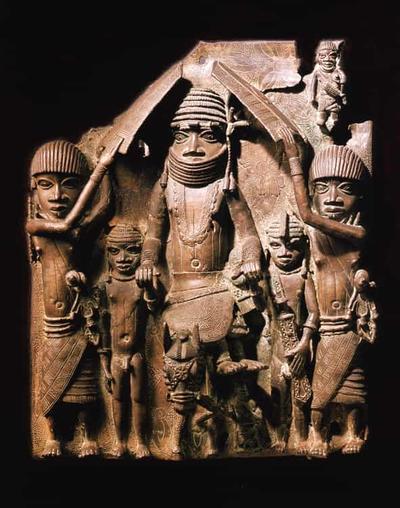
Within the Edo royal court, several groups of drummers performed during ceremonies and festivals. Within the Iwedo Palace Society, three guilds included members who played drums. The Ikpema were the guild of royal drummers, while the Igemaba were also responsible for drumming. The third group were the Iwini drummers of the Ogbelaka, a guild of royal bards whose members included both dancers and drummers. Both the Igemaba and Ikpema performed during the annual Ugie festival, although only chiefs who had not been awarded the emedo ‘mighan (“chiefs’ drums”) were permitted to dance to the drumming of the Ikpema ( ). Today in Benin City, Ikpema is used to generally describe drummers.

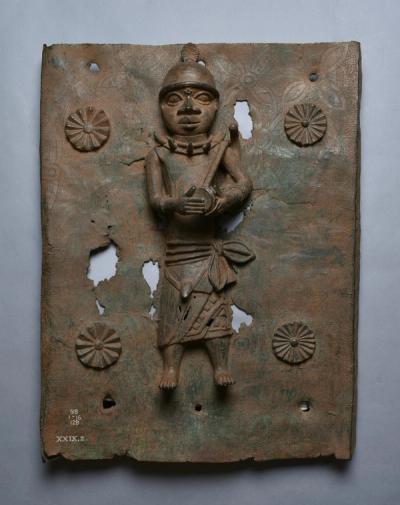
Figures playing drums were most frequently depicted by artists on Ama-Ẹrọnmwọn (bronze relief plaques). Although the drums vary in size and form, these figures have often been identified as members of the Iwini group of the Ogbelaka guild.

Drums also played an important role in warfare. Their sound, combined with blasts from trumpets and flutes and the ringing of bells, created a cacophony intended to intimidate opponents and magnify the apparent size and strength of the Benin army. The importance of drummers in warfare was likewise recorded in the visual language of the Ama-Ẹrọnmwọn, where artists from the Igun-Ẹrọnmwọn depicted drummers alongside other military figures.

Objects with Ikpema

2 objects
See all
Relief Plaque
Institution
Omo n'Oba n'Edo Uku Akpolokpolo, Ọba of Benin & National Commission for Museums and Monuments, Nigeria
ID
210443
Edo designations
Ama-Ẹrọnmwọn
Restituted
Relief Plaque
Institution
British Museum
Registration number
Af1898,0115.129
Edo designations
Ama-Ẹrọnmwọn

Objects with Ikpema

2
Relief Plaque
Institution
Omo n'Oba n'Edo Uku Akpolokpolo, Ọba of Benin & National Commission for Museums and Monuments, Nigeria
ID
210443
Edo designations
Ama-Ẹrọnmwọn
Restituted
Relief Plaque
Institution
British Museum
Registration number
Af1898,0115.129
Edo designations
Ama-Ẹrọnmwọn
Sensitive content

Sensitive Content Digital Benin includes colonial material that may contain inaccurate, derogatory or harmful language relating to African and African diasporic communities. Such language may appear in catalogue records, transcriptions, and book, exhibition or museum titles. We recognize that this material may cause distress. Sensitive-content warnings are being implemented across the collection, but this process is ongoing. The language does not reflect Digital Benin’s views; we take an anti-colonial and anti-racist position and are committed to centring the humanity of historically marginalised communities.

Read more about our approach