Ikpakohẹn
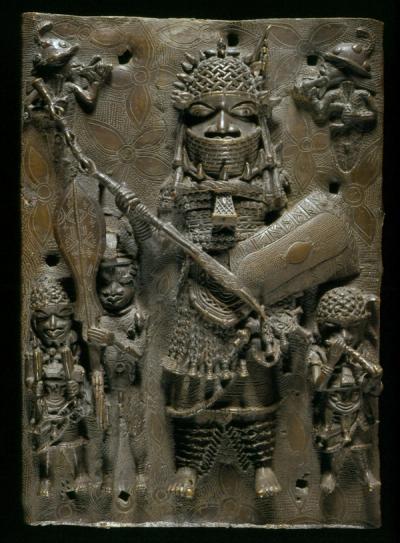
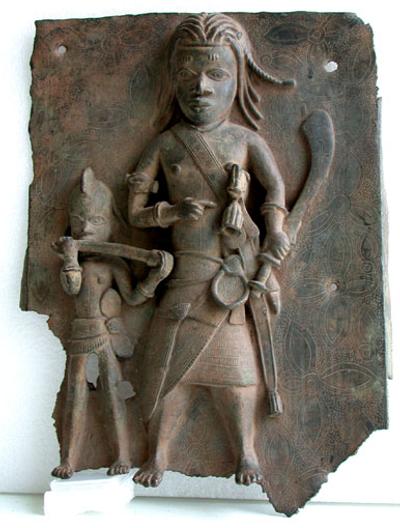
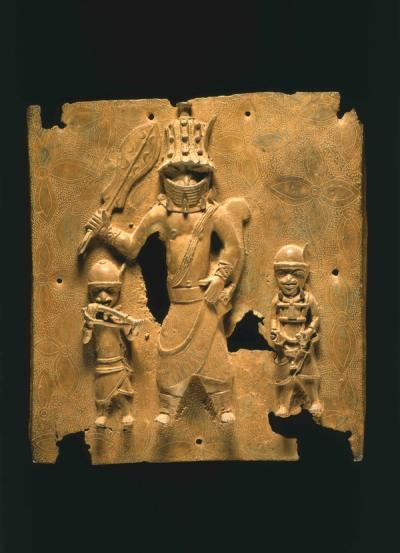
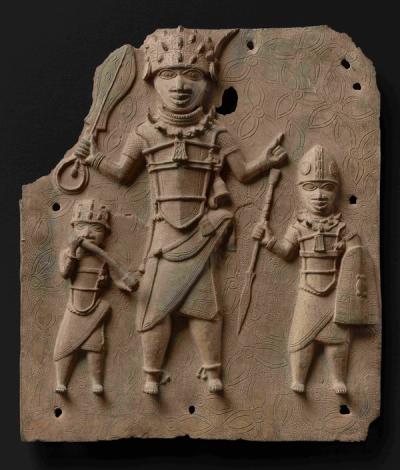
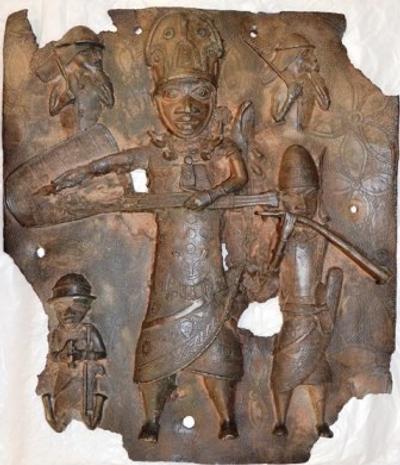
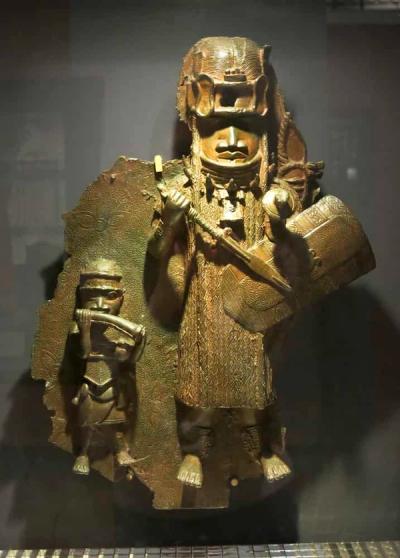
Hornblower and flute-player figures recur frequently in the visual language of Emwin Arhe (royal treasures), particularly on Ama-Ẹrọnmwọn (bronze relief plaques) and Aken’ni Elao (carved tusks). Horns and flutes made from ivory and brass have long been used in the Benin Kingdom, with ivory instruments continuing to be used today ( ).
Akohẹn are the largest type of horn and were used exclusively by the Ọba’s retainers before sacrifices in the palace. The Ikpakohẹn is a specialist hornblower responsible for playing the ivory Akohẹn, a role introduced during the reign of Ọba Eresonyẹn. According to Ọba Akẹnzua II, a group of six hornblowers from Use played these horns during Ugie (in Bradbury 1957, B.S. 85; ). Another type of horn, the Oko, was used by Ebo “to call witches and wizards to come to the crossroads” ( ).
Ọba Akẹnzua II (in Bradbury 1957, B.S. 85) also described the Eziken, a thin, side-blown fife or flute made from calabash or ivory. These instruments were played by members of the Ikpeziken, the guild of royal flute players, who performed as part of musical ensembles during ceremonies such as Ugie.
Digital Benin collates digital material from institutions, and some of this material is inherently colonial and contains words, terms and phrases that are inaccurate, derogatory and harmful towards African and African diasporic communities. Catalogue transcriptions, book titles, exhibition titles and museum titles may contain harmful terms. We recognise the potential for the material to cause physical and mental distress as well as evoke strong emotions. Owing to the scale of the collection’s data, a process to implement sensitive-content warnings in the displayed data is still incomplete. The material within the catalogue does not represent Digital Benin’s views. Digital Benin maintains a strong anti-colonial, anti-racist position and affirms its support for centring the humanity of historically marginalised and disenfranchised communities. Read more about the background of this statement here