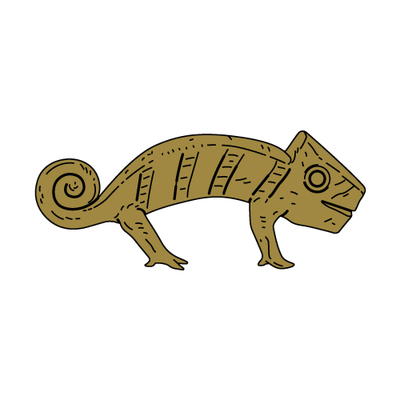
Ẹrokhi
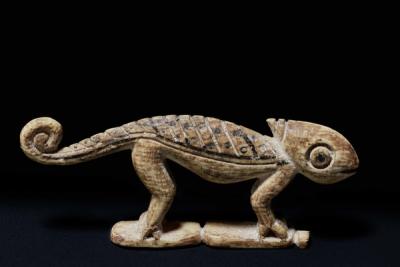
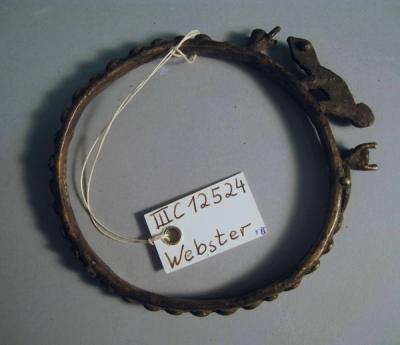
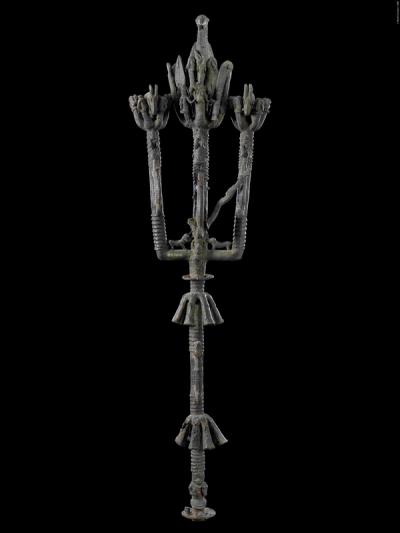
The Ẹrokhi (chameleon) carries several distinct and often potent meanings. The reptile is primarily associated with supernatural power, transformation, and long life, and is often depicted on objects associated with Osun, the deity of medicine. It is also considered one of the symbols of this deity ( ).
The supernatural power and transformative associations with the Ẹrokhi relate to the way the animal is seen as a symbol of the bush, due to its ability to camouflage itself. This capacity for camouflage has led to parallels being drawn between the Ẹrokhi and the Edo army, suggesting their ability to appear and disappear, as well as to adapt strategically. The skin of the Ẹrokhi is also believed to be poisonous, and the animal is associated with long life, as well as with the belief that anyone who depends on Osun will not die in battle.
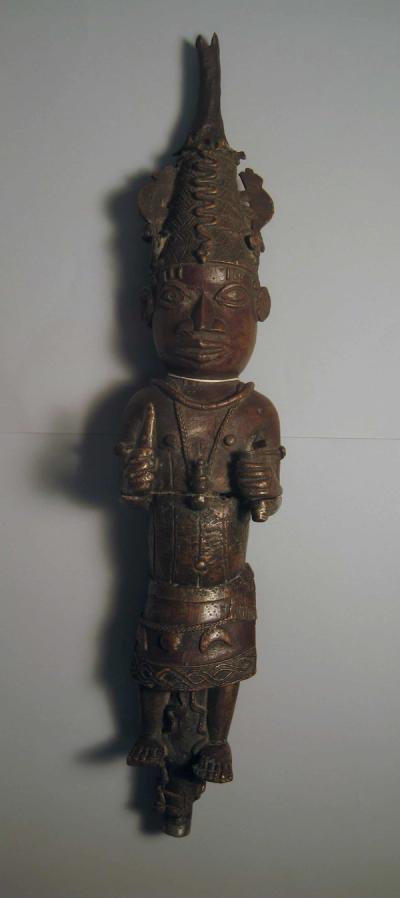
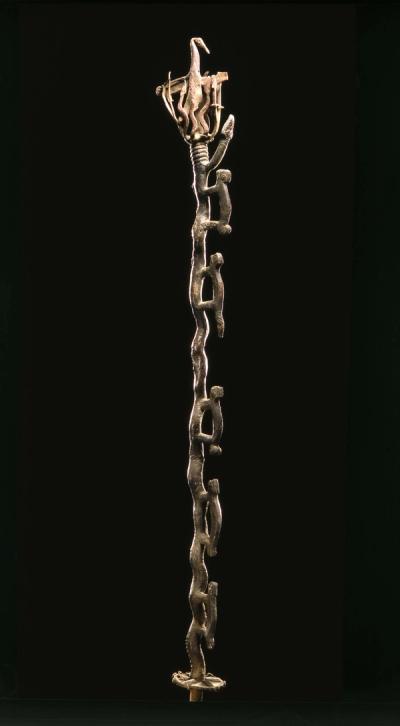
Osogan (Osun staffs) decorated with Ẹrokhi walking up the length of the staff were carried into battle by Osun specialists, who walked ahead of the army, conveying their spiritual power and potency against the enemy. The praise name for these staffs is ‘osun-nigiogio’ (medicine hot-hot), indicating the dangerous and potent beliefs surrounding these staffs, to which chameleon motifs contribute ( ). Overall, the chameleon is a complex symbol that reinforces themes of mystical potency, endurance, and the transformative power wielded by the Ọba and those associated with Osun.
Digital Benin collates digital material from institutions, and some of this material is inherently colonial and contains words, terms and phrases that are inaccurate, derogatory and harmful towards African and African diasporic communities. Catalogue transcriptions, book titles, exhibition titles and museum titles may contain harmful terms. We recognise the potential for the material to cause physical and mental distress as well as evoke strong emotions. Owing to the scale of the collection’s data, a process to implement sensitive-content warnings in the displayed data is still incomplete. The material within the catalogue does not represent Digital Benin’s views. Digital Benin maintains a strong anti-colonial, anti-racist position and affirms its support for centring the humanity of historically marginalised and disenfranchised communities. Read more about the background of this statement here