Eni
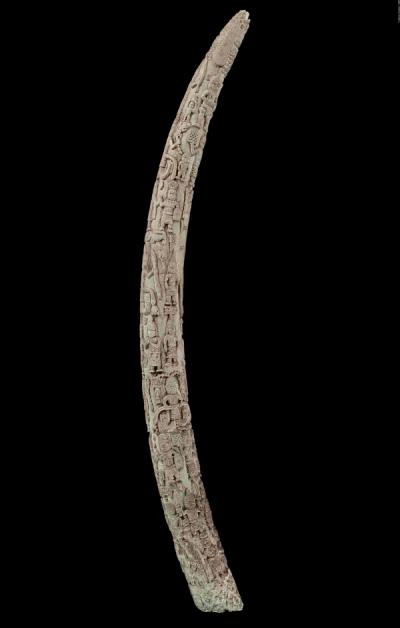
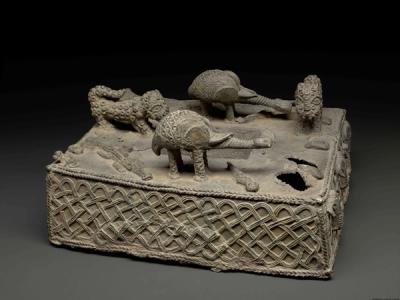
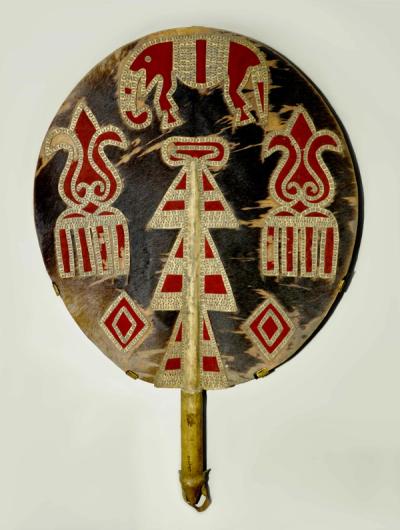
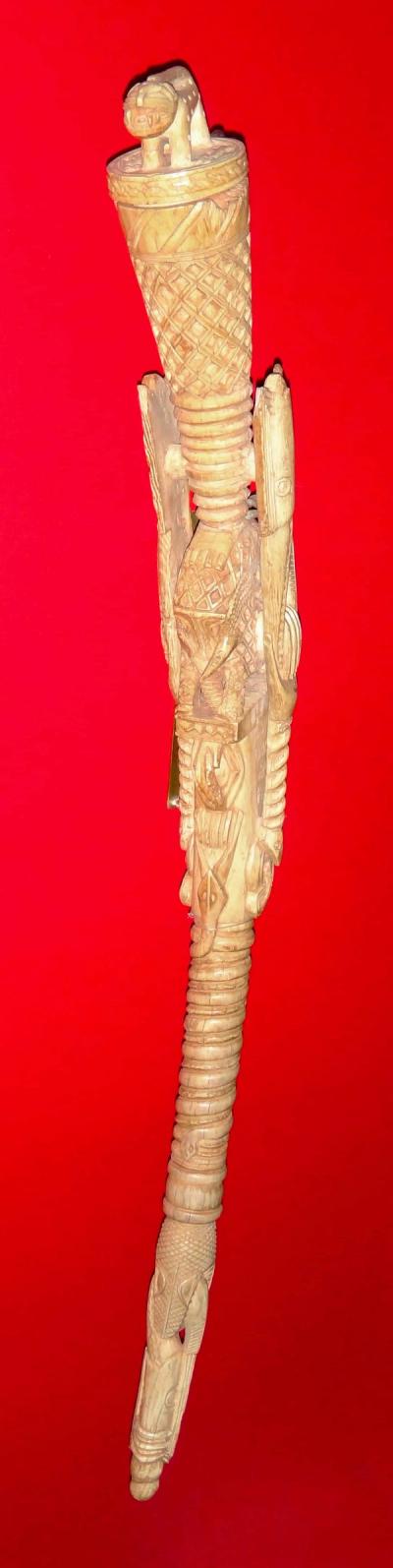
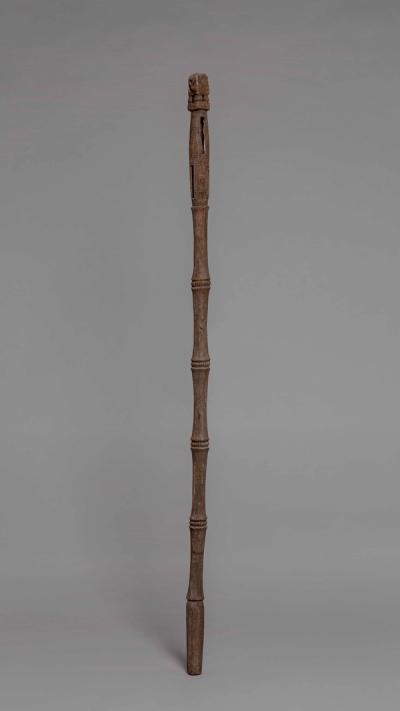
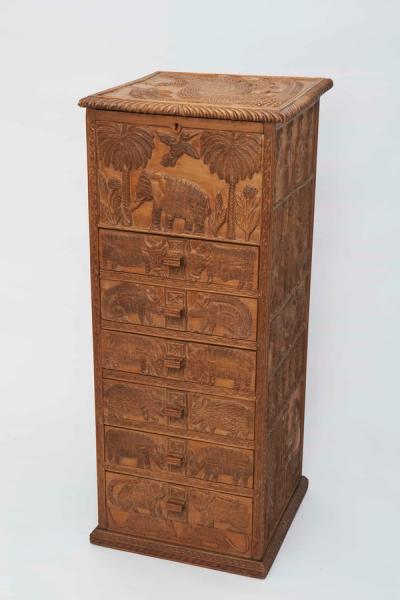
Compared to the Ẹkpẹn (leopard), the Eni (elephant) is not as prominent in the visual language of the Emwin Arhe (royal treasures). It is found on two elephant-head pendant masks and as a full figure, with a chief standing on top of it, on some staffs, but more recurrently only as a trunk, either curved or straight, sometimes terminating in a human fist clenching a bunch of leaves. For example, in her PhD thesis, Barbara Blackmun ( ) identified eight different kinds of ‘trunk hand’ motifs on the Aken'ni Elao (carved tusks) alone.
When a chief or important man passes away, it is said in Edo that ‘an elephant has fallen out of society’. Eni are also said to be the ogie (lord) of the animals, and together these associations have led to the interpretation of Eni as symbols of chiefs, possibly even rebel chiefs, in Benin iconography ( ). Based on the qualities of the animals themselves, representations of Eni on the Emwin Arhe (royal treasures) are believed to represent “physical power, leadership, wisdom, and longevity” ( ).
Digital Benin collates digital material from institutions, and some of this material is inherently colonial and contains words, terms and phrases that are inaccurate, derogatory and harmful towards African and African diasporic communities. Catalogue transcriptions, book titles, exhibition titles and museum titles may contain harmful terms. We recognise the potential for the material to cause physical and mental distress as well as evoke strong emotions. Owing to the scale of the collection’s data, a process to implement sensitive-content warnings in the displayed data is still incomplete. The material within the catalogue does not represent Digital Benin’s views. Digital Benin maintains a strong anti-colonial, anti-racist position and affirms its support for centring the humanity of historically marginalised and disenfranchised communities. Read more about the background of this statement here