Emẹ
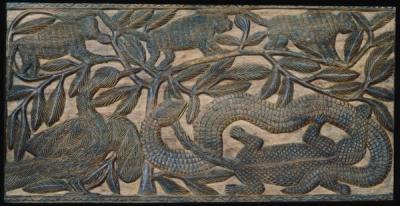
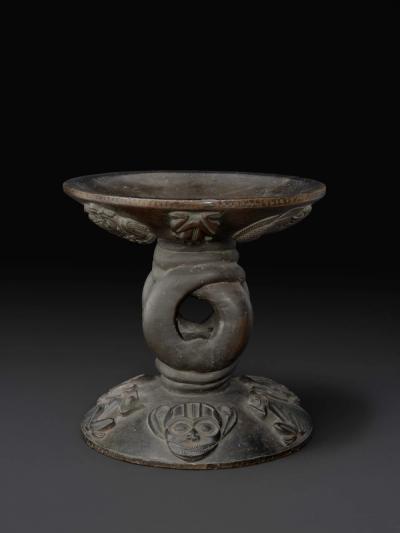
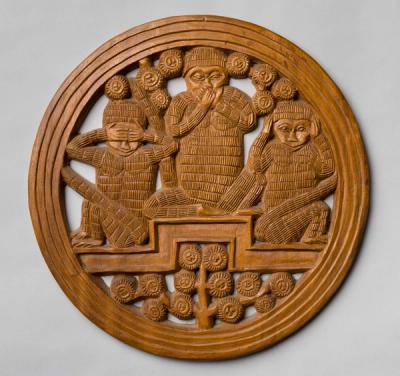
Emẹ is the generic term for monkeys in Edo (Ọbazee 2025, p. 99). They appear much less frequently than other animals, shown either in full form, crouching or resting on their haunches, with their arms threaded around or resting on their knees; in other cases, only their faces are depicted.
The monkey is associated with success and good fortune (Blackmun 1984, p. 158). In the early 1980s, Paula Ben-Amos (in Blackmun 1984) suggested that Emẹ are associated with the Ehi (personal destiny), “particularly when the Ehi guides one steadily upwards towards success.” Paraphrasing Osemwegie Ebohon (1979, p. 46), Barbara Blackmun (1984) also described a connection between Ọba Ewuare the Great and Emẹ based on a praise name for the warrior king: “the thin headed monkey who hurled himself at his foes.” Emẹ, along with frogs, are also used in palace rituals to promote success in battle (Girshick Ben-Amos 1999, p. 106).
Digital Benin collates digital material from institutions, and some of this material is inherently colonial and contains words, terms and phrases that are inaccurate, derogatory and harmful towards African and African diasporic communities. Catalogue transcriptions, book titles, exhibition titles and museum titles may contain harmful terms. We recognise the potential for the material to cause physical and mental distress as well as evoke strong emotions. Owing to the scale of the collection’s data, a process to implement sensitive-content warnings in the displayed data is still incomplete. The material within the catalogue does not represent Digital Benin’s views. Digital Benin maintains a strong anti-colonial, anti-racist position and affirms its support for centring the humanity of historically marginalised and disenfranchised communities. Read more about the background of this statement here