Ebo
During the late 15th century, European visitors began arriving in Benin City and subsequently played important roles in trade, the military, religion, and belief. Edo artists incorporated a range of figures understood to represent Europeans into the visual language of Emwin Arre (royal treasures). These depictions served in part to communicate the power and reach of the Benin monarchy, making the “greatness of ruler and realm more palpable” and demonstrating that the Ọba’s authority extended beyond his own people to those who came from distant lands ( ).
European visitors came from a number of countries, including the Netherlands, Britain, France, and Italy. Portuguese visitors, however, had the most extensive and enduring influence, which is particularly evident in the visual language of Benin royal arts ( ).
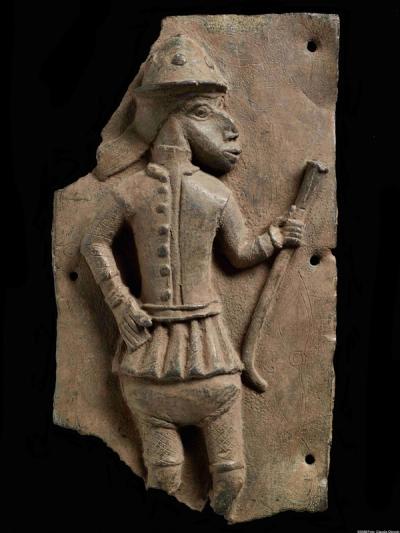
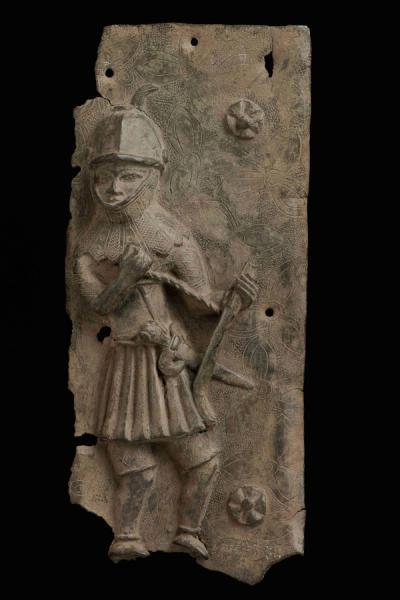
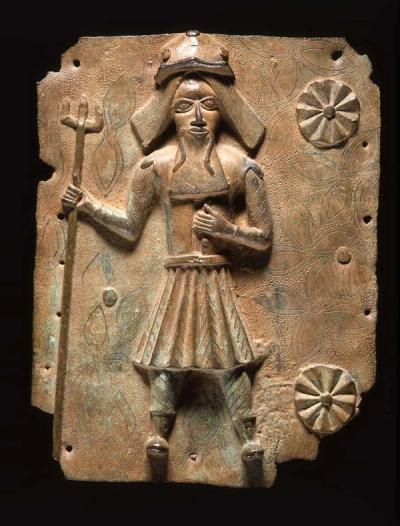
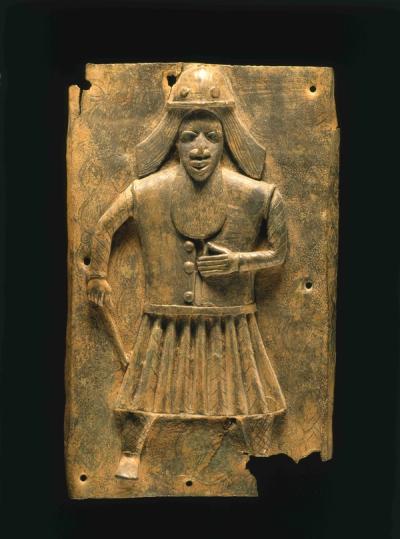
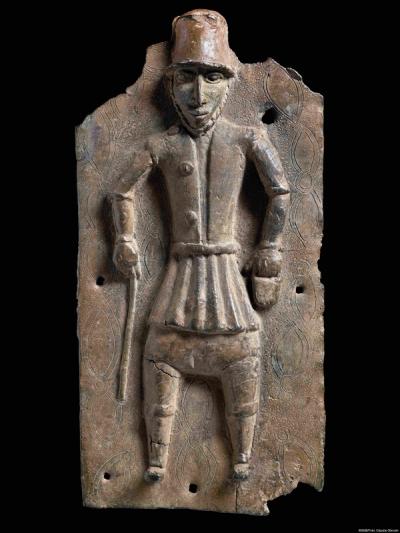
European figures were incorporated into Ama-Ẹrọnmwọn (bronze relief plaques), dating primarily to the 16th and 17th centuries, and Aken'ni Elao (carved tusks), dating from the 17th to the 19th centuries. They are typically depicted with straight, shoulder-length hair and/or beards, rounded cap-like headwear, heavily pleated skirts, and jerkins ( ). These figures often appear alongside other motifs associated with European trade and contact, such as Ugianranran (manillas) and horses, or with warfare, such as firearms. In addition to full-length figures, the Uhunmwu Ikpotoki (Portuguese head) was incorporated into a wide range of objects, most likely as a symbol of power and wealth associated with overseas trade and, by extension, with Olokun, the deity of the sea.
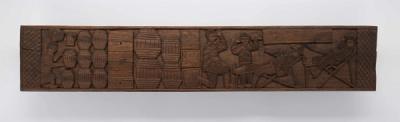
European figures also became part of the visual language developed by the Emada, palace pages whose carving tradition differed from that of the royal guild of wood and ivory carvers, the Igbesamwan. Although the precise origins of the Emada carving tradition are uncertain, it is thought to have developed during the reign of Ọba Adolo, and many surviving examples are therefore dated to the 19th century. Their representations of Europeans differ from the conventions used in earlier depictions understood to represent Portuguese visitors. Rather than wearing pleated skirts and jerkins, these later figures are typically shown in suits, wide-brimmed hats, and smoking pipes, and may carry straighter, sabre-like swords, guns, or umbrellas.
Digital Benin collates digital material from institutions, and some of this material is inherently colonial and contains words, terms and phrases that are inaccurate, derogatory and harmful towards African and African diasporic communities. Catalogue transcriptions, book titles, exhibition titles and museum titles may contain harmful terms. We recognise the potential for the material to cause physical and mental distress as well as evoke strong emotions. Owing to the scale of the collection’s data, a process to implement sensitive-content warnings in the displayed data is still incomplete. The material within the catalogue does not represent Digital Benin’s views. Digital Benin maintains a strong anti-colonial, anti-racist position and affirms its support for centring the humanity of historically marginalised and disenfranchised communities. Read more about the background of this statement here